The Department of Design at the 2025 Engineering Festival

Science, Culture, and Innovation at Politecnico di Milano

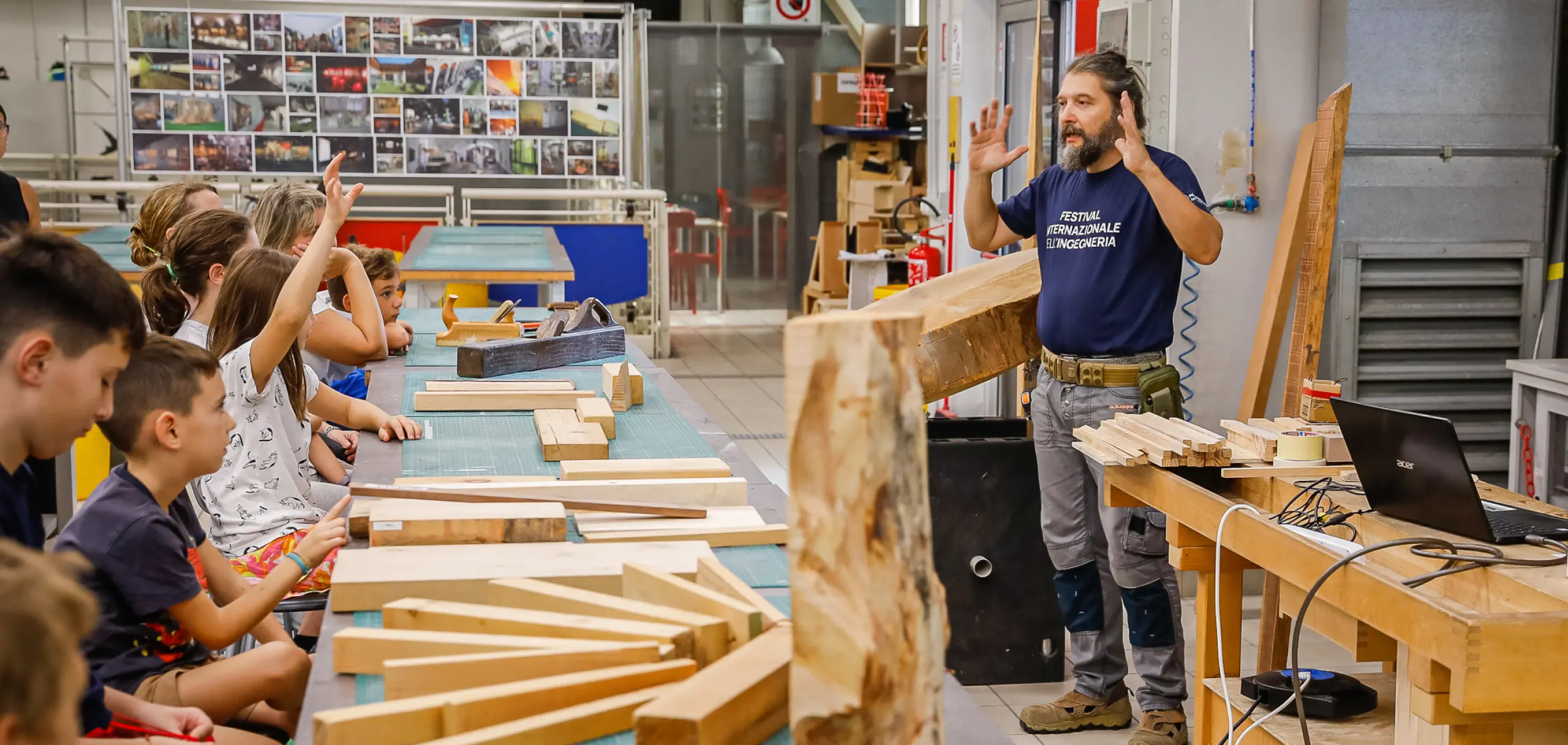
A bearded instructor wearing a "Festival Internazionale dell'Ingegneria" t-shirt emphatically teaches woodworking techniques to a group of attentive children in a well-equipped workshop. The scene is centered around a long workbench filled with wooden blocks and traditional hand planes, blending technical instruction with hands-on craftsmanship to create an engaging and educational atmosphere

The 25th edition of the International Festival of Engineering has come to an end. This year, it expanded across all Milanese campuses of the University. The Department of Design actively participated in the Festival, contributing with initiatives that highlighted the dialogue between engineering, design, and innovation.

It was an opportunity to explore the intersection between design culture and technological development, promoting an interdisciplinary and sustainability-oriented vision.

A rich and varied program was created to engage a diverse audience: 38 open laboratories, 30 activities for children, 27 activities for teenagers and career guidance, 40 popular science lectures, 10 talks, 20 exhibitionspaces,5 events and performances,along with a Fuori Festival that brought even more energy to the city.

Here are some of the activities involving the Department of Design:
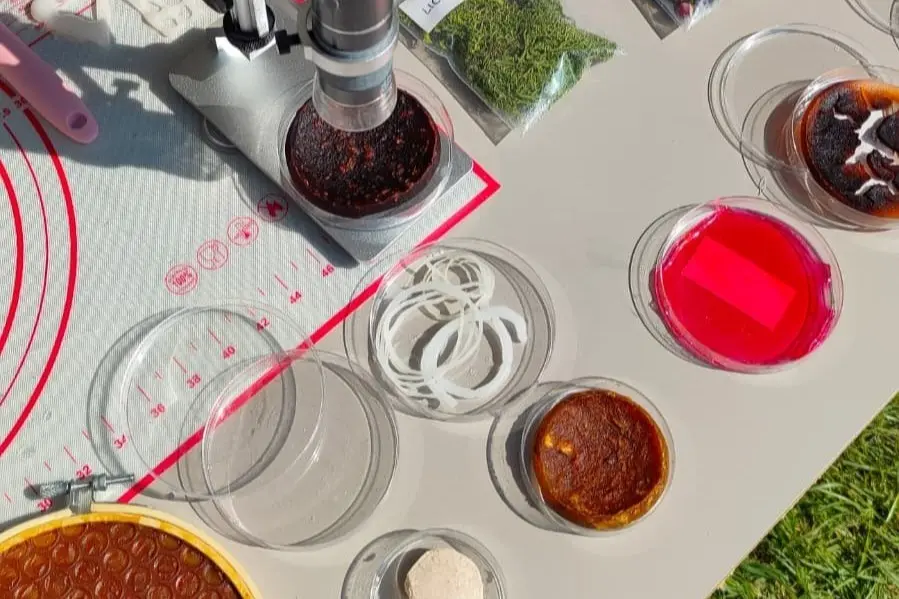
The image shows an outdoor scientific analysis station, where several Petri dishes containing organic samples and colored substances are arranged on a table next to a digital microscope. Among the samples, onion rings, vibrantly colored pink and dark brown gelatinous substances, and small bags of plant material are visible, all organized on scaled mats for a detailed study of the materials.

Valentina Rognoli curated Materials Design for Transition: Experimenting from a Biodesign Perspective, a biomaterials workshop open to the public. Set up as an interactive biolab-gazebo, it was designed to introduce visitors to contemporary practices in material design for ecological transition.

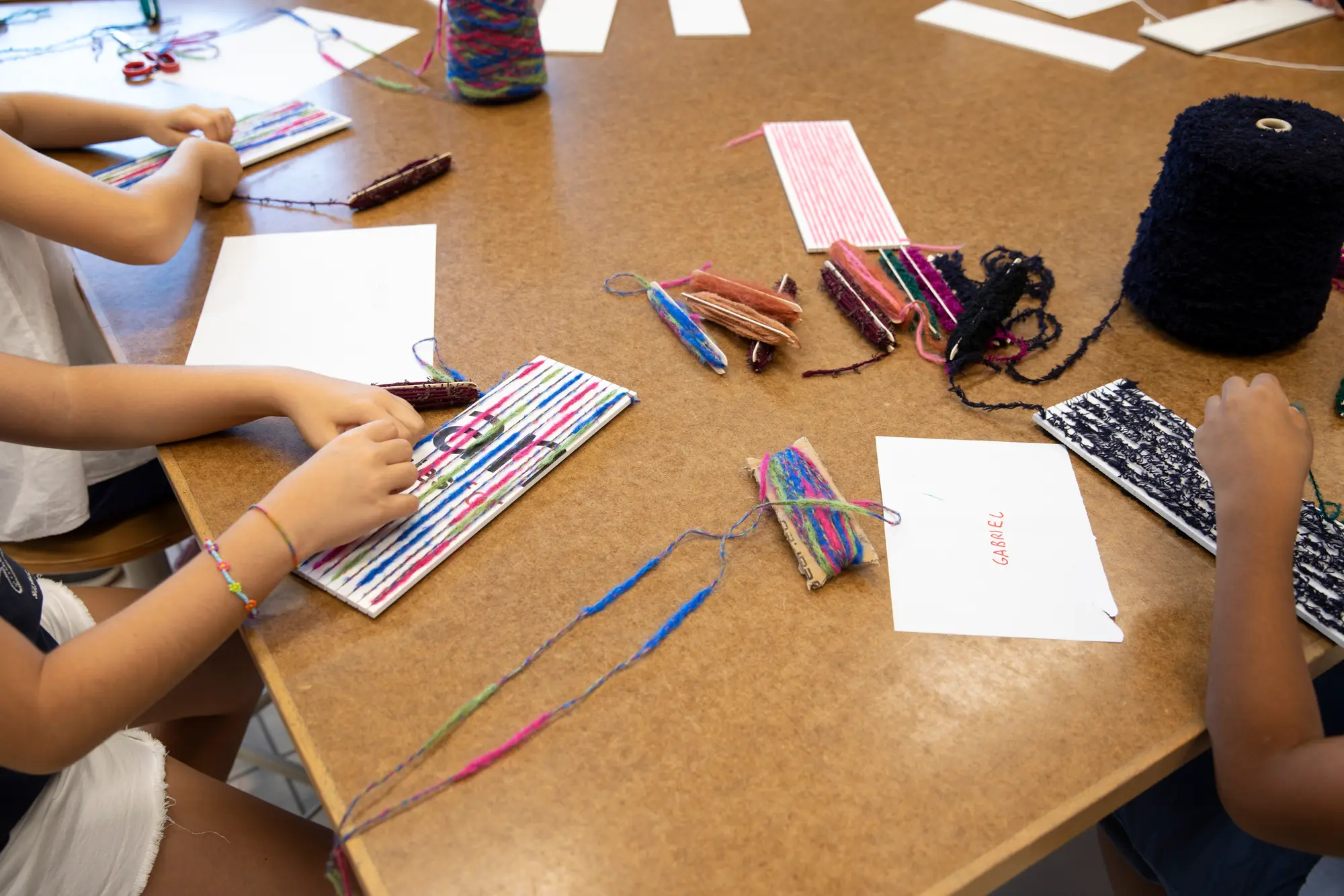
A group of children is engaged in a creative hands-on activity around a table, using colorful yarn to decorate small cardboard looms. The scene captures small, busy hands weaving vibrant threads, surrounded by spools of wool, scissors, and personalized slips of paper, creating an atmosphere of focused concentration and lively artistic expression.

For the youngest participants, the Fashion Lab created the workshop Creative Weaving – Between Warp and Weft, an activity designed to bring children closer to the world of weaving in a simple and engaging way. Using a rudimentary loom, participants were able to experience the process of fabric creation first-hand, discovering how varying the interlacing and yarns can result in different structures and patterns.

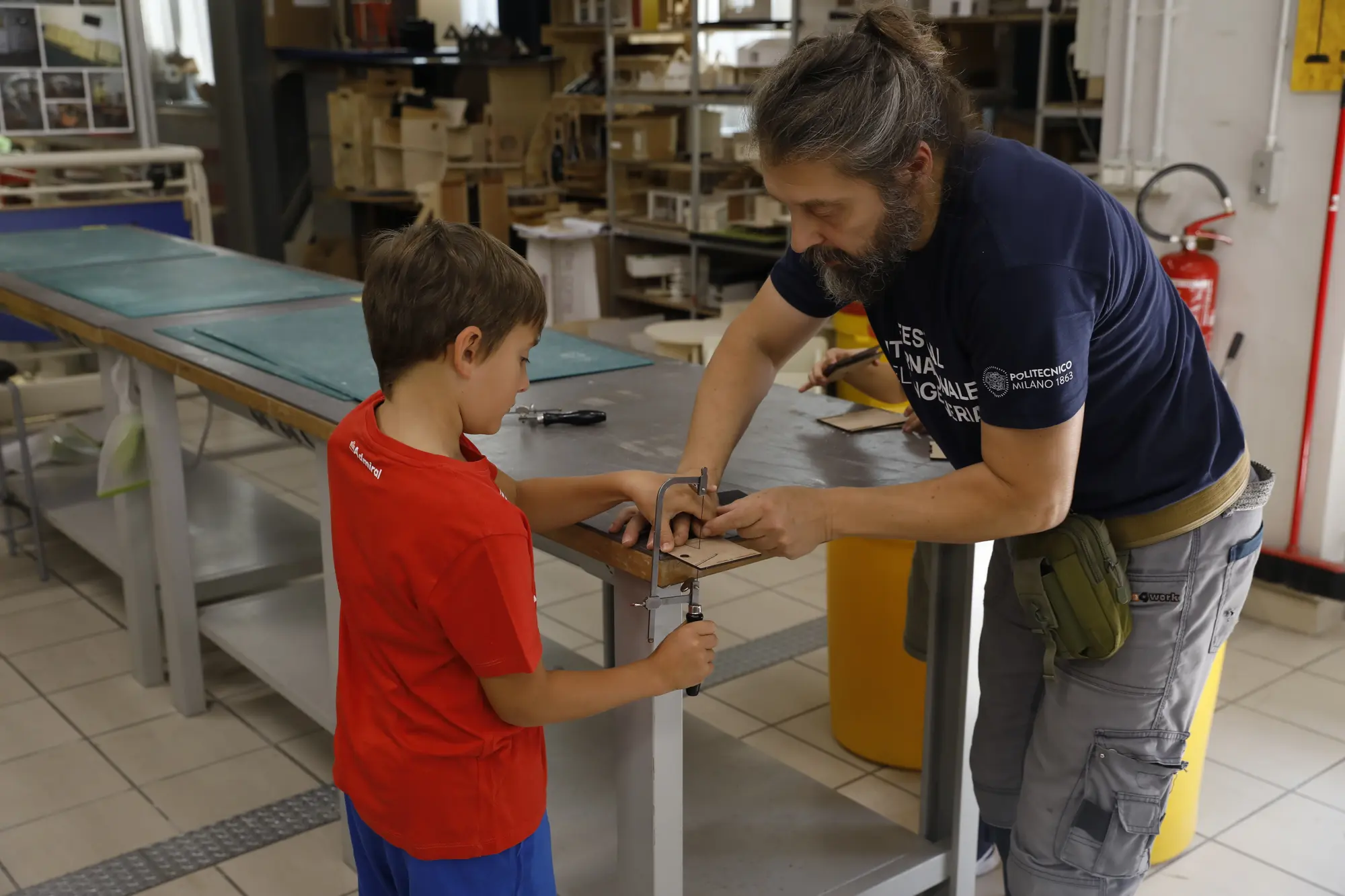
A skilled instructor carefully supervises a young student learning to use a fret saw at a workbench in a professional workshop. The man, wearing a "Festival Internazionale dell'Ingegneria" t-shirt, gently guides the child's hand movements to ensure precision and safety while cutting wood, passing on the value of manual craftsmanship in an environment filled with technical tools and ongoing projects.

The Wood and Design workshop, organized by the Prototypes and Exhibit Lab, offered participants a learning opportunity to explore the expressive and functional potential of wood and its main derivatives. Through guided practical activities, participants were able to create a solid wood sculpture and a scaled-down chair, experimenting directly with joint techniques, basic wood working tools, and the distinctive properties of various materials.

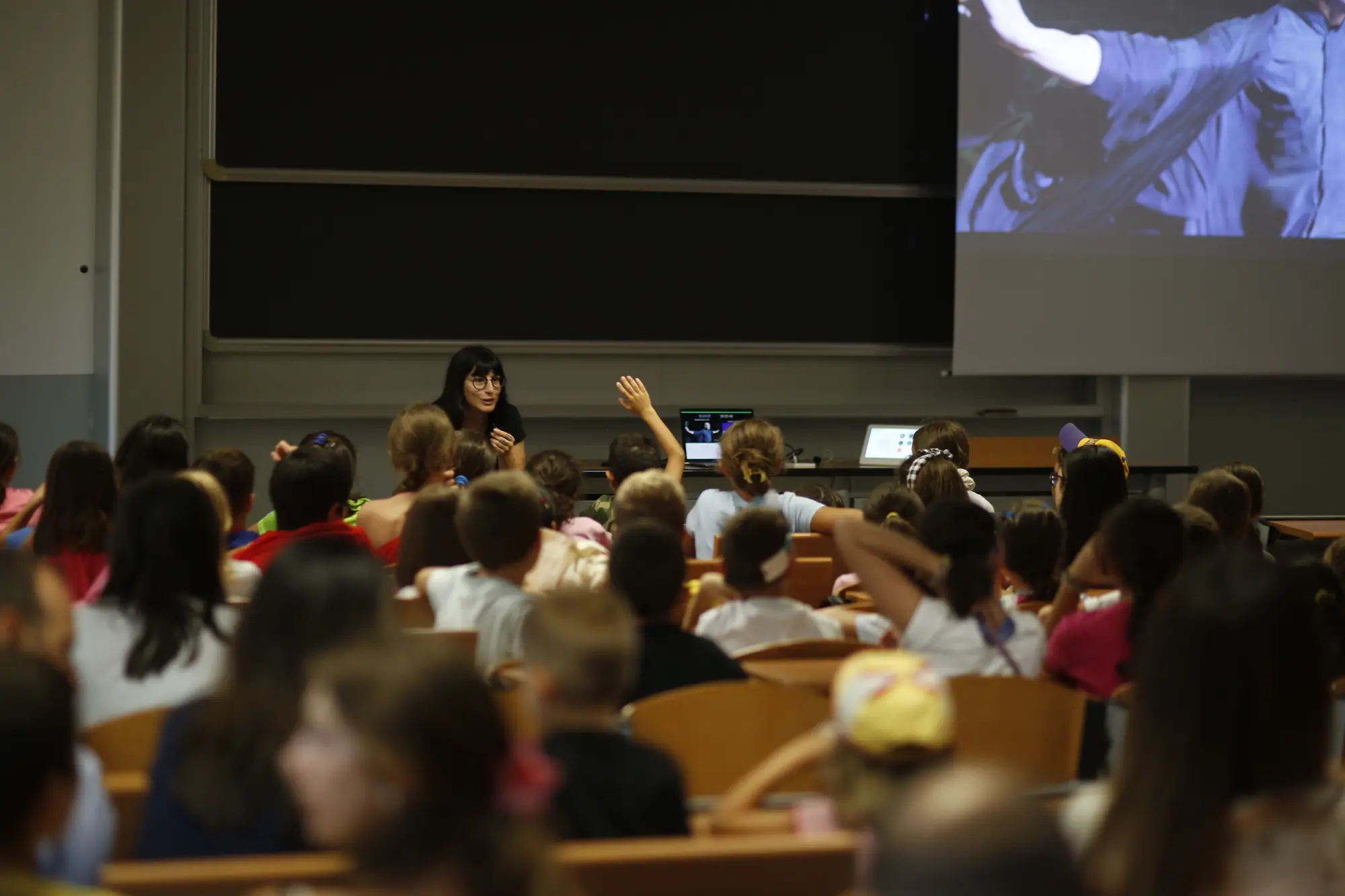
A speaker interacts with a young audience during a presentation in a lecture hall, where a child raises their hand to ask a question or participate in the discussion. The scene, characterized by an educational and dynamic atmosphere, shows the use of digital tools such as laptops and projection screens, highlighting a moment of exchange and collective learning between the expert and the large crowd.

At the La Masa Campus, the event Harry Potter and the Magic of Cinema explored the technological secrets behind the special effects of the iconic film saga. Led by Mariana Ciancia, participants embarked on a journey into the world of Hogwarts, discovering how cinematic magic takes shape through digital tools, visual effects, and advanced filmmaking techniques.

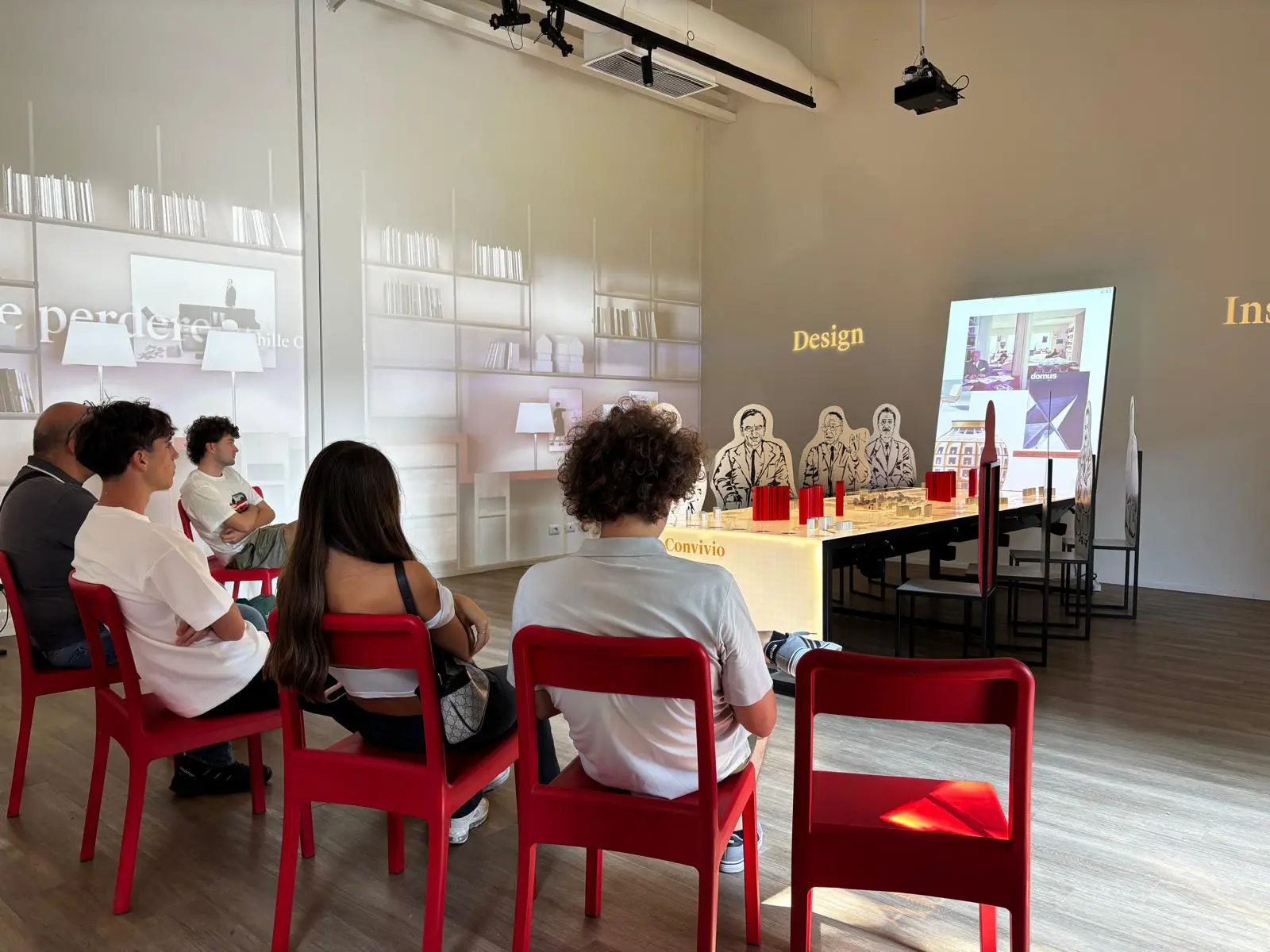
A group of people is seated on red chairs inside a modern exhibition hall, observing an interactive installation dedicated to design and the concept of "Convivio." The setting features light projections on the walls depicting a studio environment, while the center is dominated by a long backlit table with silhouettes of historical figures and architectural models, creating an immersive experience that blends culture, history, and contemporary design.

During the Festival, the Design Convivio installation – part of the Design Philology project – was also open to the public. Curated by Giampiero Bosoni together with Paola Bertola, the installation brought to life the origins of the institutionalization of design at Politecnico di Milano, staging an imaginary dialogue among some of the pioneering figures who shaped this story.

The program was completed by a guided tour of the Gianfranco Ferré Research Center, aimed at exploring the various types of materials preserved in the Ferré Archive. The visit highlighted the artistic and cultural influences that inspired some of the designer's collections, through pieces connected to movements and artists such as Alberto Giacometti, Paul Signac, Vittorio Zecchin, and others.

The Department of Design’s participation in the Festival offered a valuable opportunity to showcase the design approach as a tool for connecting disciplines, languages, and different bodies of knowledge. A meaningful contribution that emphasizes the role of design in building a more sustainable, inclusive, and innovative future.

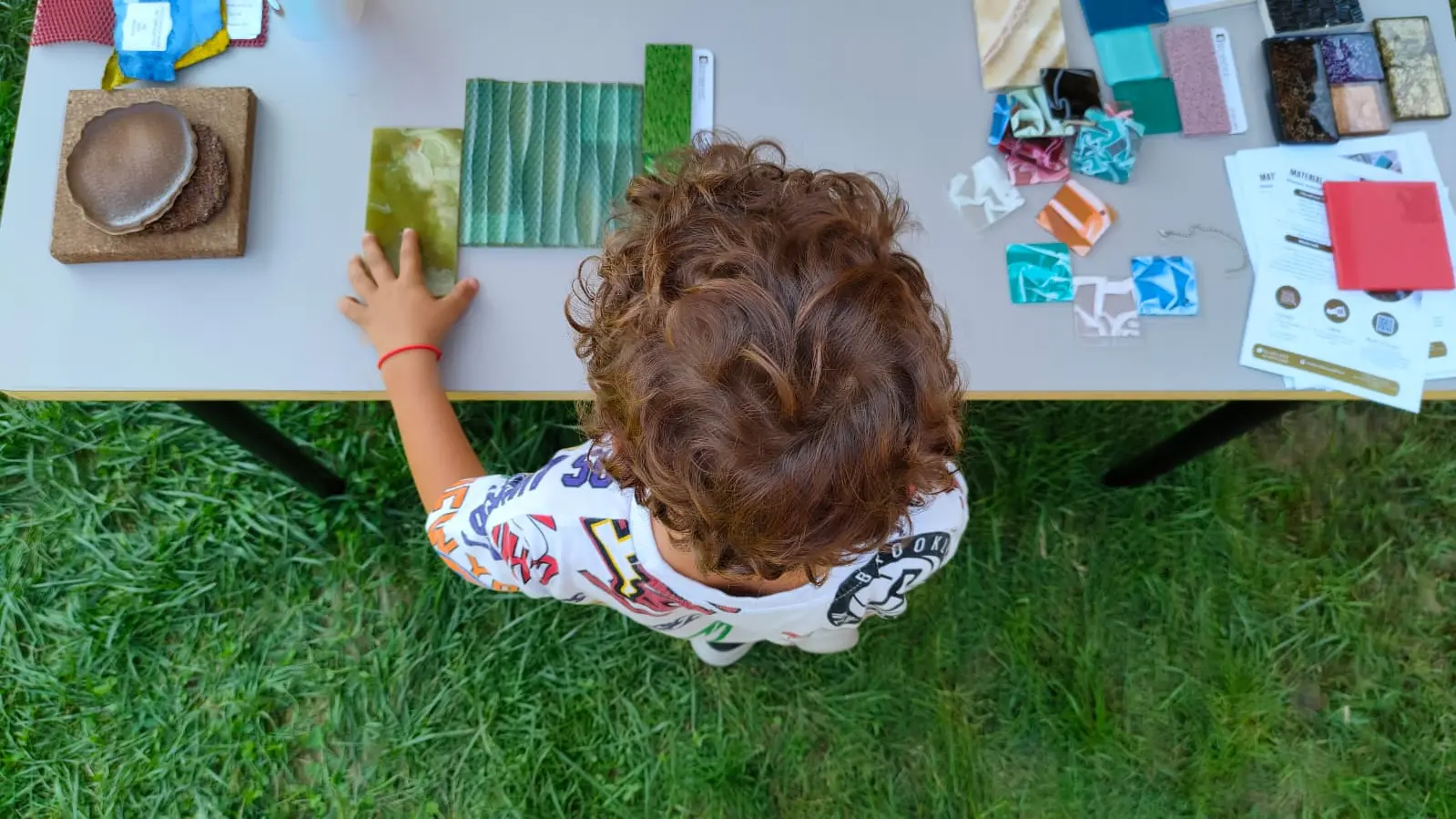
A curly-haired child is captured from an overhead perspective while curiously exploring various material samples arranged on a table outdoors. The station features a colorful collection of glass tiles, resins, and textured surfaces, offering a sensory and educational experience set in a grassy area, aimed at stimulating the child's tactile and visual discovery of different materials.

Share on: