Tracks4Crafts: A Future Oriented Approach to Heritage

Annual Meeting 2025

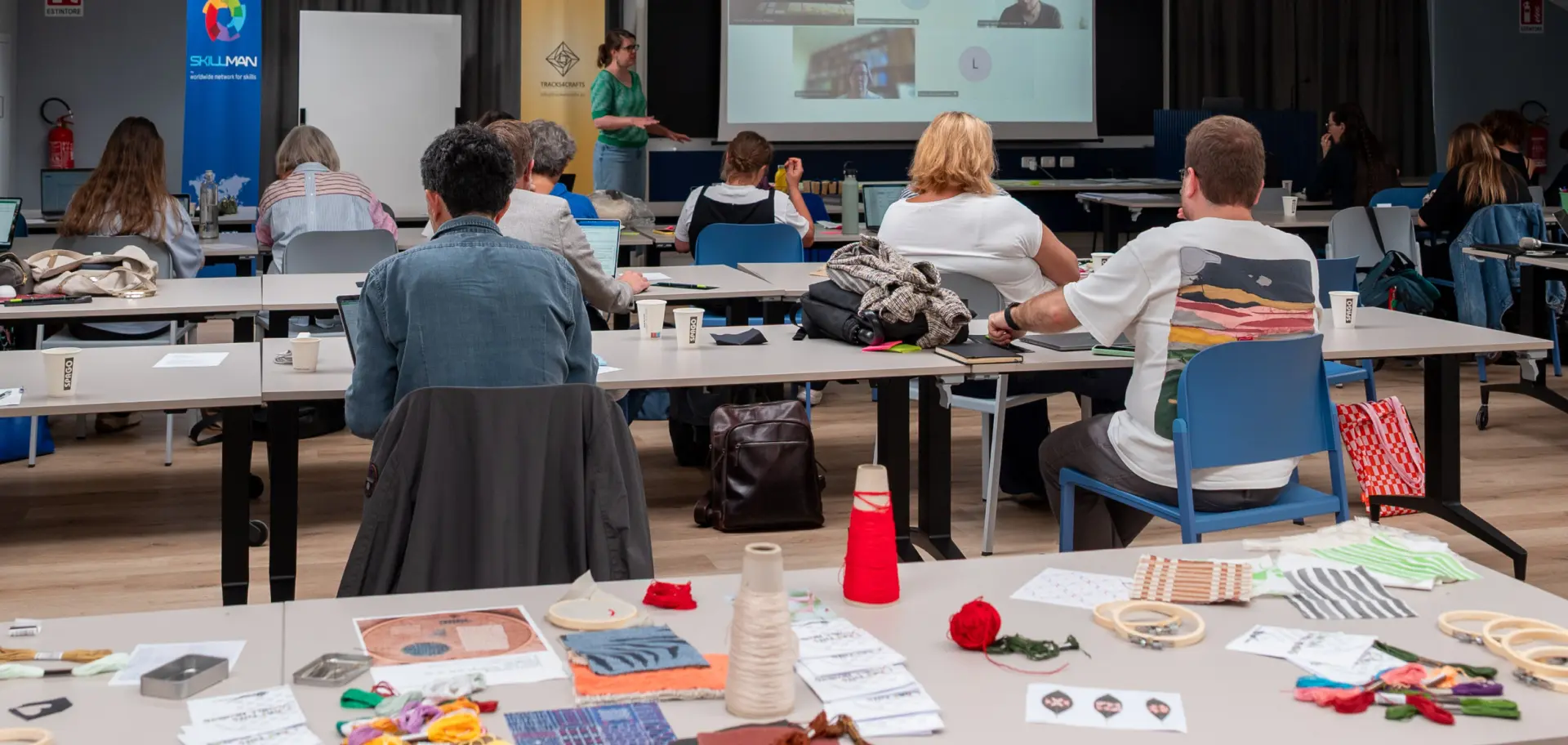
A group of attendees participates in a presentation within a modern conference hall, where a speaker illustrates concepts related to craftsmanship and textile design. In the foreground, tables are set with creative materials such as yarn skeins, embroidery hoops, and fabric samples, while in the background, a screen shows a videoconference link with other speakers, blending in-person and digital training.

Tracks4Crafts (T4C) is a European project funded by Horizon Europe (2023–2027), aimed at examining and transforming the transmission of Traditional Crafts Knowledge (TCK), with the goal of reinforcing its economic and social value and aligning it with a heritage approach oriented toward the future.

Artisanal knowledge, recognized as intangible cultural heritage (ICH), represents not only a resource for competitiveness and innovation, but also a driver of sustainable development and improved quality of life, contributing to Sustainable Development Goals 4, 8, and 11. However, the tools and formats for transmitting this knowledge are often inadequate in the face of contemporary challenges, hampering its full potential. Tracks4Crafts is born to fill this gap, developing and testing new methodologies and instruments capable of making the transmission of TCK more effective, inclusive, and forwardlooking.

The project is structured around four main tracks:

  • Tracks4Training, to create and improve innovative learning formats in transmission processes;
  • Tracks4Tech, to integrate traditional techniques with digital technologies and advanced tools;
  • Tracks4Markets, to develop business models and certification tools that enhance the value of artisanal knowledge;
  • EUnite4Tracks, to strengthen the network and dissemination of crafts across different ecosystems.
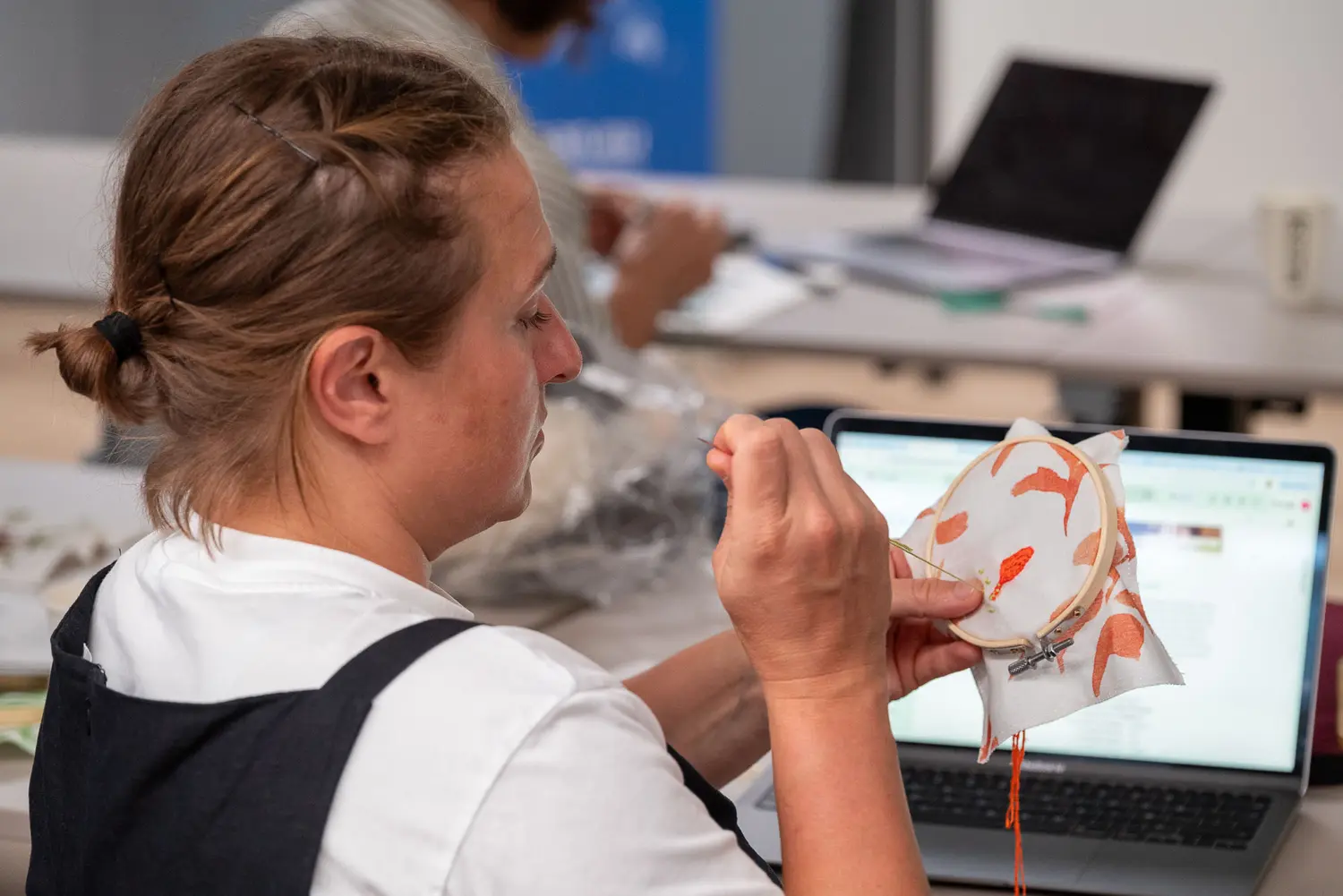
A person is seated at a desk carefully hand-stitching fabric stretched over a small circular embroidery hoop, following an orange leaf pattern. The scene takes place in a professional or academic setting, with an open laptop in the background displaying technical information, suggesting a blend of traditional textile art and the use of digital tools for design or learning.
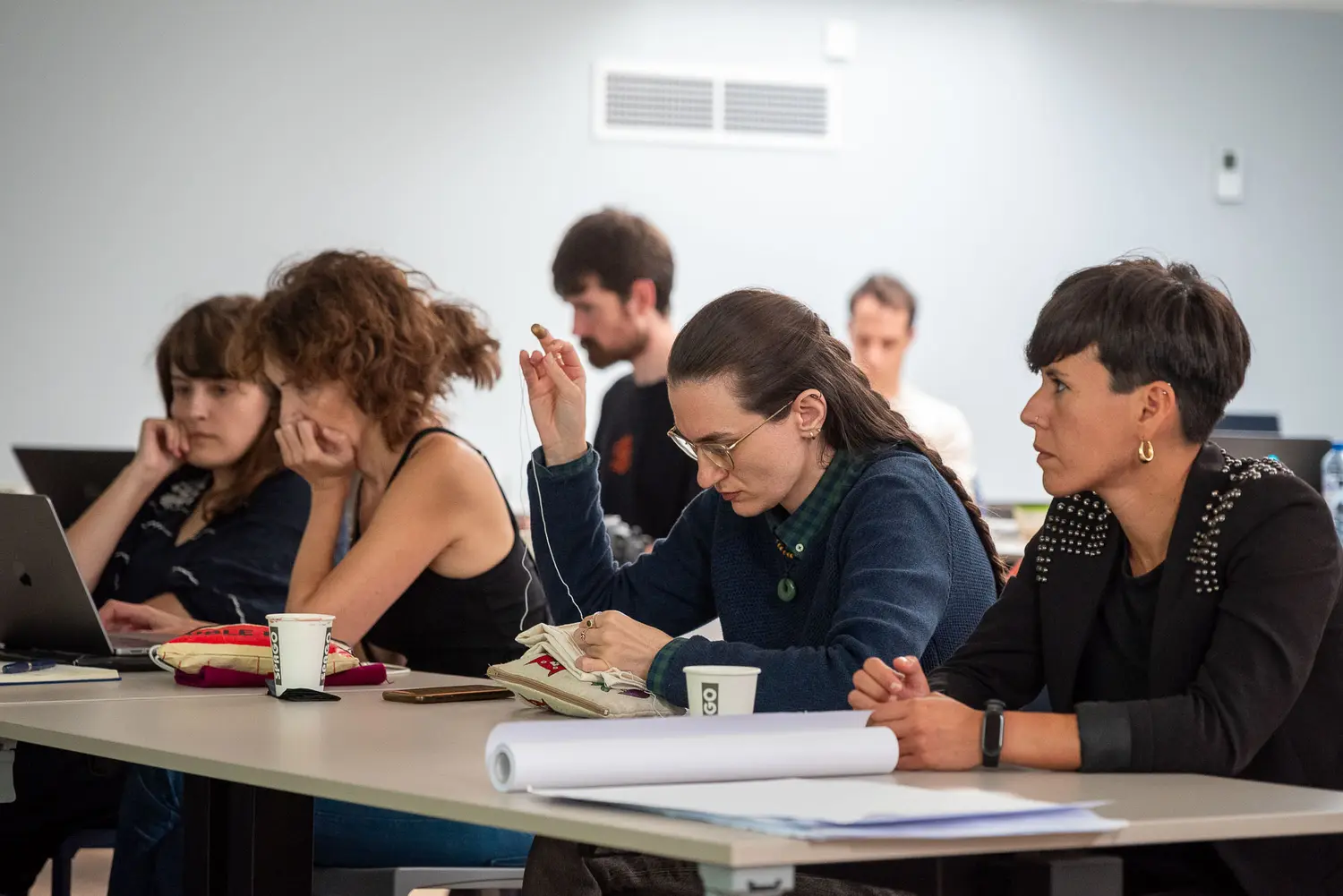
A group of participants sits at a long table during a training session or workshop in a modern classroom. In the foreground, a young woman with glasses is focused on hand-sewing fabric, precisely lifting the thread, while her colleagues follow the activity or work on their laptops. The image captures a moment of active learning that combines traditional craft practice with a contemporary, shared study environment.

A foundational element of T4C are the eight pilot cases — craft and cultural entities located in diverse geographical European contexts — which concretely experiment with new tools and approaches: WAAG FutureLab (Netherlands), Icelandic Textile Center (Iceland), Bokrijk (Belgium), Onl’fait (Switzerland), Semne Cusute (Romania), The Art of Silk Museum (Greece), MXeD (Netherlands), and Artex (Italy). These craft ecosystems are real living labs, where tradition and innovation meet to test learning formats, documentation practices, and certification tools, while simultaneously addressing the cultural and economic barriers that hinder the continuity of knowledge.

The consortium is coordinated by the University of Antwerp (Belgium) and includes distinguished academic and institutional partners: 3Walks (Spain), Skillman.eu (Italy), the European Crafts Alliance (ECA, Belgium), the Design Department of Politecnico di Milano (Italy), Université Paris 1 PanthéonSorbonne (France), Latvian Academy of Culture (Latvia). Together with the pilot case actors, these partners contribute to an interdisciplinary, cocreative approach that engages researchers, artisans, cultural networks, and local communities.

Through this shared work, Tracks4Crafts aims to transform embodied knowledge into accessible and shared heritage, fostering the continuity of European crafts and its capacity to renew, innovate, and generate social, cultural, and economic impact.

Annual Meeting 2025: Three Days of Dialogue and Cocreation in Milan

From 9 to 11 September 2025, the Department of Design at Politecnico di Milano hosted the Annual Meeting of the European project Tracks4Crafts (T4C). For three days, about forty partners and pilot case representatives from different European countries gathered in Milan to discuss the project’s progress, review ongoing deliverables, and jointly outline future prospects through to 2027.
The meeting constituted a crucial moment of evaluation and cocreation — a technical meeting but also a collective space where researchers, artisans, designers, and institutions wove together visions, experiences, and practices.

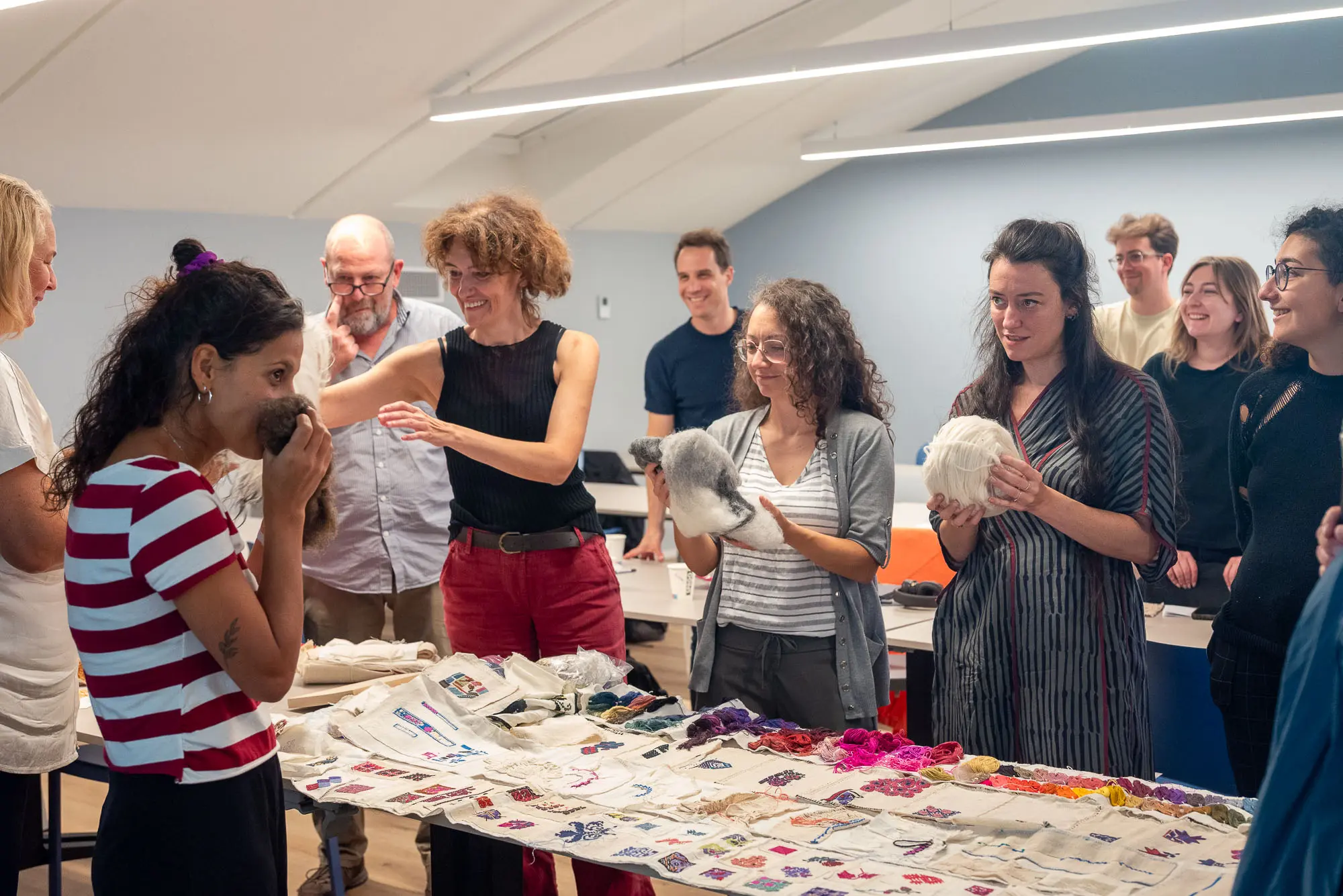
A group of people enthusiastically participates in an interactive workshop dedicated to textile fibers and embroidery. The scene captures a moment of sensory exploration: some participants observe and feel soft balls of wool and raw fibers, while a rich variety of fabric samples embroidered with colorful patterns is displayed in the foreground. The atmosphere is convivial and engaging, characterized by the exchange of ideas and the tactile discovery of materials within a modern learning space.
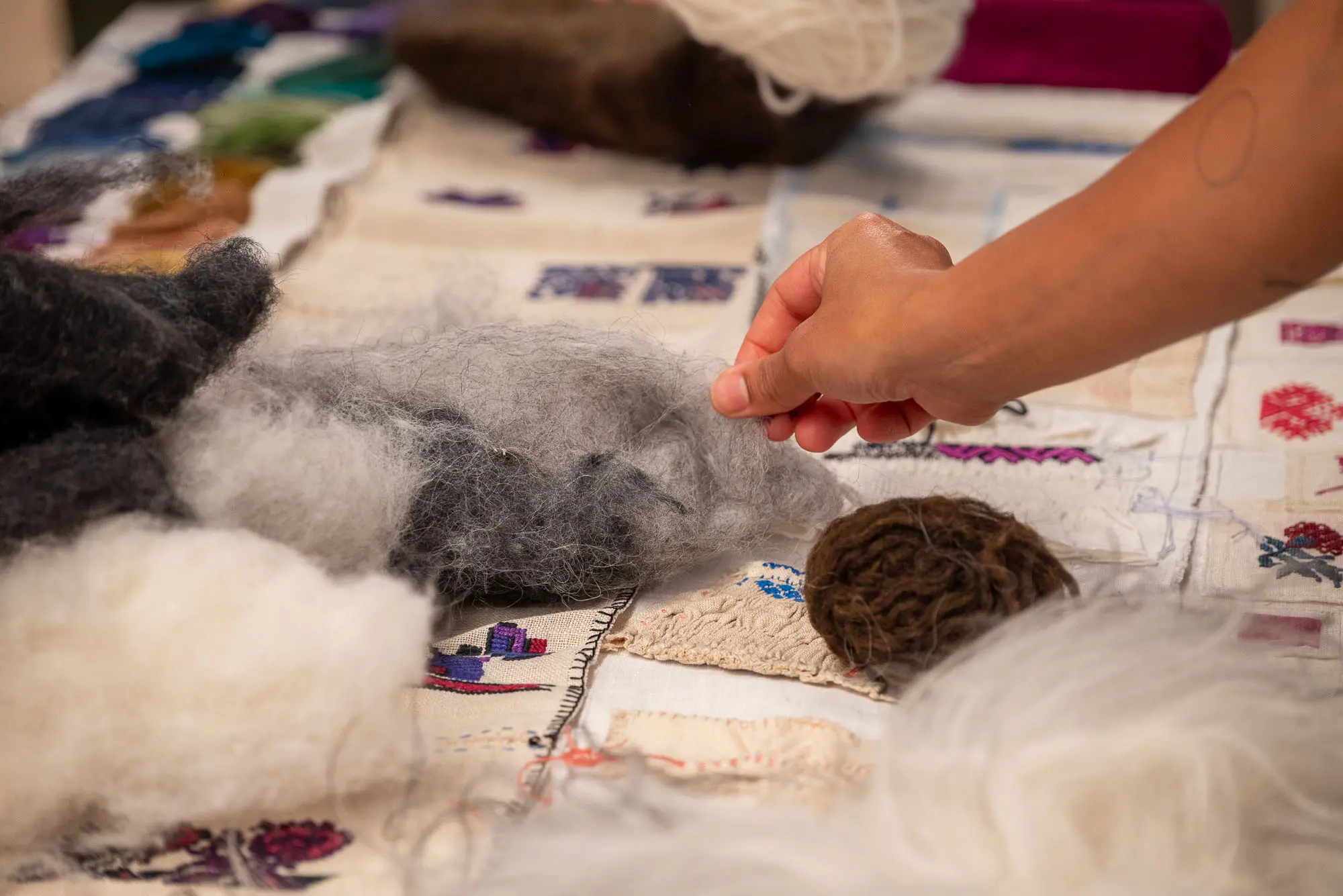
A hand gently explores different types of natural fibers and textile materials arranged on a long table covered with embroidered samples. The image focuses on the tactile and material aspects of craftsmanship, showing soft clouds of raw wool in various shades of gray and white alongside small balls of yarn, highlighting the phase of study and selection of raw materials in the textile creative process.

Thematic Workshops and Strategic Discussions

The Annual Meeting’s program alternated plenary sessions with thematic workshops, giving each working group space to share results, challenges, and new ideas.

  • Workshop on Business Models — led by Prof. Annick Schramme and Laura D’Hoore (both from UAntwerp), this workshop explored tools and strategies for economically valorising artisanal knowledge, taking into account various contemporary challenges.
  • Workshop on Emerging Technologies — led by Prof. Jouke Casper Verlinden and Ian Garcia, this workshop focused on the role of new digital technologies, from augmented reality to artificial intelligence, as tools able to enhance the transmission of artisanal knowledge and crafts in general. It reflected on how these technologies might generate immersive learning experiences, support storytelling, and open up new forms of innovation for craft practices.
  • Materials Driven Craft Innovation “Materials Dialogues” — led by Prof. Valentina Rognoli and Dr. Sofia Soledad Duarte Poblete from the Department of Design, this workshop was dedicated to the tangible discussion of materials collected and developed within the project. It was a moment to reflect on how to valorise the resources, the transformation processes, and the possibilities for crosspilot exploration. This reflection opened up new perspectives on considering materials not only as technical supports but as true cultural mediators and instruments of social innovation. There was also discussion of material and artisanal intelligence in the context of the project.
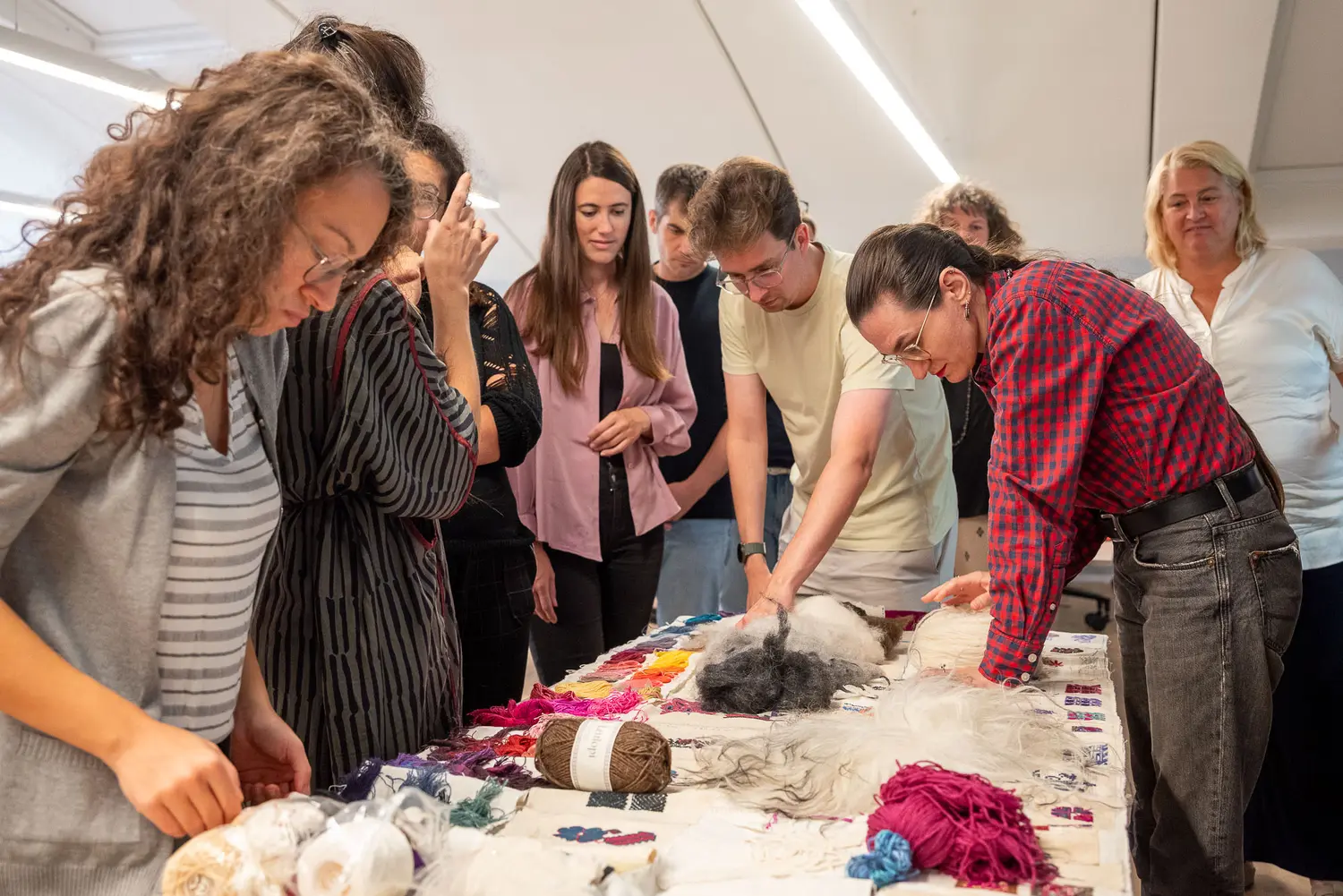
A group of workshop participants is gathered around a table to closely examine a variety of textile raw materials. The scene shows people observing and touching samples of natural fibers, colored yarns, and raw wool fleeces laid out on a long work surface. The atmosphere suggests a moment of technical and sensory exploration, typical of an educational program dedicated to material knowledge and handcrafted textile design.
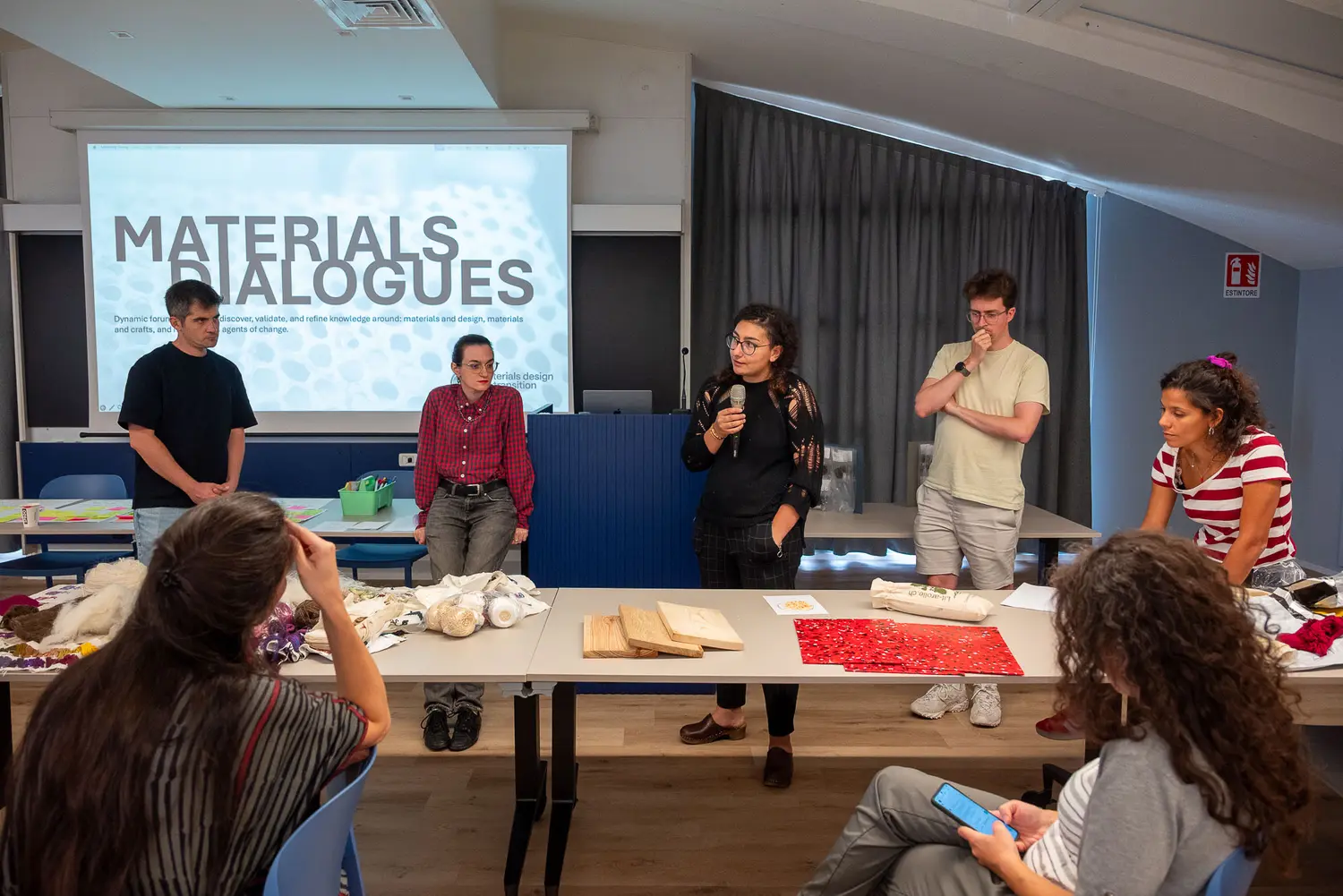
A young speaker talks into a microphone during a presentation titled "Materials Dialogues," addressing a group of people in a modern classroom. Various material samples, including wooden boards and textiles, are arranged on the table in front of her, serving as central elements for the discussion. The scene captures a moment of knowledge sharing and academic debate, with the screen in the background emphasizing the event's focus on design and materials research.

Throughout the three days, a transversal practice accompanied the more theoretical sessions: visible mending. Through the manual gesture of repairing textiles, participants maintained focus in a dynamic way, experimenting with a form of active listening that involved both mind and hands.

The Contribution of MaDeTrans and the Focus on Materials

A central role in the organization of the Annual Meeting was played by the research group MaDeTrans — Materials Design for Transition from the Department of Design. The overall planning, facilitation of workshops, and guided tours of labs were overseen by Prof. Valentina Rognoli and Dr. Sofia Soledad Duarte Poblete, while researchers Ziqian Yu, Francesco Cianfano, and Nicolò Baroli supported coordination of the final workshop.


The final workshop, held on 11 September at the new Biodesign Lab, was particularly significant. There, craftspeople from the pilot cases had the opportunity to experiment using the DIY Materials Approach, exploring how combining traditional knowledge and material design tools could generate innovation in their practices. By sharing raw materials and expertise, participants worked on hypotheses for modifying materials, techniques, and processes, while also documenting steps to make them accessible to others.
The workshop also included speculative projects conceived as “narrative devices” to stimulate new ideas in contemporary craft and engage younger generations. In this context, the importance of artisanal and material intelligence was emphasized — not only as technical skill but as a living, creative heritage.

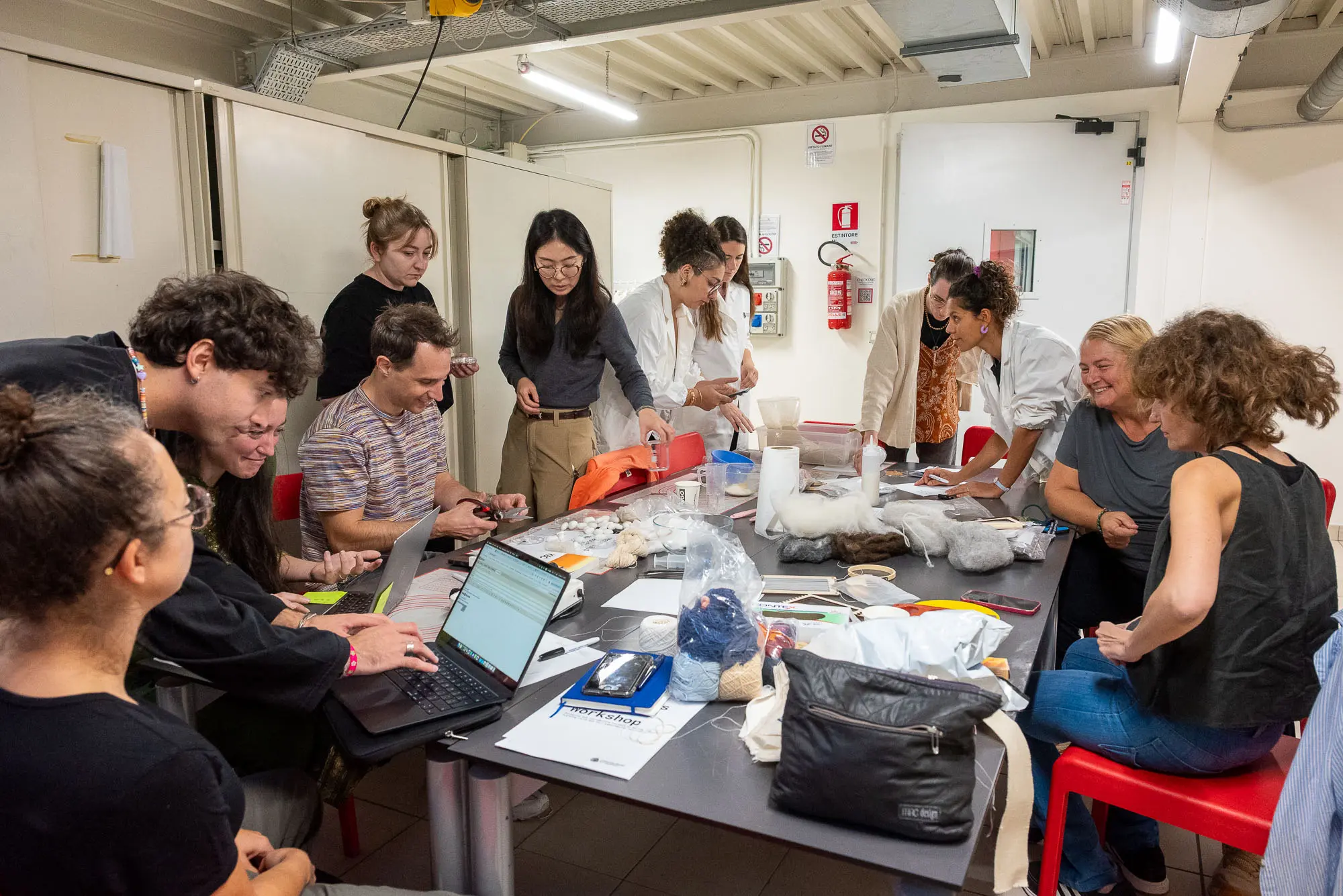
A diverse group of professionals and students is gathered around a large workbench in a technical laboratory, actively collaborating on a textile design project. The scene showcases a dynamic exchange of skills: while some participants use laptops for digital and management tasks, others handle fiber samples, yarns, and textile materials arranged on the table. The setting, characterized by an atmosphere of research and experimentation, reflects a multidisciplinary approach typical of a workshop dedicated to innovation and sustainability in the fashion sector.

Future Prospects

Ample attention was given to reflecting on future prospects and the need to plan carefully the project’s final phase. Methods for presenting results clearly and accessibly were discussed; possible scientific and popular publications; strategies to valorise and disseminate the material already produced; and residencies for participants to enhance their exchange with various partners.
Finally, the proposal emerged to develop a materiotheque dedicated to T4C, with the aim of making visible and shareable the heritage of resources and processes generated by the project.

«These three days showed how the strength of Tracks4Crafts lies in the encounter between disciplines, practices and people: a balance between reflection and experimentation, which opens new possibilities for a craft heritage truly oriented to the future.»

(Sofia Duarte and Valentina Rognoli)

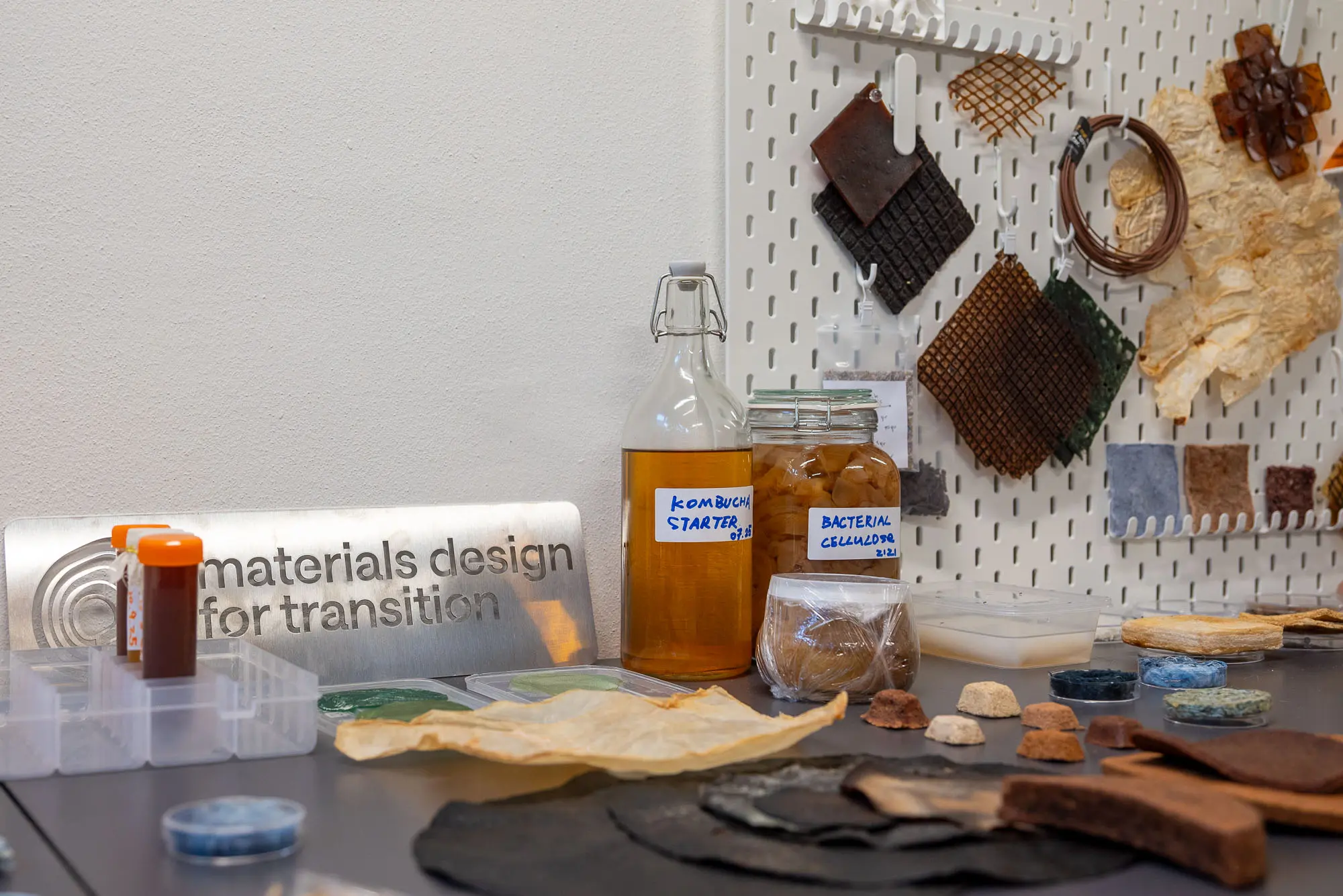
A workbench in a research laboratory displays a variety of bio-based materials and experimental samples next to a metal plaque inscribed with "materials design for transition." On the table, glass containers with labels such as "Kombucha Starter" and "Bacterial Cellulose" are visible, along with various organic textures, small material molds, and a pegboard in the background showcasing further flexible and latticed specimens. The image illustrates an innovative and sustainable approach to design, focused on creating new materials through biological and circular processes.

Looking ahead to 2027, the Annual Meeting in Milan consolidated the consortium’s cohesion and relaunched T4C’s mission: to transform European craftsmanship into a driver of cultural, social, and economic innovation, while preserving its authenticity and vitality.

Share on: