
GREENTEX. GREEN innovative production of bio-based TEXtiles: spinning, electrospinning and life cycle assessment of clever textiles for apparel architecture and interior design
GREENTEX. GREEN innovative production of bio-based TEXtiles: spinning, electrospinning and life cycle assessment of clever textiles for apparel architecture and interior design
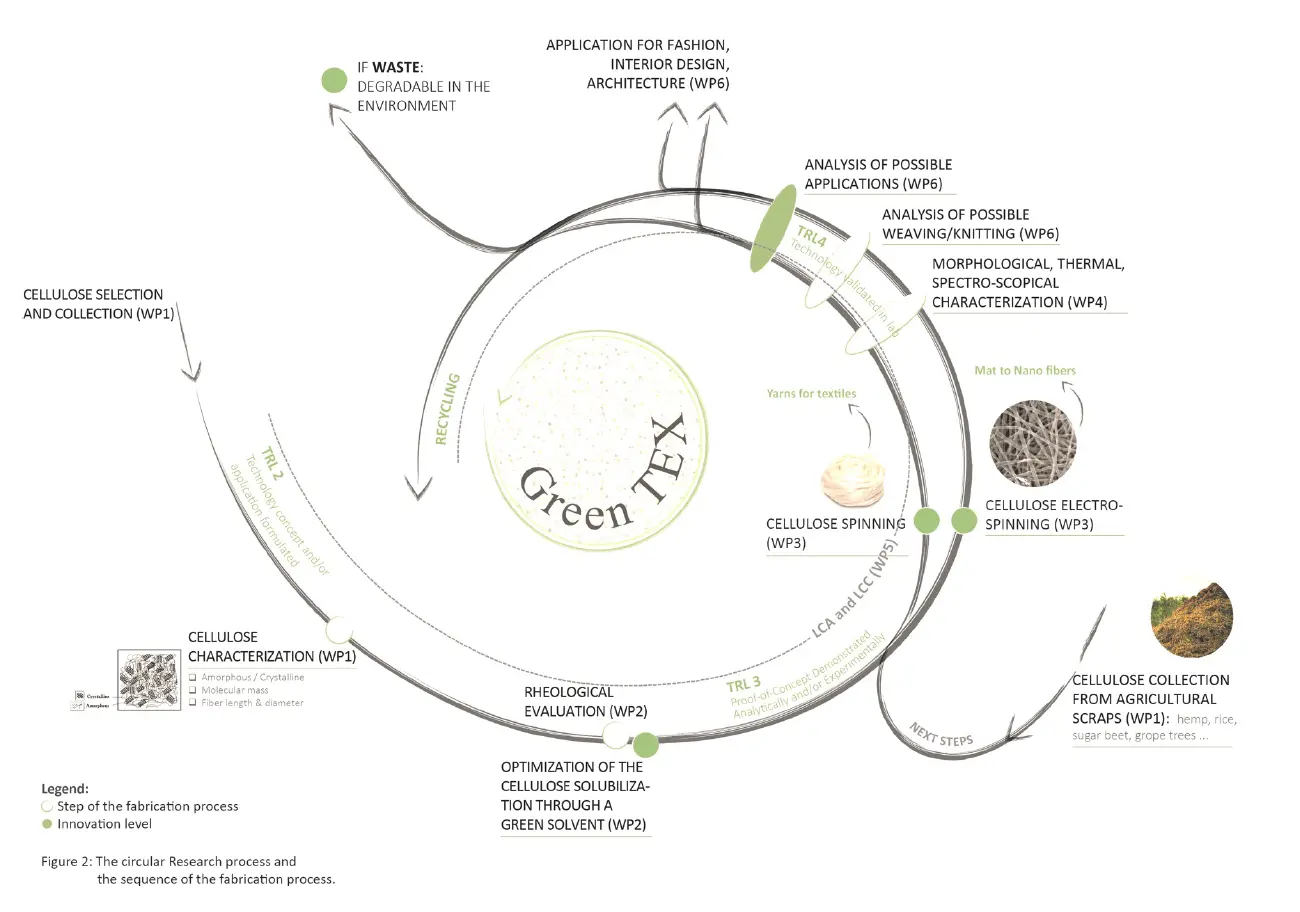
GREENTEX is a response to growing environmental concerns and new regulations on the eco-compatibility of products, which require a renewal of design and manufacturing approaches. Currently, bio-based materials are being developed from various natural sources and agricultural wastes, most containing a large amount of cellulose, which shows great potential as a substitute for common synthetic polymers.
The project will make the production process of cellulose-based fabrics more sustainable and greener by focusing mainly on spinning methods (electrospinning and wet spinning). GREENTEX focuses on the application of the innovative process to the exploitation of lignocellulosic biomass derived from Italian agricultural waste.
The project considers the effectiveness and versatility of these processes, studying the correlation between the structure of the material produced and the characteristics of the yarns/mats obtained, for which large-scale applications will be evaluated (clothing, architecture, design, possibly in the medical field and for filtration systems).
Research groups