COLTA’s contribution to social collective catering.
From food distribution to the construction of community welfare

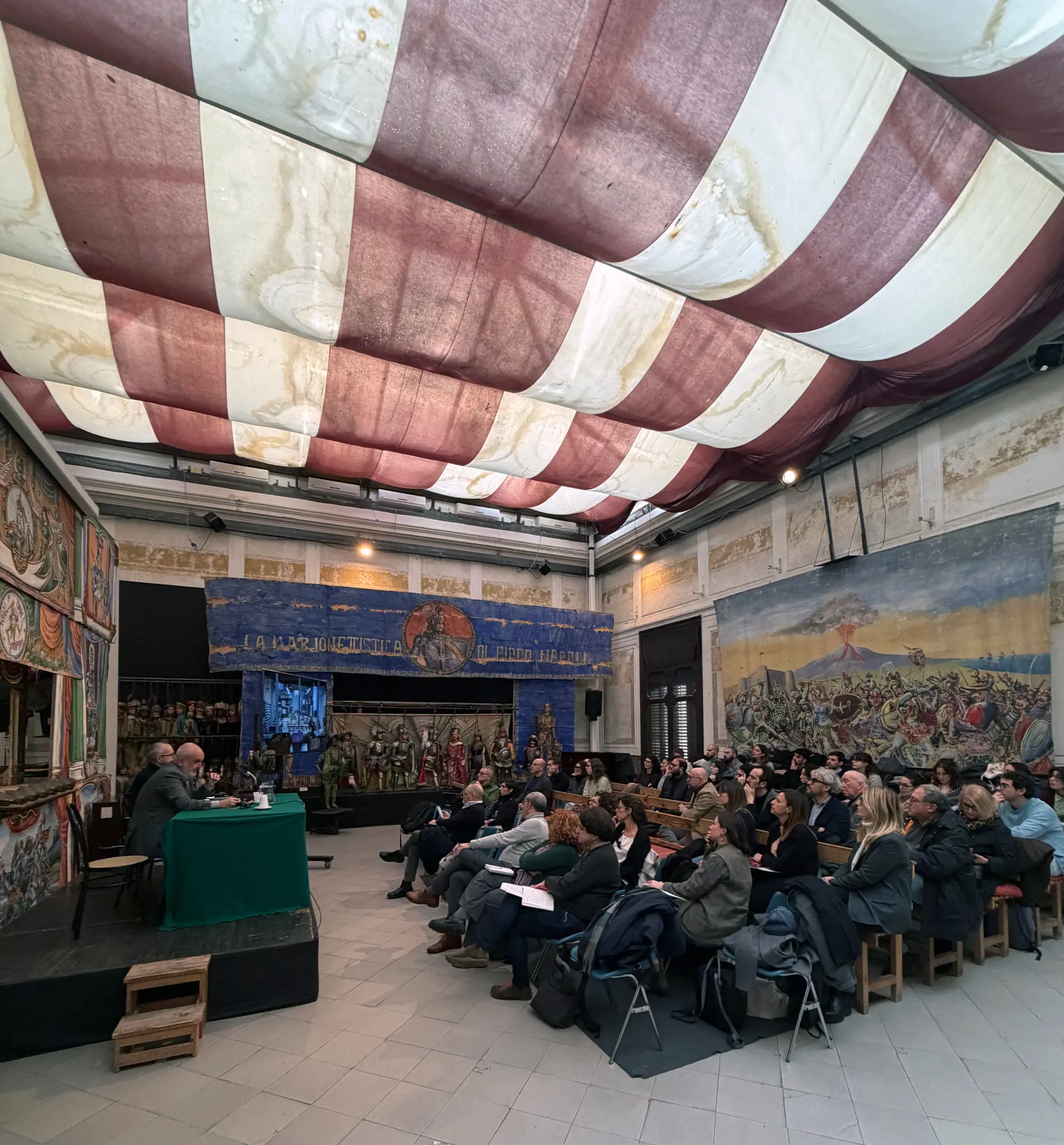
From January 22 to 24, 2026, the concluding event of COLTA – Collettivi a Tavola (PRIN – Funded by the European Union – Next Generation EU, Mission 4 Component 1) took place in Palermo as a moment of discussion and sharing of the results of the project of the same name, coordinated by the University of Palermo and developed in collaboration with the Department of Design of the Politecnico di Milano and the University of Gastronomic Sciences of Pollenzo.
Within the evocative setting of the Museo delle Marionette, the field research carried out in collaboration with Caritas Reggiana was presented. This research made it possible to explore the current mechanisms of social collective catering and to envision design-driven development scenarios in both the short and long term. A valuable experience that confirms the importance of interdisciplinary research and design action as tools for generating innovation and social impact.
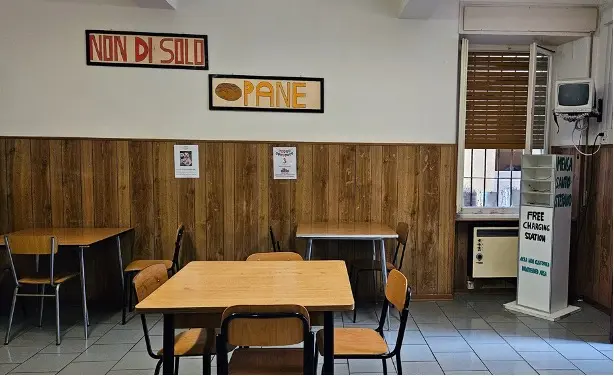
Collective catering as an enabler of relationships
In recent years, collective catering has returned to the center of public debate as a key infrastructure of contemporary welfare. Not only as a response to primary needs, but as a space where social policies, care practices, relationships, and territorial dynamics intersect. It is within this context that COLTA – Collettivi a Tavola is positioned: a research project that investigates collective catering in Italy from an interdisciplinary perspective, with a specific focus on social collective catering.
The contribution of the Research Unit SIR of the Department of Design at the Politecnico di Milano focused on analyzing social collective catering as a complex service system, adopting a Service Design approach to read and interpret practices, relationships and organizational configurations that are often invisible, yet crucial to the quality of the experience and the production of social value.

Eating together is never a neutral act. It is a deeply social practice that builds belonging, defines roles, and makes boundaries of inclusion and exclusion visible. Canteens, in this sense, are not merely places for food distribution, but social devices that structure relationships, care practices, and forms of recognition. The COLTA project is situated within this framework, proposing an observation of social collective catering as an urban welfare infrastructure capable of generating value far beyond the distribution of meals, and of activating processes of social innovation rooted in local territories.
Service Design as an interpretative and transformative lens
The Department of Design Research Unit adopted a critical and transformative Service Design approach, understood not simply as a set of analytical tools, but as an interpretative lens capable of making the complexity of welfare services legible, understanding current mechanisms, and imagining transformative scenarios from the short to the long term.
The service is interpreted as a socio-technical ecosystem composed of actors, processes, relationships, material and immaterial infrastructures, formal rules, and informal practices. From this perspective, value is not produced by a single actor, but emerges from co-production among organizations, volunteers, institutions, and hosted communities.

The design analysis was developed across three interconnected levels that characterize the catering system:
- a macro level, related to relationships with the territory and public policies;
- a meso level, linked to the organization and management of the service;
- a micro level, focused on the everyday experiences of diners and volunteers.
Adopting this perspective made it possible to understand the complex relationships between the different levels and to identify potential areas of innovation that concern not only the dimension of individual experience, but also physical and digital infrastructures, organizational arrangements, and strategic vision.
The case study of the Mense Diffuse in Reggio Emilia
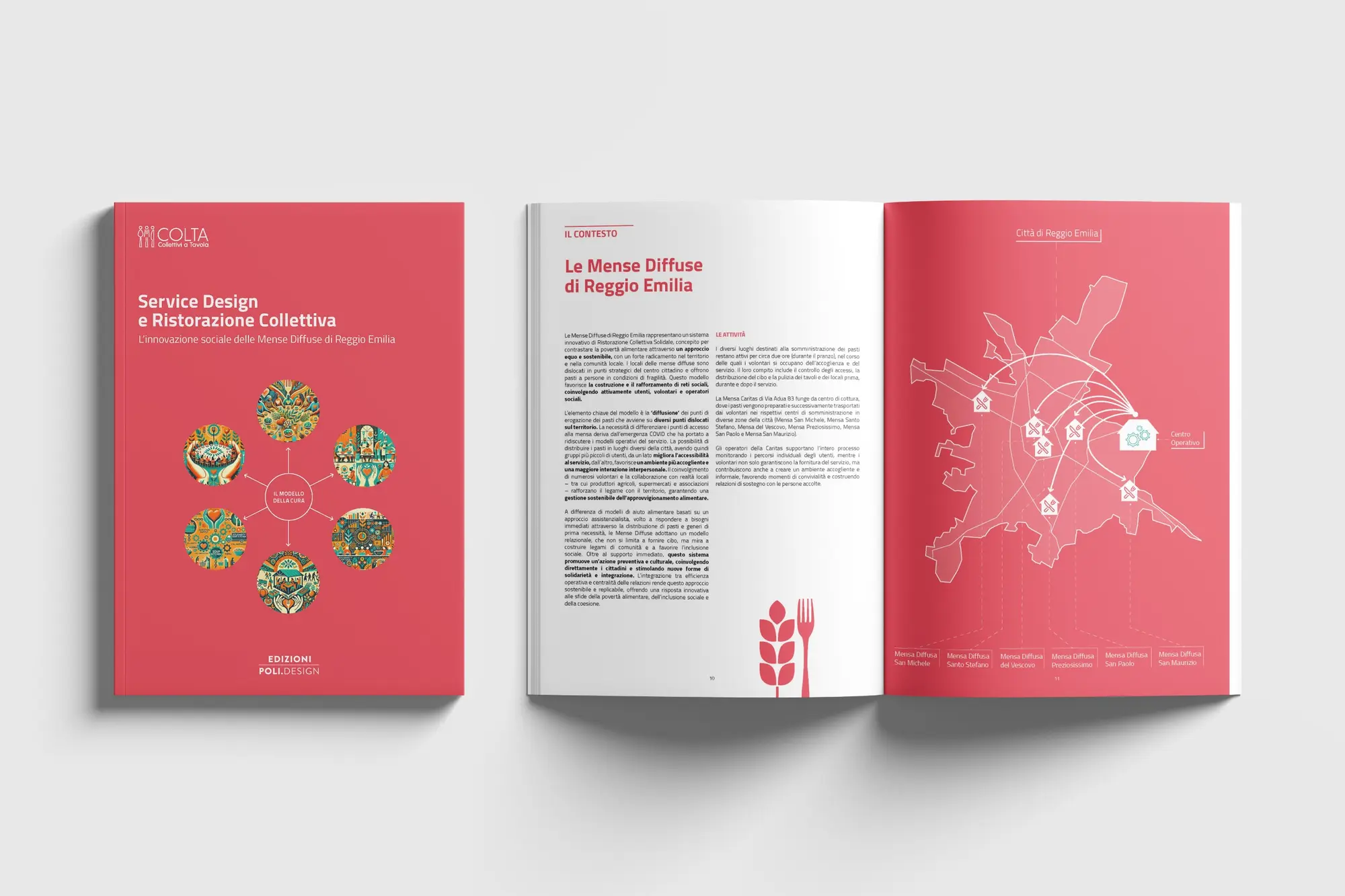
At the heart of the research lies the case study of the Mense Diffuse in Reggio Emilia, a model developed by the Caritas Diocesana starting in 2020 in response to the critical issues that emerged during the pandemic. Moving beyond the paradigm of the centralized canteen, the service is structured as a network of distribution points spread across the urban fabric, hosted in parish and community spaces.
This model made it possible not only to improve accessibility and safety, but above all to transform the canteen into a network of proximity, capable of strengthening relationships among volunteers, diners, and the local territory. Decentralization fostered more intimate and meaningful interactions, increasing the quality of the experience and the sense of belonging. The Mense Diffuse thus take shape as a relational infrastructure, in which the meal becomes a social enabler and the service a space of community care.
Action research and field immersion
From a methodological standpoint, the research adopted an action research approach. Researchers actively participated in the service, taking on operational roles – including as volunteers – and engaging in the daily life of the canteens. This positioning made it possible to capture dimensions that are difficult to access through quantitative approaches: informal practices, implicit rules, emotional dynamics, and micro-interactions that constitute the backbone of the service.
The research was articulated in three main phases:
- an initial phase of theoretical analysis and case study analysis of collective catering at national and international levels;
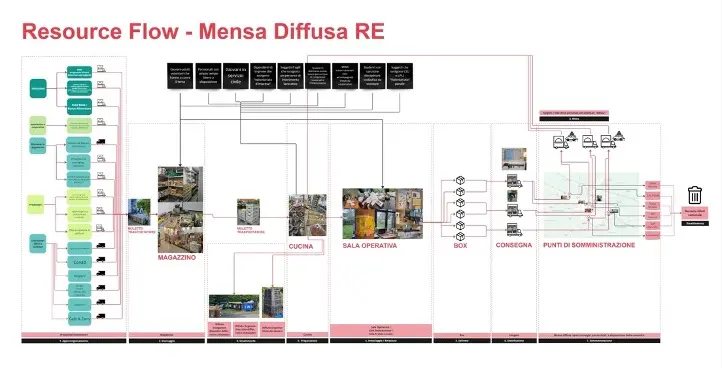
- a phase of participant observation in the field and systemic mapping of the service in its current configuration (As Is service), using typical Service Design tools such as offering maps, system maps, stakeholder maps, and customer journeys;
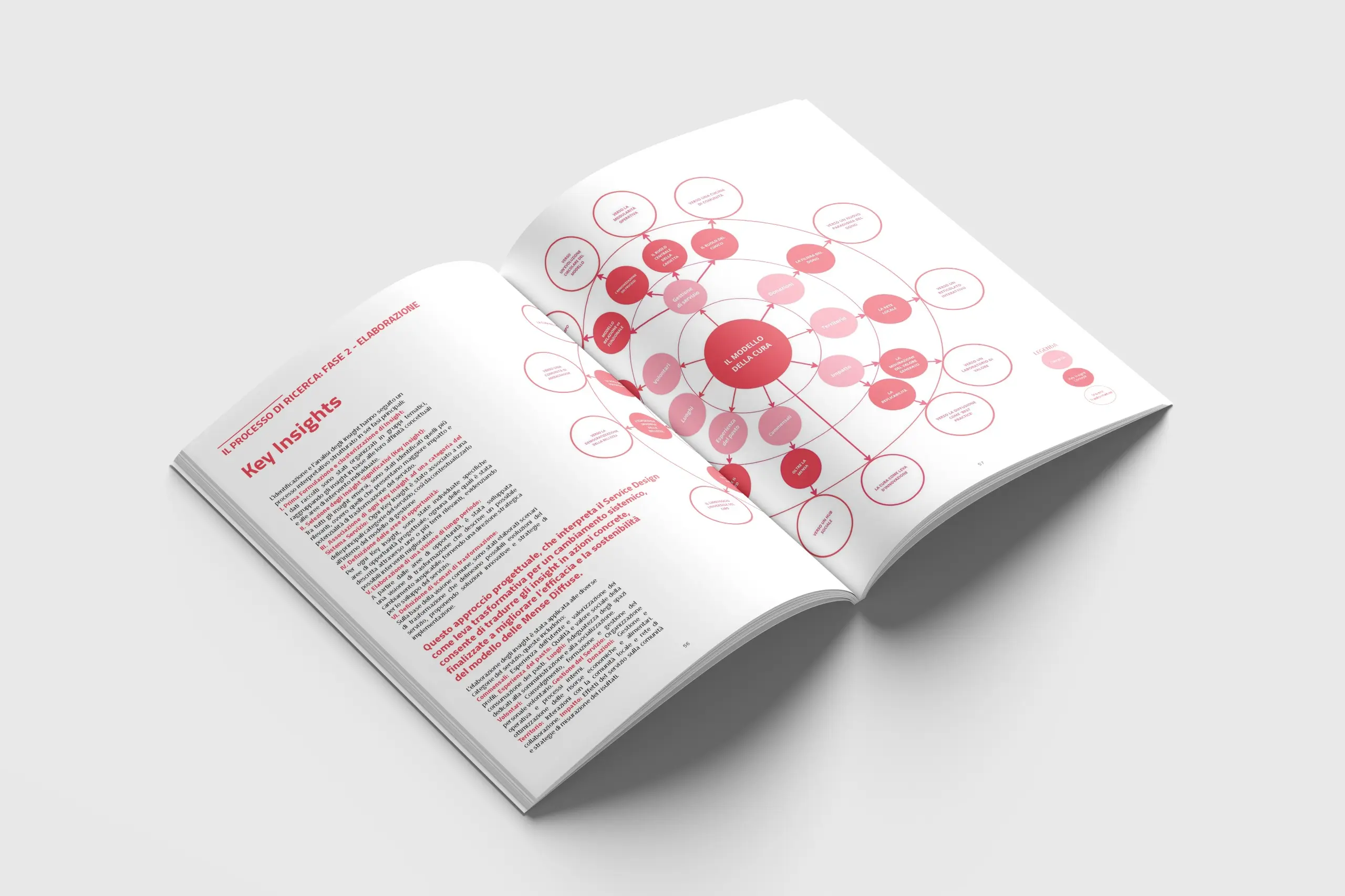
- a phase of interpretation of the results, in which key insights were developed from the knowledge acquired in the field and from comparison with similar experiences;
- a design phase in which a transformation model was developed, identifying project areas, long-term scenarios, and concrete actions to be implemented in the short term, using available resources.

Beyond the meal: toward scenarios for a long-term transition
From the synthesis of the maps and data collected, several design areas emerged around which to co-design targeted actions. These areas address different aspects of the collective catering service and aim to overcome an assistential logic by considering guests (diners) not as passive recipients, but as actors within an active community, bearers of skills and resources to be shared. Another crucial area concerns the role of volunteers, who act as true relational and cultural mediators of the service. Their work ensures continuity, quality, and the transmission of values, making the model resilient, but also vulnerable if not adequately supported. Other elements of transformation include, for example, the capacity to harmonize internal service processes and relationships with the territory, issues related to the criticalities surrounding the donation supply chain, the meal experience as a holistic dimension, care for spaces as a factor of dignity, the territorial network as an actor within the service, and the measurement of social impact as a design lever.
Building on these learnings, design scenarios were outlined that envision possible transitions of the service model toward greater awareness, replicability, and sustainability, without undermining its relational dimension.
The work carried out within COLTA thus shows how social collective catering can be understood not as a set of charitable practices, but as an advanced laboratory of social innovation, creating the conditions to structure services with low material infrastructural intensity but high relational intensity.
In this sense, COLTA offers a vision of food welfare that places relationships and care at its center, granting Service Design a key role in interpreting, making visible, and accompanying processes of social transformation rooted in local territories.