Designing Democratic Transitions. Milan Symposium at Politecnico di Milano

An initiative within the CoDesign4Transitions project.

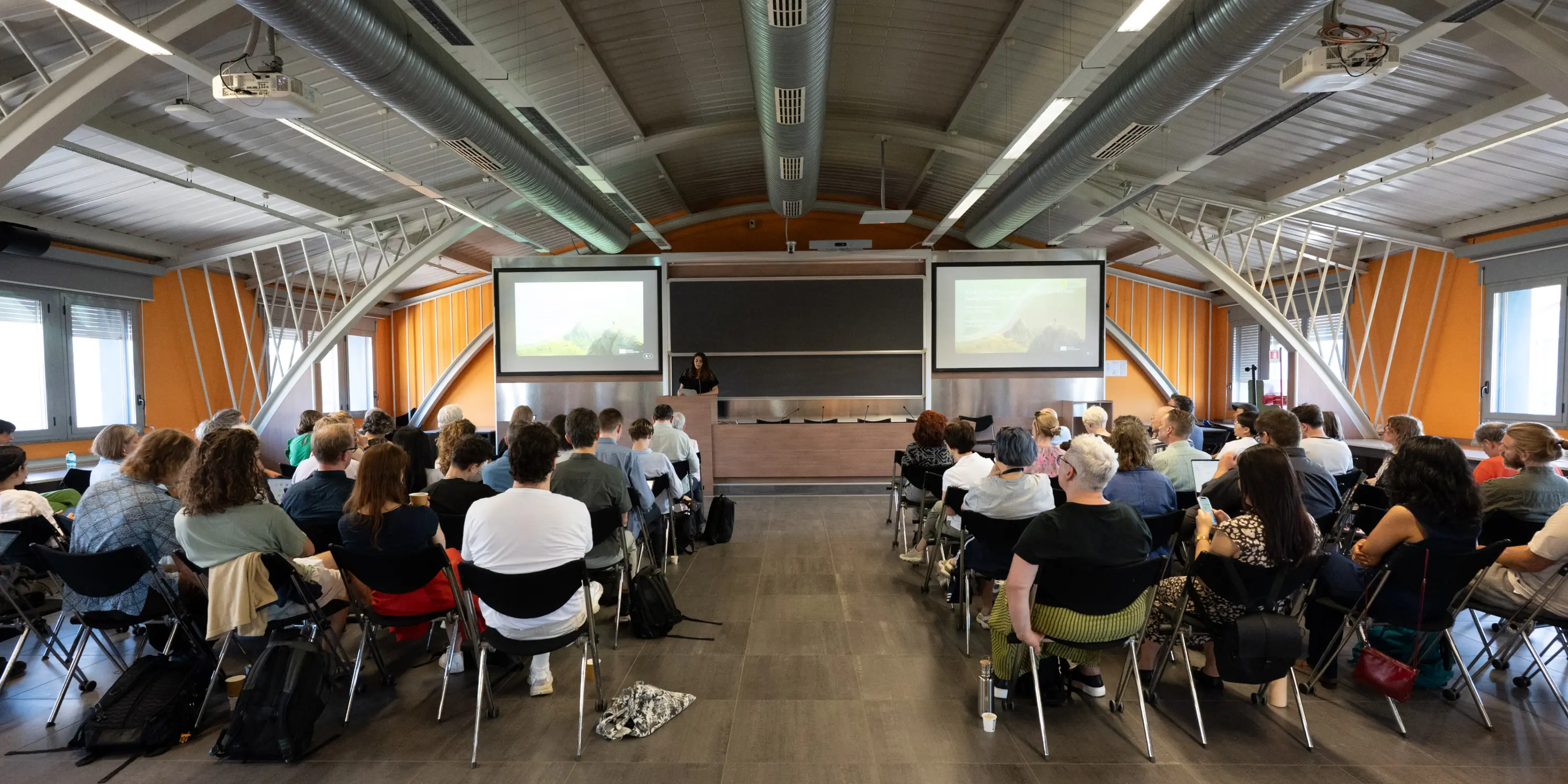
The Department of Design at Politecnico di Milano hosted the Milan Symposium, an international initiative organised within the framework of the European project CoDesign4Transitions, bringing together more than sixty researchers, doctoral candidates, designers, practitioners, representatives of public institutions and civil society organisations from across Europe.

Coordinated by Marzia Mortati, Associate Professor at the Department of Design, Politecnico di Milano, and Lucy Kimbell, Professor of Contemporary Design Practices at Central Saint Martins, University of the Arts London, the symposium was much more than a scientific dissemination event. It provided a space to reflect on one of the most pressing challenges of our time: how to address the ecological transition in ways that are democratic, inclusive and socially legitimate.

Through keynote lectures, panel discussions and sessions dedicated to ongoing research, the initiative explored the contribution of design to sustainable transition processes, addressing themes such as democratic innovation, governance, public participation, experimentation and systems change.
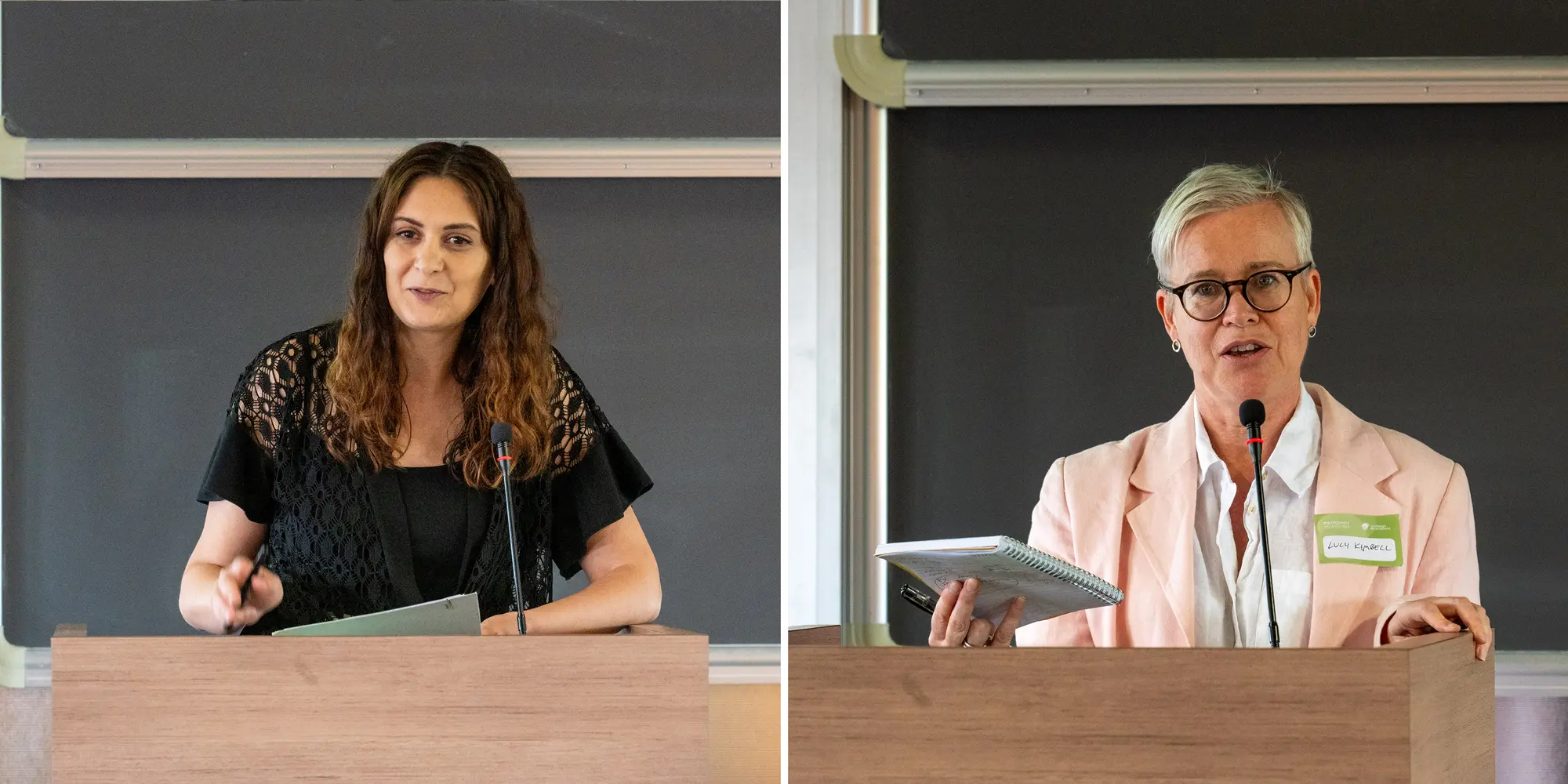
Co-Chairs Marzia Mortati and Lucy Kimbell.

Particular attention was devoted to the work of the thirteen Doctoral Candidates within the CoDesign4Transitions network, who presented the progress of their research on prototyping, visualisation, materialisation, and organisational and social transformation practices related to climate transitions. The symposium created a space for dialogue between research and practice, encouraging reflection not only on the potential of design to support sustainable transformations, but also on its limitations, tensions and political implications when operating in contexts characterized by competing interests, unequal distributions of power and conditions of deep uncertainty.

In this sense, the initiative highlighted the increasingly central role of design as a discipline capable of accompanying and guiding complex transformation processes involving institutions, organisations and territories.

Keynote "From Democratic Innovation to Sustainable Transitions: Where Does Design Sit Today?". Speakers: Idil Gaziulusoy, Mikołaj Cześnik and Maurizio Teli.

From sustainability as a goal to transition as a process

Over the past decade, the debate on sustainability has progressively shifted from defining objectives to designing the conditions required to achieve them. The challenge is no longer simply to imagine desirable futures, but to understand how to build pathways for change capable of engaging diverse actors, conflicting interests and complex systems.

It is within this context that CoDesign4Transitions operates. Funded through the Marie Skłodowska-Curie Actions programme under Horizon Europe and coordinated by Politecnico di Milano, the doctoral network brings together universities, public organisations, businesses and civil society actors across seven European countries. Its objective is to train a new generation of researchers capable of working at the intersection of co-design, democratic innovation, service and systems design, sustainability and climate transitions.

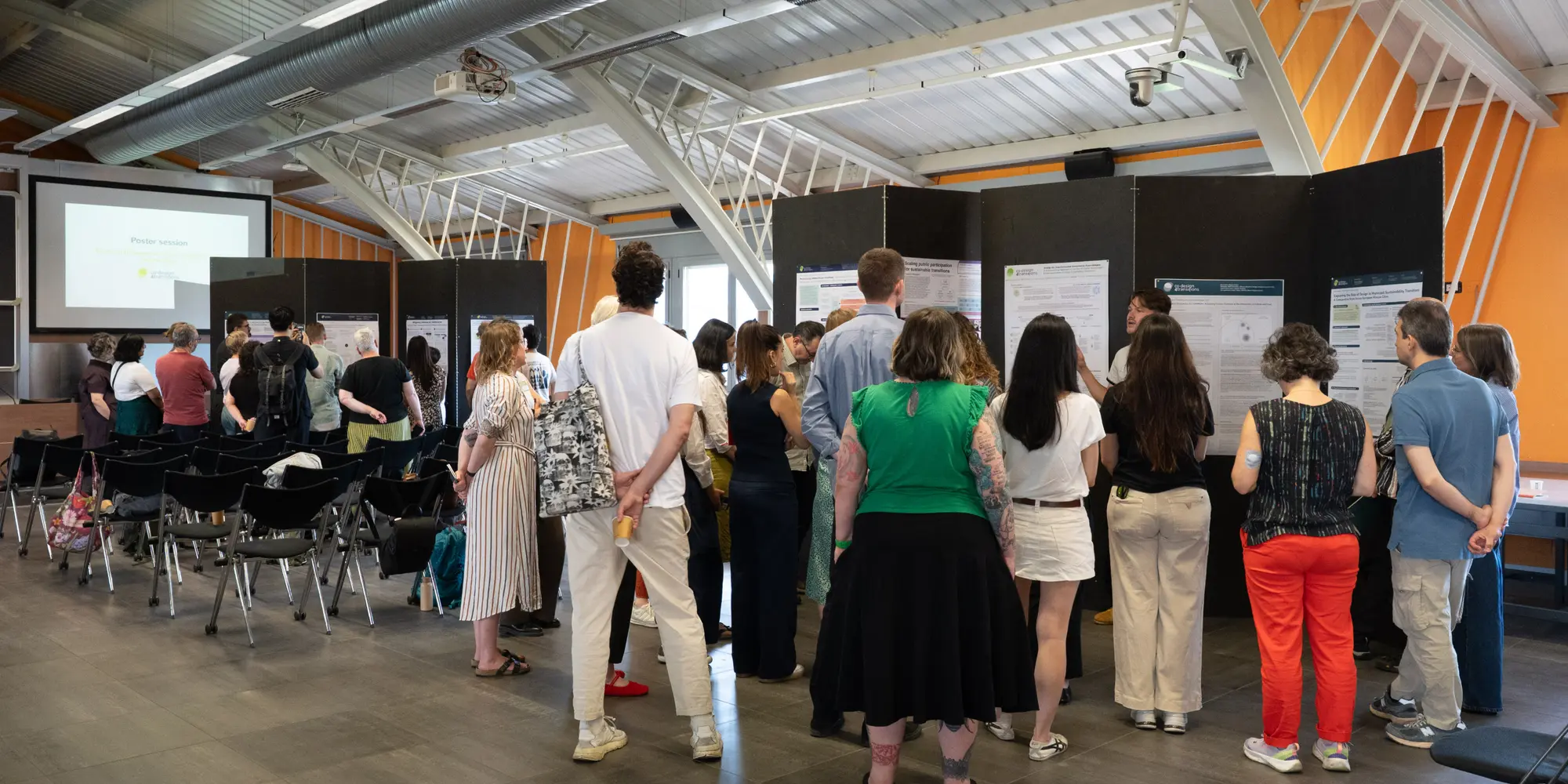
Poster session "Doctoral Research as a Site of Inquiry and Intervention".

Design as a political practice

One of the most prominent themes emerging from the symposium was the need to move beyond the idea of design as a neutral problem-solving activity. Climate transitions involve collective decisions, the distribution of resources, conflicts of interest and competing visions of the future. In this context, design cannot be limited to facilitating innovation processes; it must engage with issues of power, representation, inclusion and legitimacy.

The symposium proposed an understanding of design as a situated and political practice, capable of creating the conditions for diverse actors to participate in the construction of shared futures. Rather than seeking consensus, design was presented as a set of tools and practices for navigating complexity, disagreement and uncertainty. This perspective challenges simplified narratives of innovation and recognises conflict as an inevitable component of transformative processes.

Prototyping, visualising, transforming

The very structure of CoDesign4Transitions reflects this understanding of design. The network’s thirteen doctoral research projects are organised around three broad areas of inquiry, each representing a distinctive capacity of the discipline.

The first focuses on prototyping as a tool for democratic participation in climate transitions. In this perspective, prototypes are not merely devices for testing solutions; they become spaces through which citizens, institutions and organisations can explore possible futures, discuss alternatives and make tangible issues that are often abstract.

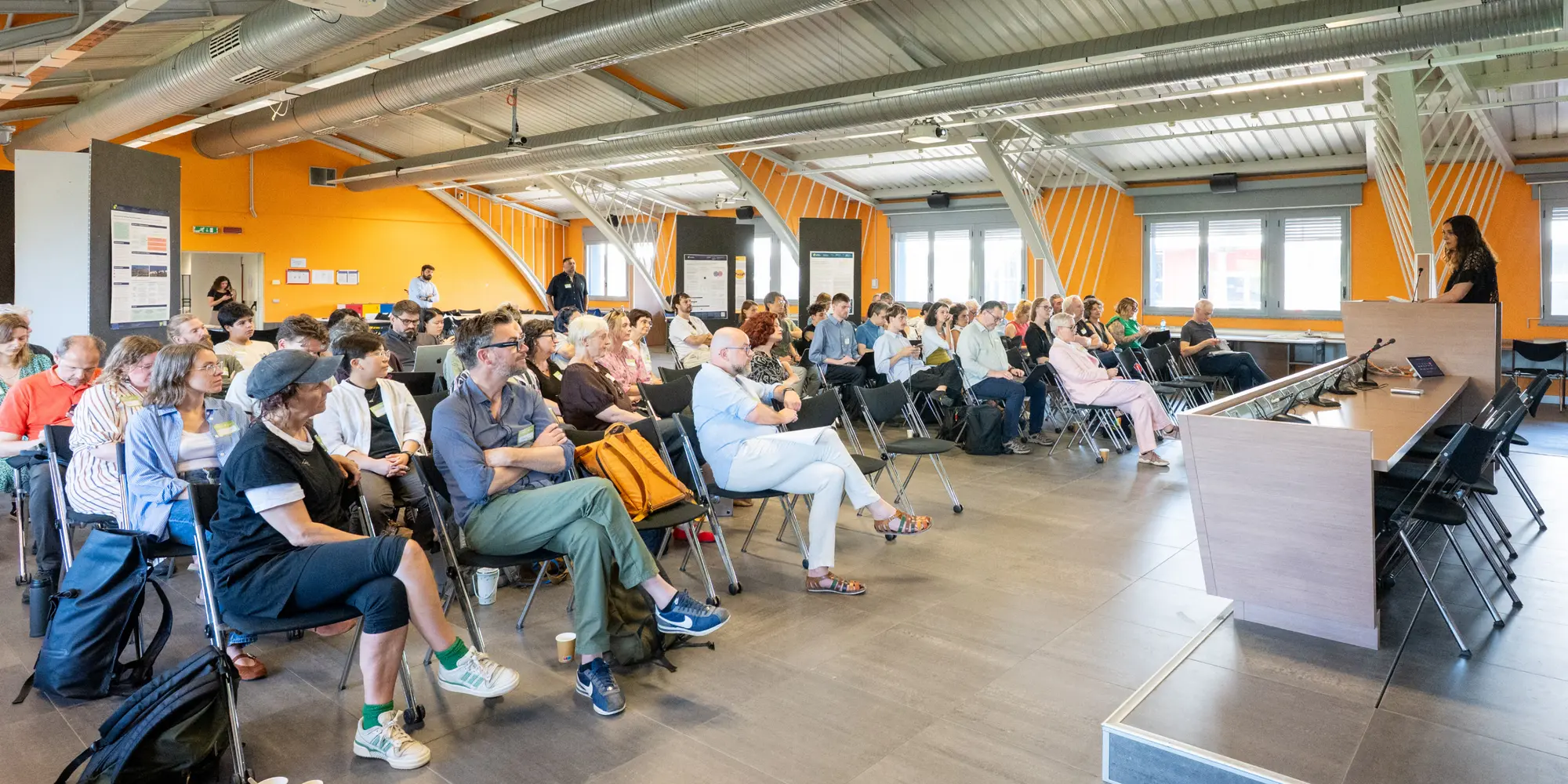
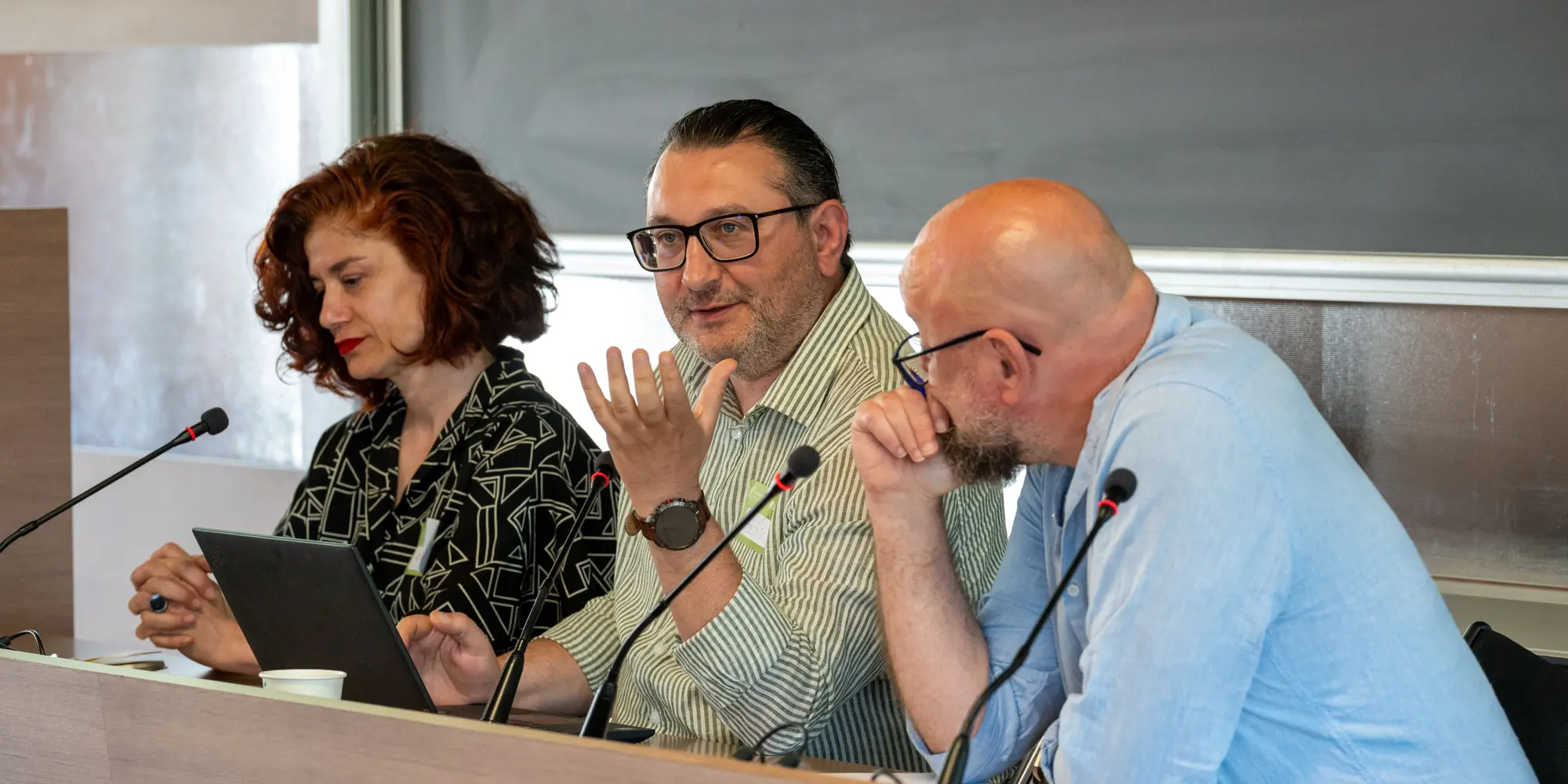
Panel session.

The second area investigates visualisation and materialisation practices. Faced with the growing complexity of climate-related challenges, design offers capabilities for translating information, evidence and dilemmas into forms that are understandable and shareable, supporting collective sensemaking and public deliberation.

The third area explores the contribution of design to organisational and systemic change. Attention is directed towards the practices through which public administrations, businesses and civil society organisations can adopt new models of governance, experimentation and participation to address ecological transitions.

Across all three areas, design emerges not as a producer of finished solutions, but as an infrastructure for collective learning and transformation.

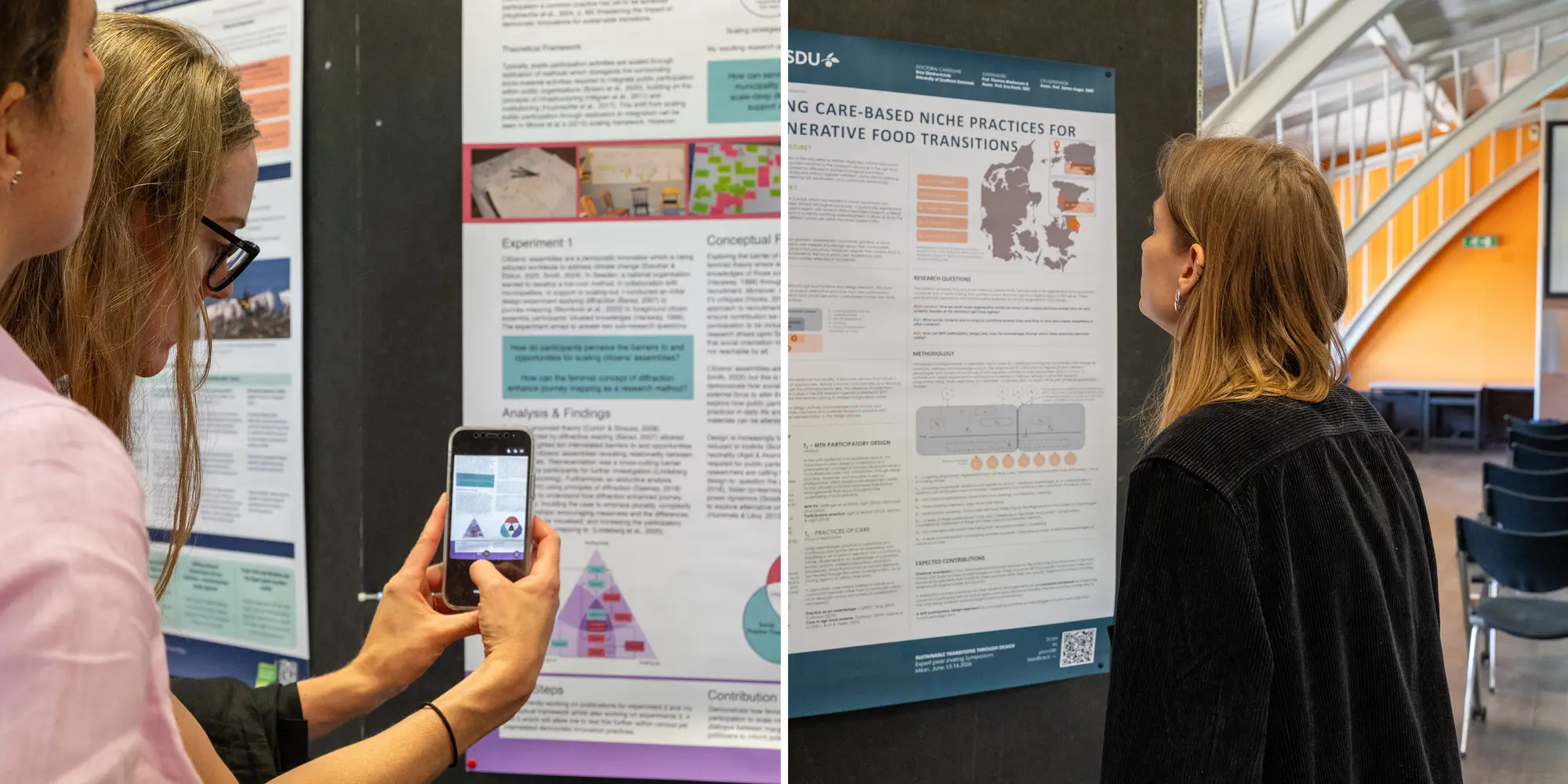
Doctoral candidates' work exhibition.

Infrastructures for change

Within contemporary transition debates, change is no longer understood as the result of isolated interventions or innovations. Instead, it is increasingly seen as the outcome of networks of actors, institutions, practices and tools that make collective action possible over time.

From this perspective, design contributes to the construction of material, organisational and cognitive infrastructures capable of supporting long-term transformation processes. Experimentation labs, participation platforms, visualisation tools, collaborative practices and new forms of governance become essential elements in enabling transitions towards more sustainable models.

The key question is no longer simply what to design, but which conditions should be designed to allow change to emerge, consolidate and spread.

Educating designers for transitions

The symposium also provided an opportunity to engage with the work of the thirteen Doctoral Candidates within the CoDesign4Transitions network, who come from different disciplinary and cultural backgrounds but share a common commitment to exploring the contribution of design to social and ecological transformation.

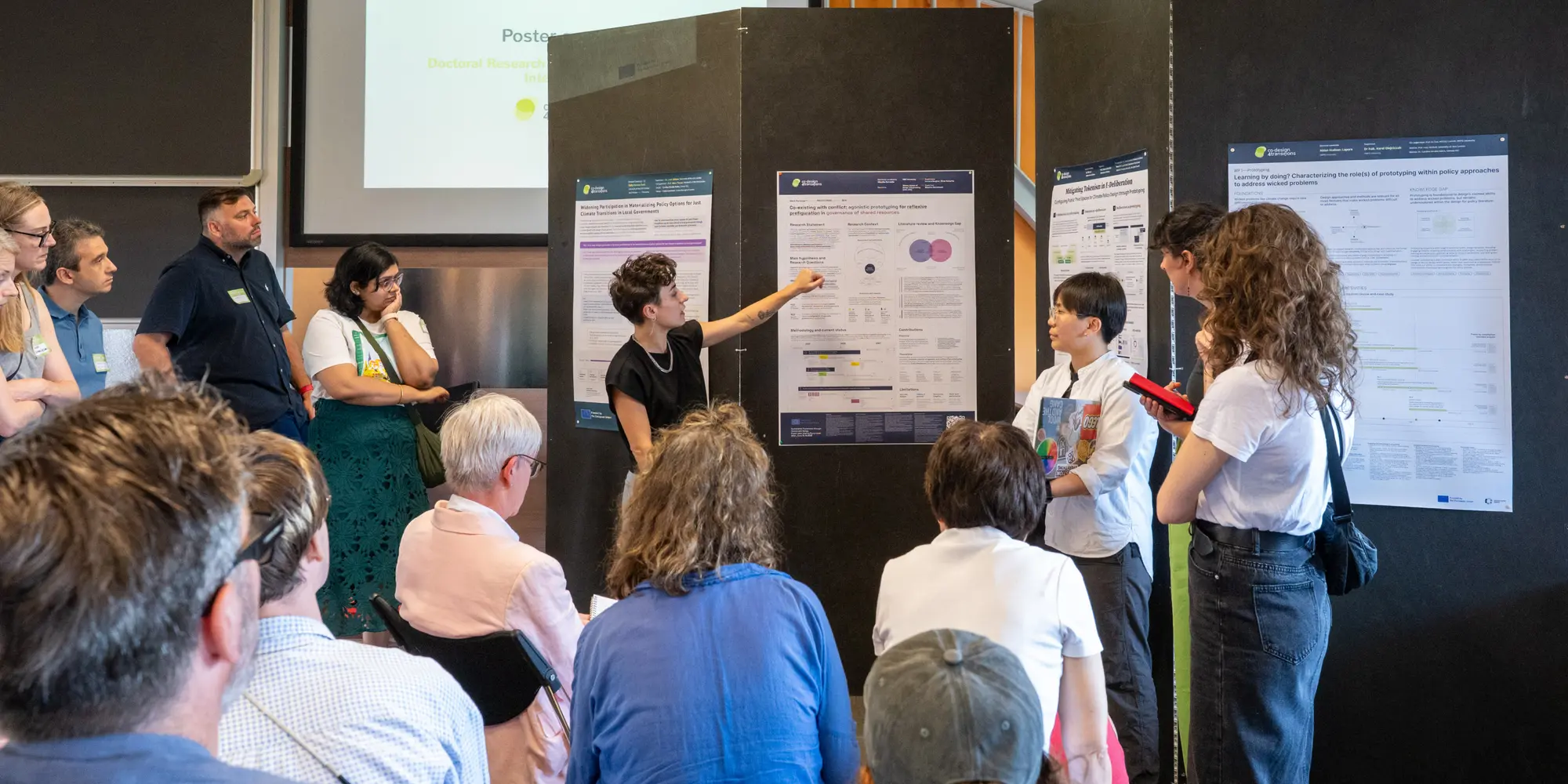
Doctoral candidates within the CoD4T network present work-in-progress.

The international and transdisciplinary nature of the project reflects broader changes taking place within design research. Contemporary challenges require capabilities that cross disciplinary boundaries and engage with political science, transition studies, public governance and social innovation.

The CoDesign4Transitions programme is a research initiative that also serves as a laboratory for developing new educational models and envisioning the future of design.

Towards a Democratic Culture of Transition

The discussions that emerged during the Milan Symposium converged around a shared awareness: sustainable transitions cannot be achieved solely through more efficient technologies or more advanced policies. They require processes capable of fostering participation, generating trust, making alternatives visible and creating spaces for dialogue among diverse perspectives.

In this scenario, design increasingly moves away from being understood as a discipline focused on solving problems and towards being recognised as a practice that enables democratic processes of transformation.

This perspective expands the scope of the project while reaffirming its strategic relevance in addressing the major challenges of our time. Today, designing for sustainability means designing the conditions through which societies can imagine and collectively build their own pathways of change.

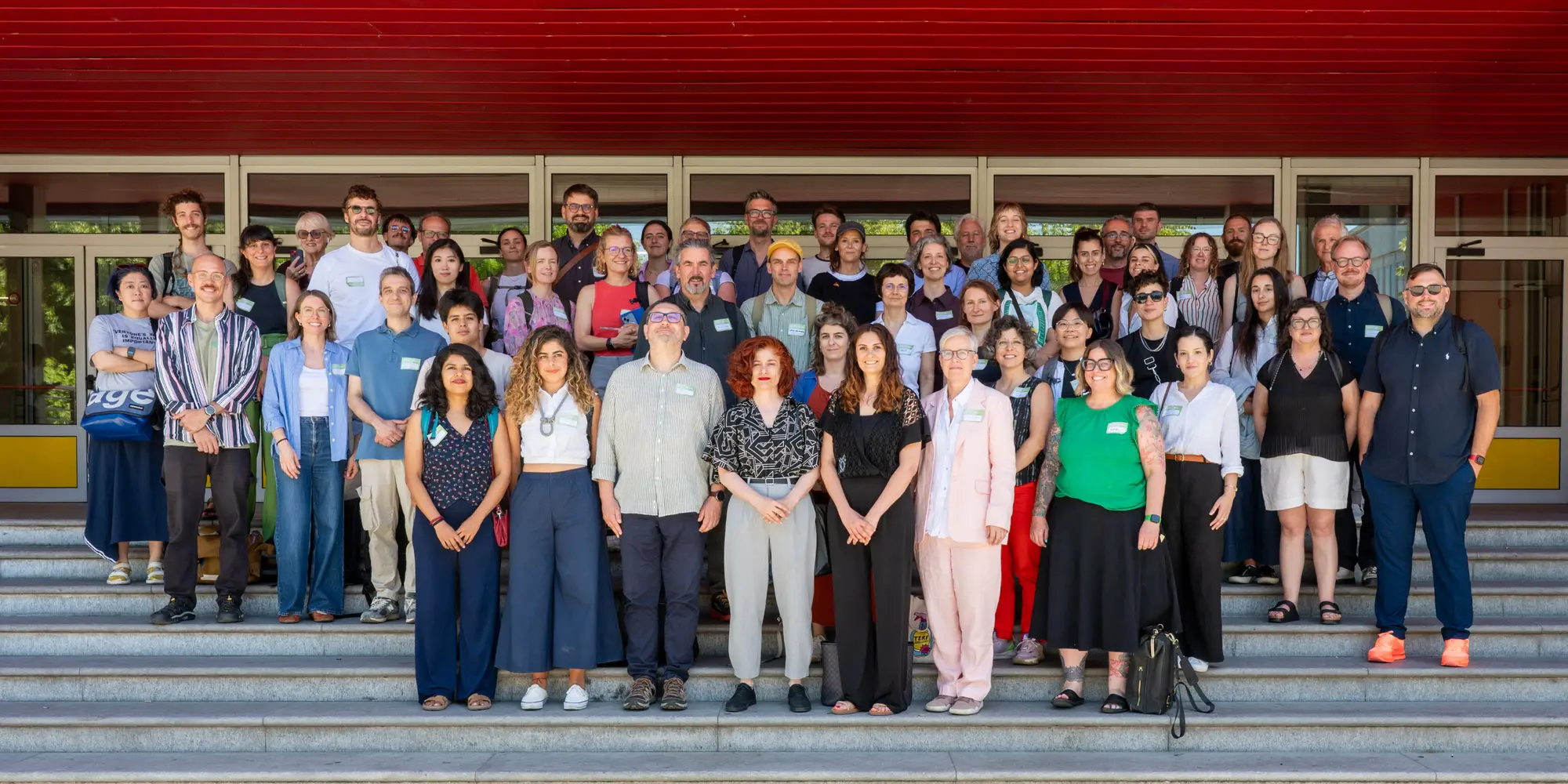
Group photo

Photo credits: Image Lab.

Share on: