
For several days, the Department of Design became a place where the future was not discussed as something to be predicted, but as a dimension to be critically explored. This is the deeper significance of Anticipation 2026, the sixth edition of the conference series launched in Trento in 2015 by philosopher Roberto Poli and now recognized as one of the leading international events in the field of anticipation studies. Under the leadership of Conference Chair Manuela Celi, the conference's arrival in Milan, following previous editions in Trento, London, Oslo, Tempe, and Lancaster, represents far more than a change of venue. It marks the positioning of design at the center of an interdisciplinary reflection on how we imagine, construct, and orient the future.
Designing the unknown. Design as a practice of anticipation
Anticipation Conference 2026
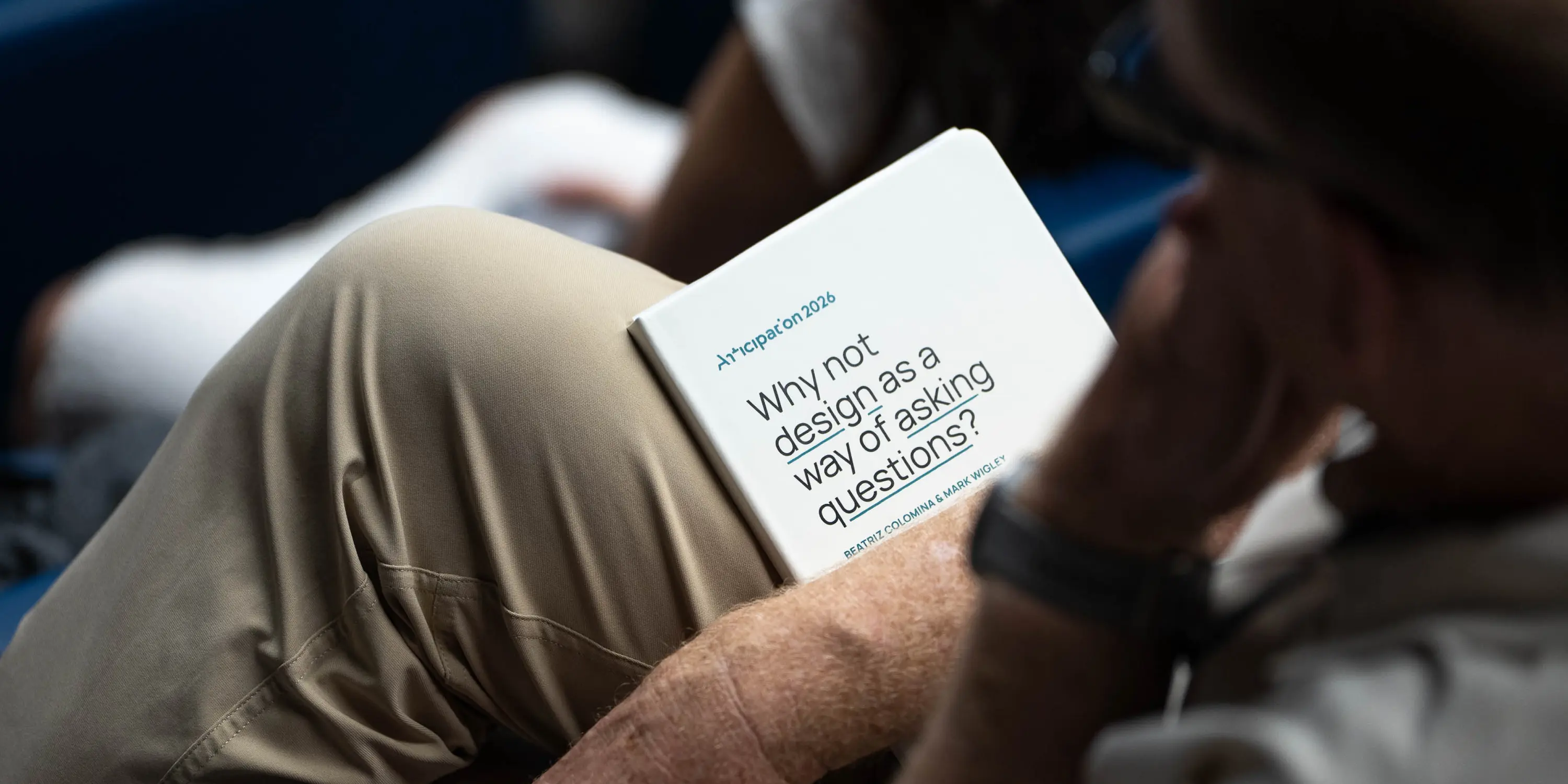
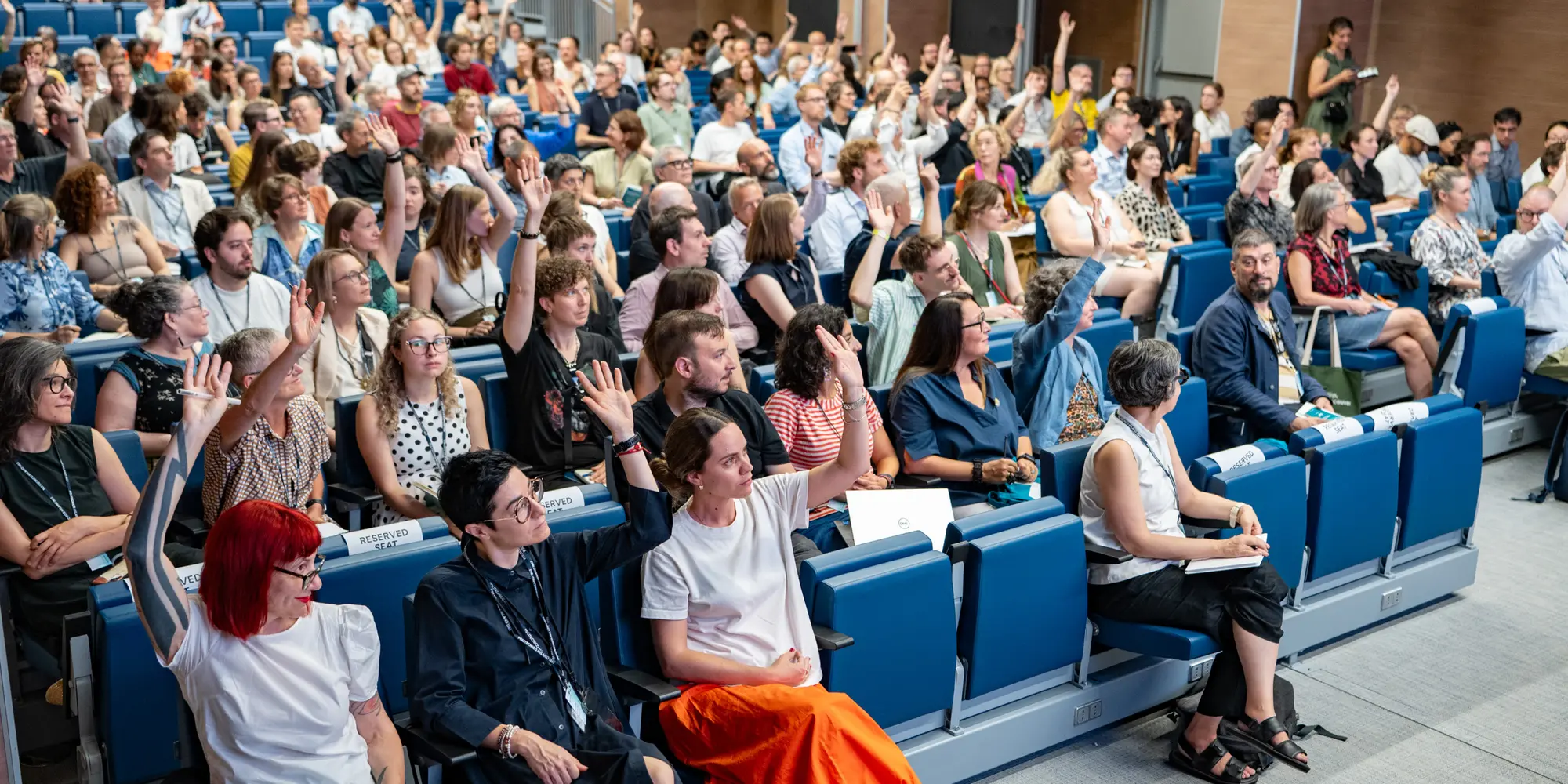
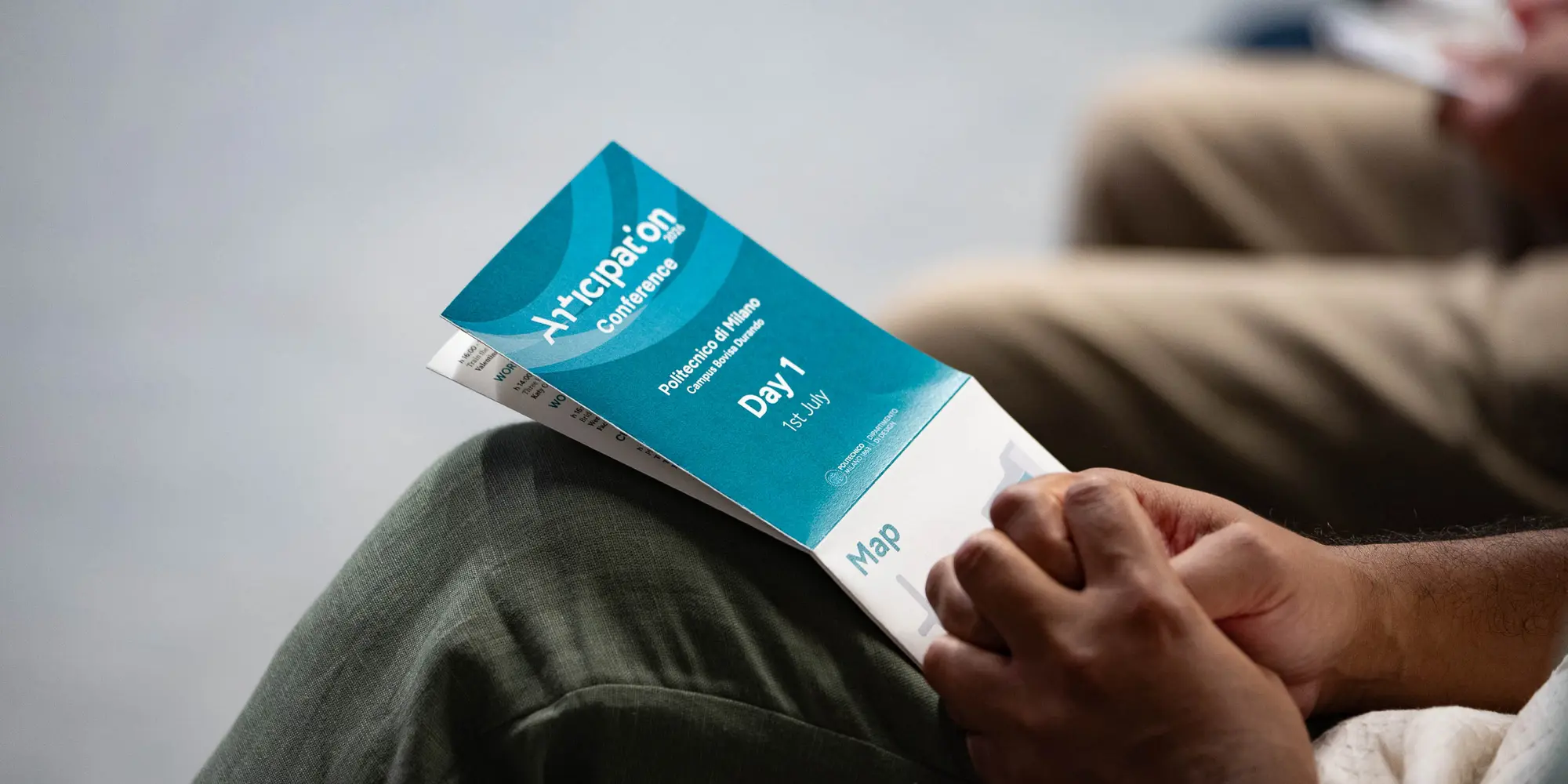
From 1 to 3 July 2026, the Department of Design at Politecnico di Milano hosted the sixth edition of the Anticipation Conference. Bringing together more than 300 participants from 35 countries, 161 scientific papers, workshops, curated sessions, and experiential formats, the conference transformed the Bovisa Campus into an international laboratory devoted to one of the most pressing questions of our time: how do we design when the future is no longer predictable, but radically open?
Anticipation 2026 defines itself as an interdisciplinary conference dedicated to rethinking the role of ideas about the future under conditions of uncertainty, indeterminacy, and unknowing.
Through dialogue across research, design, philosophy, institutions, and professional practice, the conference created an interdisciplinary space for examining how possible futures emerge through the interplay of imaginaries, material practices, aesthetic dimensions, ethical concerns, and forms of knowledge. From the politics of speculation to situated knowledges of anticipation, design is presented not as an applied discipline but as a transdisciplinary practice capable of engaging with what remains unresolved, not yet emerged, or difficult to represent.
The conference theme, Staying with the Unknown: Paradox, Uncertainty, and the Praxis of Hope, clearly outlines this year's direction. Rather than reducing uncertainty or developing increasingly sophisticated tools to control the future, the conference invites us to recognise paradox as the ordinary condition of the present, uncertainty as the very ground of anticipation, and hope as a rigorous, shared, and deeply political design practice.
Its underlying premise is that the contemporary world can no longer be understood through binary oppositions such as global and local, present and future, human and non-human, or individual and system. Such categories often simplify realities that are fundamentally interconnected. In a present marked by climate crises, technological transformations, geopolitical instability, and deep social inequalities, paradox is not an anomaly but the atmosphere within which design practices unfold. Staying with the unknown therefore means learning to inhabit complexity without seeking to dissolve it.
Within this perspective, uncertainty itself takes on a radically different meaning. It is no longer an obstacle to overcome through prediction, but the very condition that makes anticipation possible. Rather than filling every gap through predictive models, Anticipation proposes dwelling within spaces of openness, embracing provisionality, friction, ambiguity, and even what has not yet found language. Anticipation thus shifts from a technical exercise to an ethical, cultural, and aesthetic engagement with the “not-yet”.
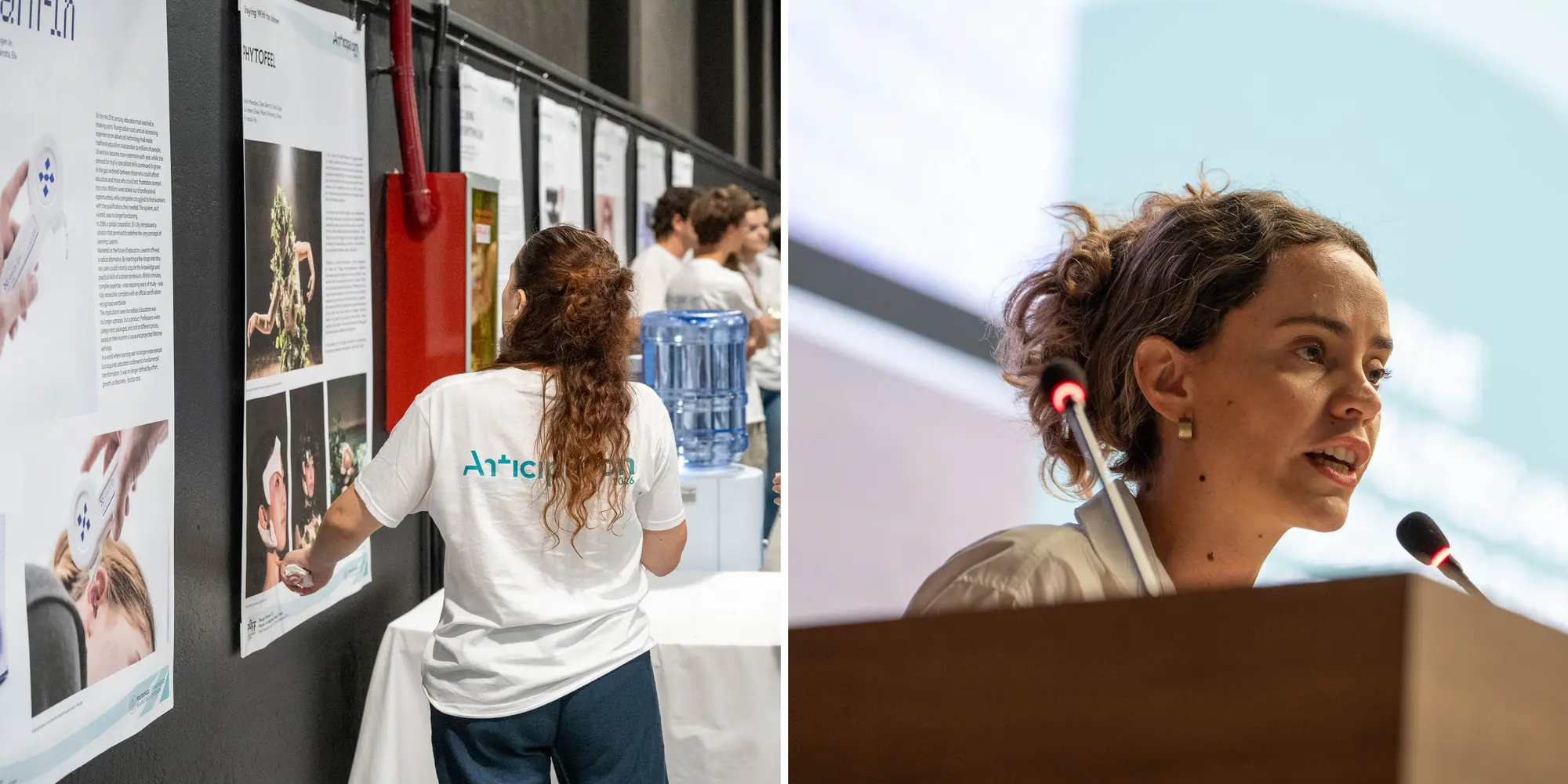
This is where design assumes a strategic role. The conference places design at the center because it provides particularly effective tools for working with what has not yet been defined. Scenarios, prototypes, speculative narratives, visualisations, participatory practices, and material experiments do more than represent possible futures; they make them discussable, shareable, and open to transformation. Design thus becomes a mode of inquiry that makes uncertainty tangible without prematurely resolving it.
The conference programme reflected this approach. More than 300 participants from 35 countries contributed to three days of discussions featuring 161 papers, eight curated sessions, eighteen workshops, roundtables, exhibitions, experiential formats, and more than thirty projects developed during the PhD Summer School held earlier that week. Together, these activities embodied a vision of research that recognises dialogue across disciplines, languages, and practices as a fundamental component of knowledge production.
The conference was organised around seven thematic tracks: plural temporalities, futures literacy, governance and justice, embodied anticipation, design as world-making, practices of care, and planetary ecologies. Together, they outline a field of inquiry that reflects some of the most significant transformations in contemporary design. What emerges is a conception of design that expands beyond artefacts and services to encompass the social, cultural, institutional, and ecological conditions through which future possibilities take shape.
The keynote sessions further deepened this reflection. Betti Marenko challenged the predictive regimes that increasingly shape the present, arguing for the value of uncertainty as a space of possibility. Fabio Scarano connected futures literacy, ecological thinking, and learning from more-than-human forms of intelligence, proposing an understanding of anticipation grounded in regeneration. Ivana Milojević called for a genuine temporal literacy capable of freeing our understanding of the future from linearity and the logic of prediction.
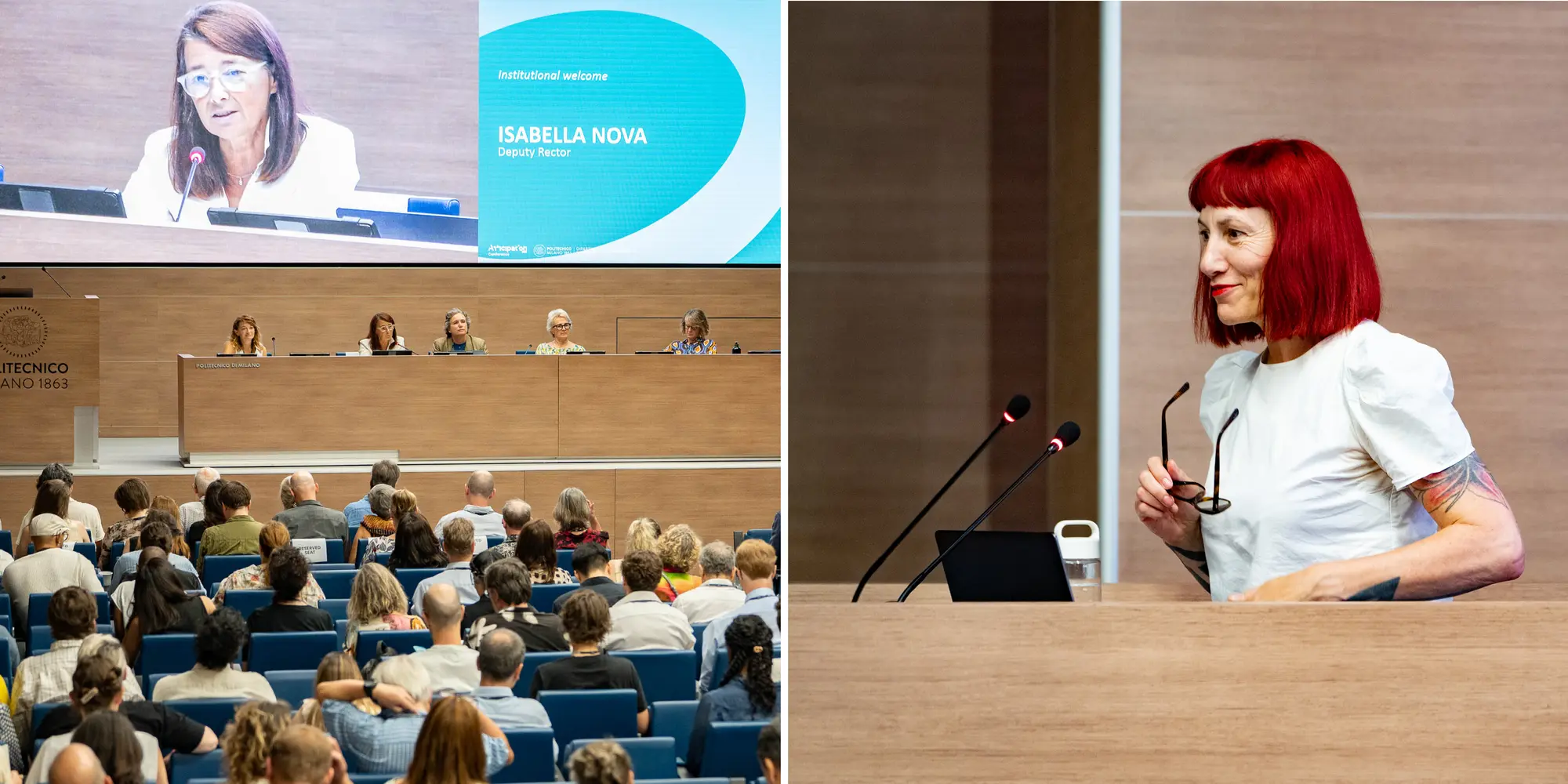
Among the conference's most compelling themes was hope. Not hope as naïve optimism, but what Tomás Maldonado described as projectual hope: the capacity of design to recognise possibilities for action even within conditions of uncertainty. Drawing on the work of Ernst Bloch and Tony Fry, Anticipation reclaims hope as a projective force capable of identifying potential within the present and orienting design towards the creation of alternative worlds. In this perspective, hope and anticipation become shared responsibilities in the collective construction of futures.
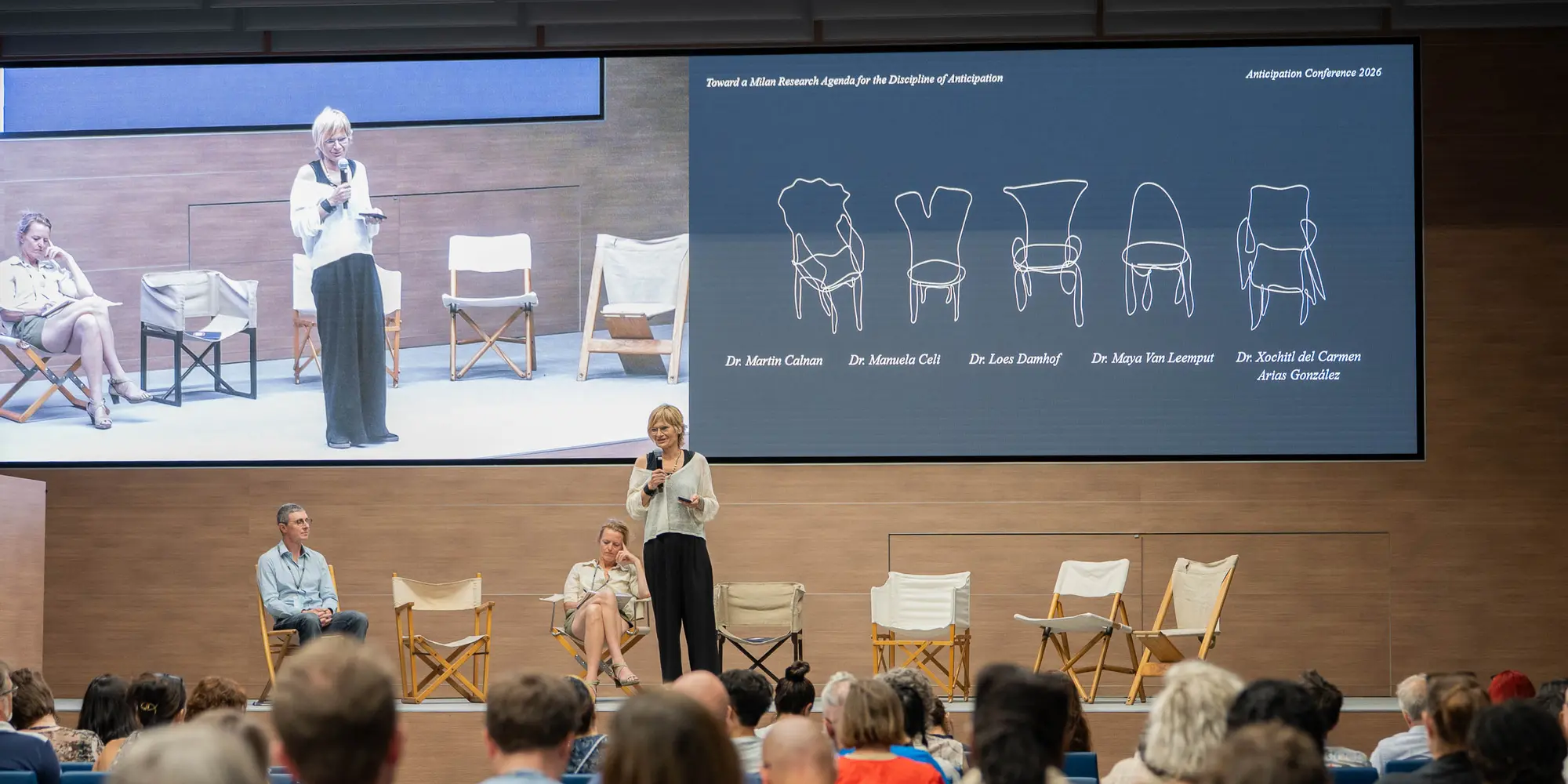
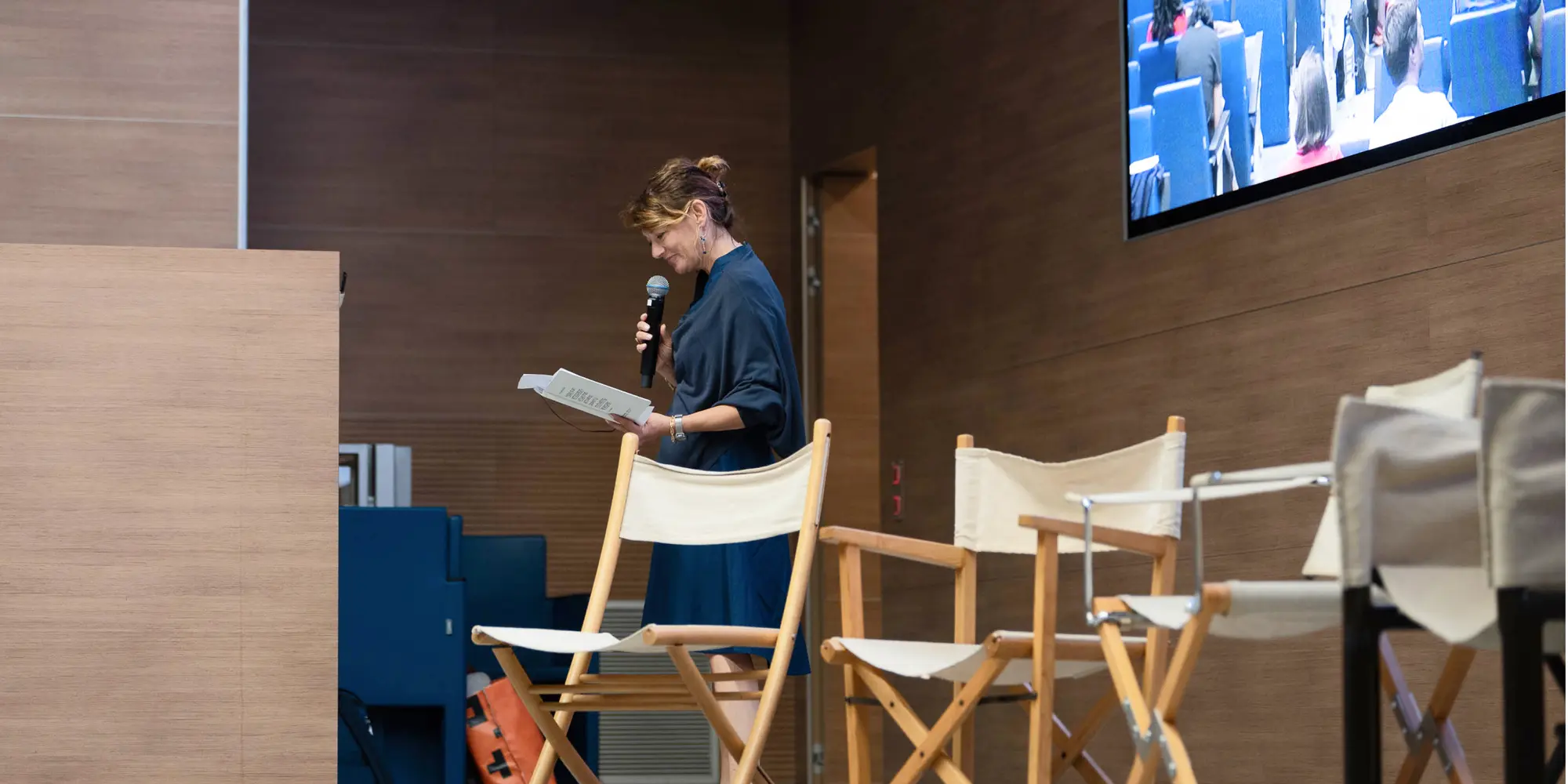
The conference's closing session also translated these principles into practice. The UNESCO Chair session Take a Chair brought speakers and participants together in a shared space for open dialogue, transforming discussion into a collective experience. At the heart of the session were the canvas folding chairs from Soft Fold, the research project by Davide Biancucci developed in collaboration with Campeggi Design. More than simply seating, they became a design device that fostered conversation, attentive listening, and collective reflection. In this way, Take a Chair embodied one of the conference's central ideas: anticipation as a relational practice, grounded in dialogue and in the plurality of perspectives.