
House and Studio Museums between Art and Design

Edited by Anna Mazzanti

Abstract purple background with soft, blurred geometric shapes. Large curved forms and stylized arrows pointing in different directions appear within a gradient effect, creating a sense of depth and motion.

A volume exploring homes and studios as living spaces of the faber, where art, design, and curatorial practices intertwine.

The house and studio museums of artists, architects, and designer, understood as the spaces of the faber, constitute the central focus of House and Studio Museums between Art and Design – Research methods and design strategies. The work aims to examine how these dwellings and workplaces, alreadyestablished as museums or intended to become such after the death of their owners, may be systematically studied, classified, and enhanced through the disciplinary perspectives of art history, museology, and design.

The volume originates from the D.E.SY Designing Enhancement Strategies and Exhibit Systems for Italian House and Studio Museum research project and develops a typological framework for the spaces of the faber in Lombardy, with particular attention to the Milanese context. Within this framework, the book explores the narrative, experiential, and curatorial potential of these environments in relation to contemporary design and curatorialpractices.
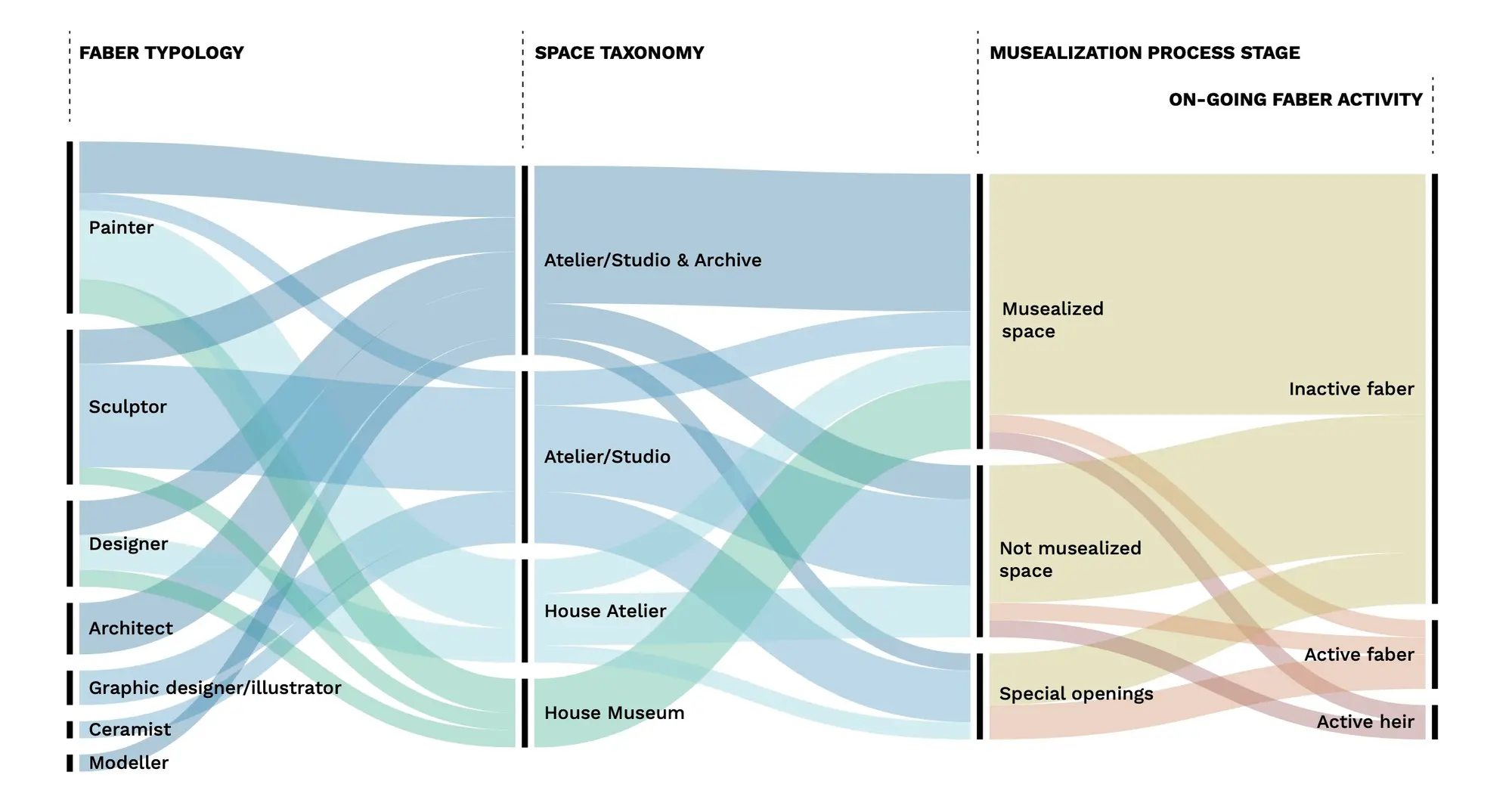
Sankey diagram illustrating relationships between faber typologies (such as painter, sculptor, designer, architect, and others), types of spaces (atelier/studio and archive, atelier/studio, house atelier, house museum), stages of musealisation, and the current status of faber activity (inactive faber, active faber, or active heir).
Visualisation of the relationship between faber, space taxonomy, ongoing musealisation process and ongoing faber activities (author’s elaboration). Image taken from the essay ‘Towards a Taxonomy of Faber’s Spaces: Milan and the Lombardy Region’ by Alessandra Spagnoli.

The collected contributions address various typologies – house museums, house ateliers, studios, and studio archives – and engage with issues such as the aura and genius loci of these spaces, processes of musealisation and reconstruction, as well as analog and digital storytelling devices aimed at their enhancement.

By integrating historical, museological, and design-oriented approaches, the volume proposes a polysemous reading of the spaces of the faber, understood as vital microcosms and three-dimensional self-portraits. In doing so, itprovides a shared methodological framework and practical tools for researchers, curators, designers, and cultural institutions

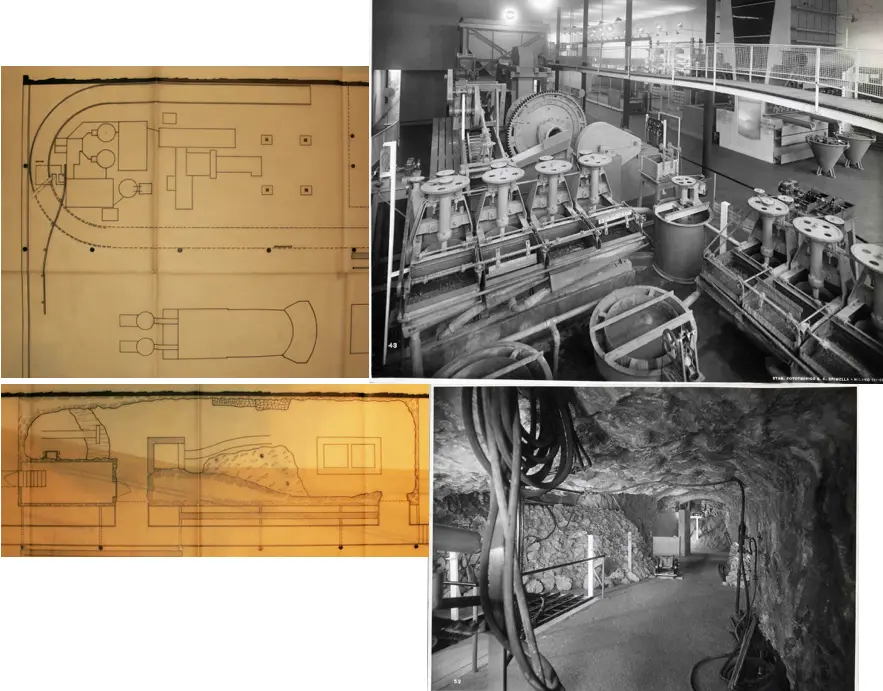
Composite image showing technical drawings and archival photographs of the Lead and Zinc Room designed by Franco Albini for the 1938 “Mostra autarchica del minerale Italiano” in Rome, including exhibition layout plans and views of industrial machinery and tunnel-like displays.
Drawings and photos of the Lead and Zinc Room, designed by Albini for Montecatini, at the Mostra autarchica del minerale italiano, Rome, 1938. Franco Albini Foundation Archive. Image taken from the essay ‘Virtualisation and Digitalisation as Tools for Re-Reading the Ephemeral: The Case of the Franco Albini Foundation’ by Chiara Lecce.

The volume is structured into three sections: 

  • Methods and Theories
  • Stories
  • Practices

Contributions: Marta E. Cecchi, Giampiero Bosoni, Alessandra Spagnoli, Raffaella Trocchianesi, Rita Capurro, Barbara Di Prete, Davide Spallazzo, Martina Sciannamè, Mauro Ceconello and Chiara Lecce.

House and Studio Museums between Art and Design is available in the FrancoAngeli open access catalog.

Share on: