JRP Active Ageing

The Joint Research Platform

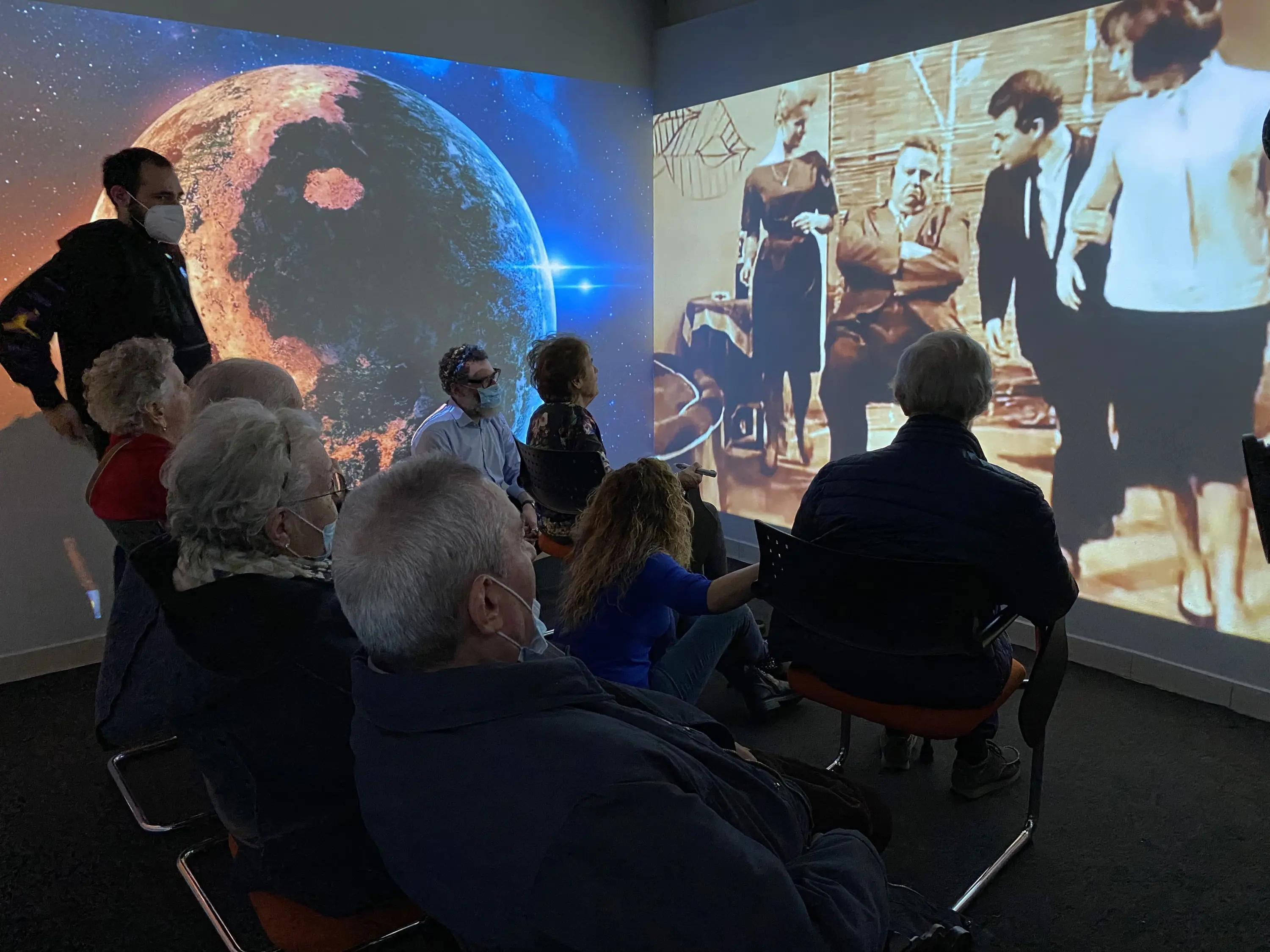
The image documents an immersive and intergenerational experience that blends historical memory, space exploration, and technology. In a darkened room, a group of people (mostly elderly) is seated in front of large wall projections. On the left, a projection shows a planet similar to Earth or Mars seen from space, with vivid surface details and sunlight filtering from the horizon. On the right, a second projection shows black-and-white scenes that appear to be taken from a vintage film or historical documentary, depicting people in 1950s or 60s attire. Some participants are wearing surgical masks, suggesting the event took place during a period of health precautions. The atmosphere is one of attentive contemplation, suggesting the use of immersive digital environments for cognitive stimulation or the sharing of collective memories related to space imagery.

The unitary project of the Joint Research Platform, set up by the Fondazione Politecnico di Milano and the Department of Design, in collaboration with EQUA Cooperativa Sociale and Prof. Marco Trabucchi's Geriatric Research Group, allows the energies of national research and businesses to converge to meet the needs of the "new elderly" and address the challenges of a maturing society.

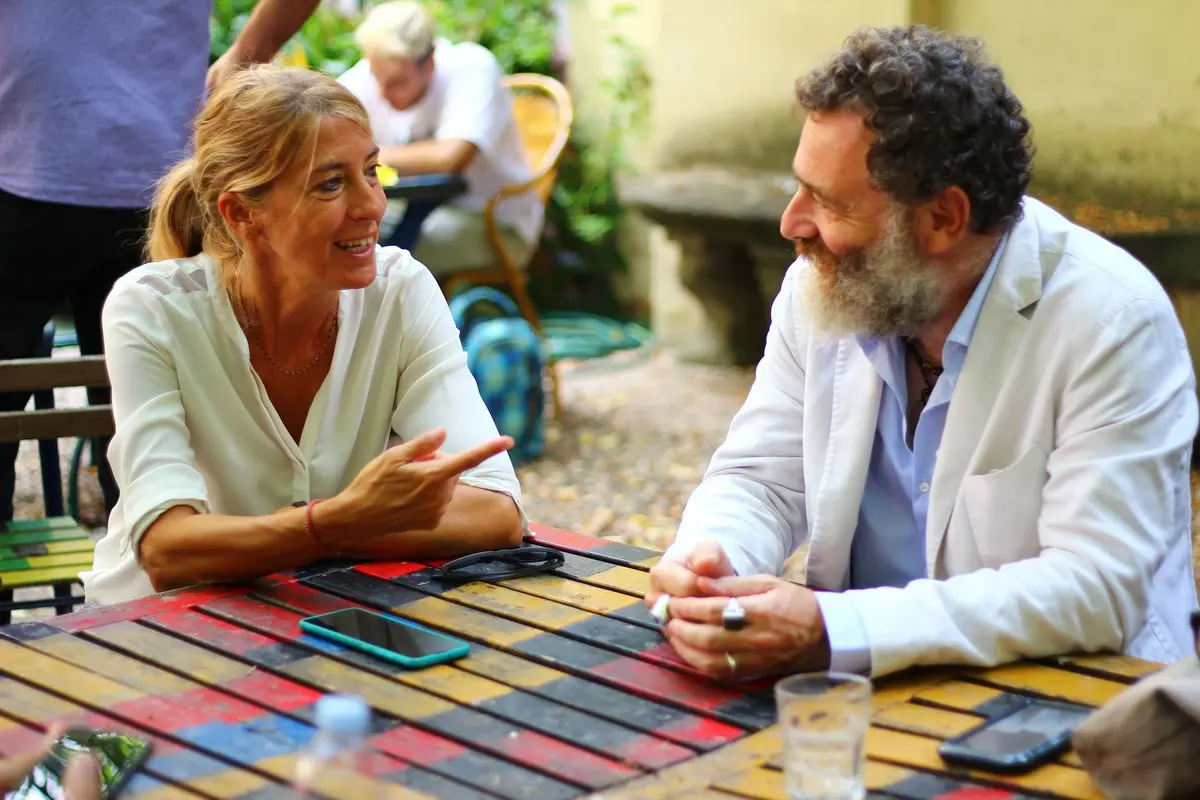
The image captures a moment of informal and lively conversation between two people in an outdoor setting, likely a university courtyard or garden during a break. At the center of the scene, a woman and a man sit across from each other at a rustic wooden table with colorful planks (red, yellow, and black). The woman on the left, wearing a white blouse with her blonde hair tied back, is shown gesturing emphatically, suggesting a passionate dialogue. The man on the right, with a thick grey beard and wearing a white blazer over a light blue shirt, listens with a smiling and interested expression. Some smartphones and glasses are visible on the table. The background is slightly blurred, but other people and lush greenery can be seen, creating a relaxed and convivial atmosphere.
Alessandro Biamonti (Dipartimento di Design) e Sara Mariazzi (EQUA Cooperativa Sociale)

Over the years, the phenomenon of aging has been a reason for research aimed at introducing new personal services with a view to a possible change in demand in the future. From these premises comes an awareness of the importance of bringing technological innovation into the so-called Active Ageing, marked by the totality of behaviors, practices and lifestyles useful in mitigating the occurrence of problems related to aging.

Within the scope of research to treat aging-related diseases, those on Alzheimer's occupy a key space. In fact, September is the world month dedicated to the treatment and prevention of this syndrome, a titling that became necessary when September 21, World Alzheimer's Day, was no longer sufficient to contain the necessary dissemination, education, and information activities that the current dimension of the syndrome requires, a syndrome that is growing both internally within different societies and on a planetary scale.
The image displays a visual experiment or a design prototype exploring the contamination between synthetic forms and organic substances in a research context. At the center of the scene, a complex white sculptural structure, characterized by fluid and enveloping lines, is partially covered by a dark green, viscous substance. The liquid appears to drip and adhere to the object's surface, creating a sharp contrast between the purity of the white and the dense, organic appearance of the fluid. In the background, the environment looks like a laboratory or a highly technological futuristic set, with white panels featuring the repeated text "SPACE4INSPIRATION". A metal shelving structure is visible on the right, reinforcing the idea of a storage or scientific testing environment. The composition suggests an investigation into biological growth, lubrication, or fluid management in controlled environmental conditions, typical of space research.
Prof. Mario Bisson inside the EDME lab.Through the platform it will be possible to develop projects and applied research by experimenting with innovative services and products in collaboration with the sponsoring institutions

The numbers are generically dramatic and mark almost exponential increases in the coming decades. The growth of cases is given by the inexorable progress of the syndrome as the elderly population continues to increase. In fact, while the progressive aging of the population is the result of a better quality of life, better medical care, and a generally more widespread condition of well-being, it is the aging process itself that is the basis for the development of the syndrome.

But in addition to the number of people with Alzheimer's disease, it must be taken into account that the disease also impacts the family members and caregivers around them. This means that for every person with Alzheimer's disease, a family unit of at least 3-5 people belonging to 2-3 different generations is affected by the disease. If we consider this dynamic applied to the approximately 1.5 million people in our country who suffer from Alzheimer's dementia, the impact on society becomes apparent.

To contrast this state of affairs we currently have three tools at our disposal.

  • The pharmacological approach. Very complex to manage, which can give good results in a preliminary stage, but has proven ineffective in terms of "cure," rather invasive and not sufficient in the most compromised stages.
  • The non-pharmacological approach. Having overcome an initial distrust in the last 15-20 years, thanks to its particular sensitivity, adaptability and listening to personal experience, it has become the main resource, especially in stages of increasing compromise. It comes in different approaches, models and forms, often with well-defined protocols. It is the therapeutic field whose effectiveness can be helped by appropriate planning action, in dialogue with therapists.
  • Prevention. Because of the complexity and unpredictability of the evolution of the syndrome in each individual, there is no single recipe that definitively averts the danger. It has long become evident, however, that certain good practices, lifestyles, and behaviors can be significantly beneficial in mitigating and slowing the occurrence of symptoms.

Therefore, technological research plays a key role in this context in order to provide tools and develop strategies that can improve the quality of life of the over-65 population.
In this sense, the JRP Active Ageing will allow the actors involved in the initiative to develop innovative strategies, focusing on and, in some cases, anticipating, solutions aimed at responding more effectively to emerging needs, and thus to be competitive in the current and future market.

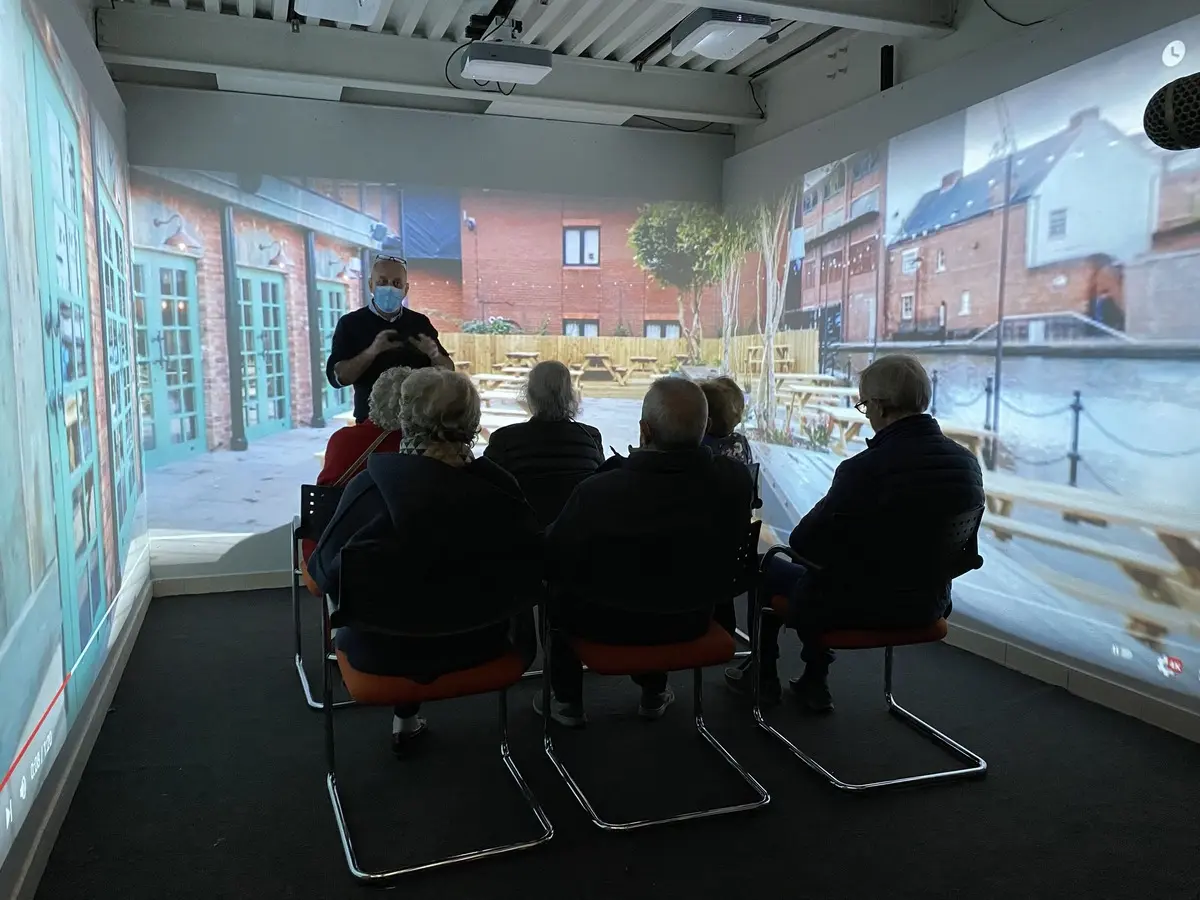
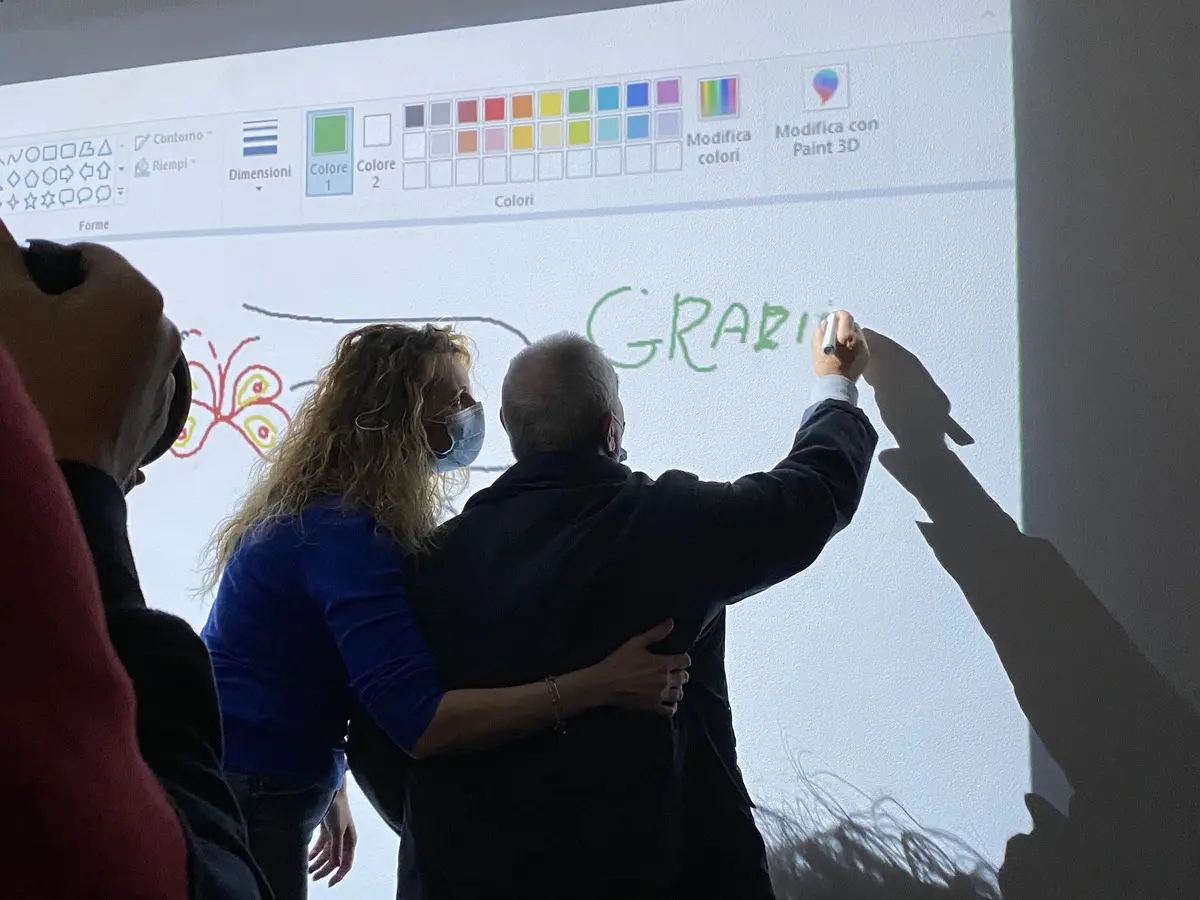
The image captures a moment of direct and assisted interaction with a digital whiteboard, part of a workshop or rehabilitative activity. In the foreground, a woman with long, wavy blonde hair, wearing a blue sweater and a surgical mask, supports and guides an elderly man as he writes on a projected surface. The man is shown from behind and is writing the word "GRAZIE" (Thank you) in green cursive using a digital pen or pointer. Projected on the wall is the interface of a drawing software (similar to Paint 3D), complete with a color palette and editing tools. To the left of the word, a stylized drawing of a colorful butterfly is visible. The image conveys a sense of human warmth and support, highlighting how technology can be used to foster self-expression and communication in care or educational settings.
The use of technological tools will help interaction with the vulnerable

Thanks to its multidisciplinary nature, the platform will include in its planning numerous research topics oriented on different time horizons: from projects aimed at prevention dynamics to entertainment projects, from the development of new urban and residential policies that meet new needs to inclusive cultural projects, from studies and evaluations on assistive, domotic and AI technologies to sports and training projects.

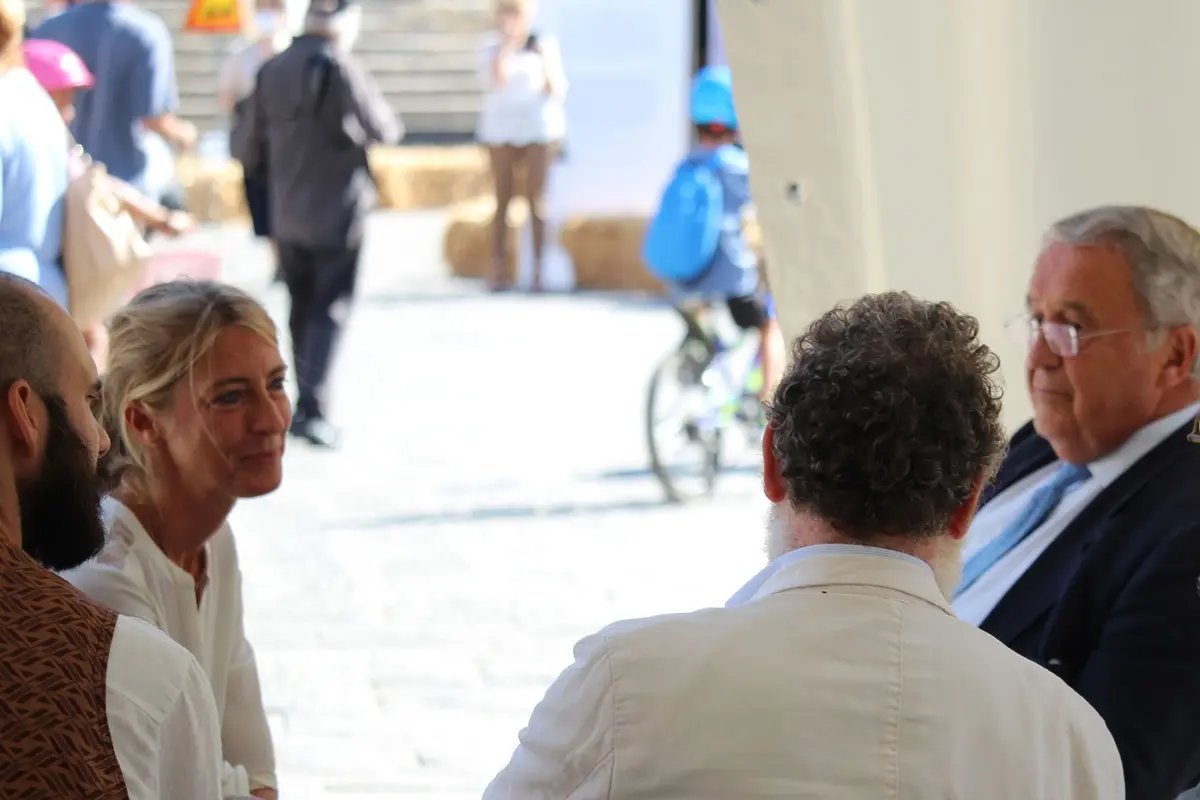
The last image you uploaded documents a moment of institutional or academic meeting and discussion outdoors. In the foreground, three people are seen engaged in a conversation, either in profile or from behind. On the left, a blonde woman in a white blouse watches her interlocutor with a smiling and attentive expression. The latter, on the right, is an older man wearing glasses, a dark jacket, and a light blue tie, suggesting a role of authority or representation. Between them, the back of a man's head with curly hair and a grey beard (seen in other photos of the set) is visible. The background is very bright and slightly blurred, showing a square or courtyard where other people and a child on a bicycle are moving, creating a contrast between the solemnity of the foreground discussion and the liveliness of the surrounding daily life.
Alessandro Biamonti, Sara Mariazzi and Marco Trabucchi, founders and promoters of JRP Active Ageing

Founding Partners

Fondazione Politecnico di Milano
Department of Design, Politecnico di Milano

Promoters of the initiative

EQUA Cooperativa Sociale
Gruppo di Ricerca Geriatrica

Share on: