Lab.I.R.Int, Genera e Comune di Milano. Casa Chiaravalle

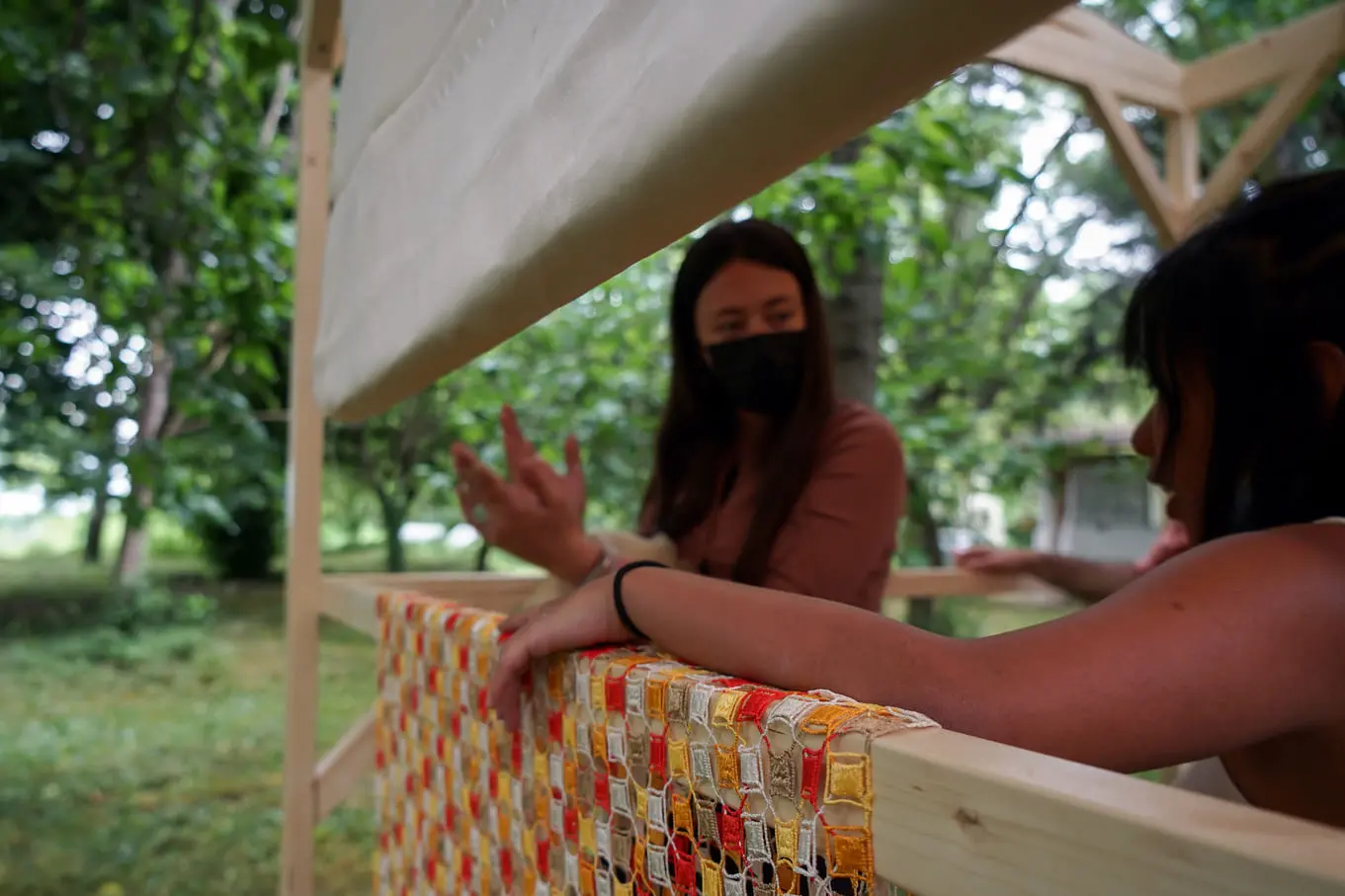
Two people interact under a light wood structure reminiscent of a loom or a self-supporting pavilion. In the foreground, a person in a tank top touches a thick knit fabric with an irregular checkered pattern, featuring interwoven colorful threads in shades of orange, ochre, and red. In the background, a woman wearing a black surgical mask and a terracotta-colored top gestures with her hands, likely explaining the production process or the tactile properties of the material. The scene, set in a natural green environment, suggests a workshop or an experimentation in bio-design and human interaction.

From 20 to 22 May, a group of Interior Design undergraduates designed and built rooms and exteriors for Cascina Grace, a guesthouse for the elderly that the Genera Cooperative is setting up inside Casa Chiaravalle, the largest seized property in the Lombardy Region, in the care of the City of Milan.

For several years, and even more so today, Genera has been engaged in the design and implementation of innovative places for the care of the elderly; places open to the community and characterised by a positive living and cross-generational dimension; places where people of all ages take care of each other.

The Cascina Grace areas will initially be used as summer accommodation for the elderly and then as an experimental Alzheimer's Village, the second after the one built in the Figino neighbourhood. The students tailored their projects on the basis of this last, delicate and more fragile user group. They "took care" of the residence's spaces, making them cosy and unique, ready to welcome future guests into a comfortable, domestic environment. During the two days of the workshop, they created the installations designed for the rooms, each decorated according to a different, unique theme, and for some of the spaces in the green area surrounding the facility, through shaded structures that allow the garden and a bowling green to be experienced in the shade of the trees.
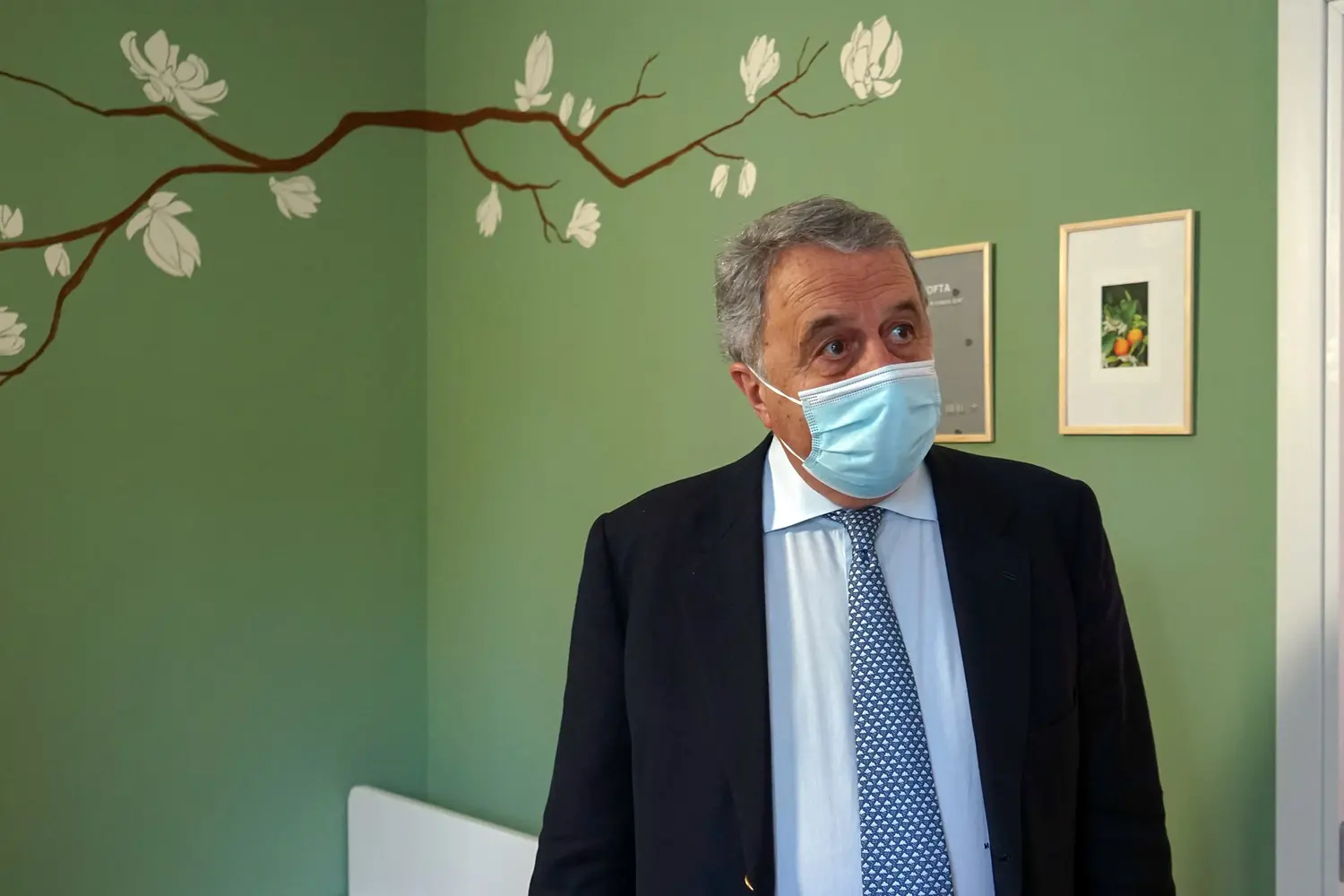
A man in a suit and tie looks upward inside a sage green room, decorated with a floral mural and small botanical frames. The atmosphere is formal and professional.
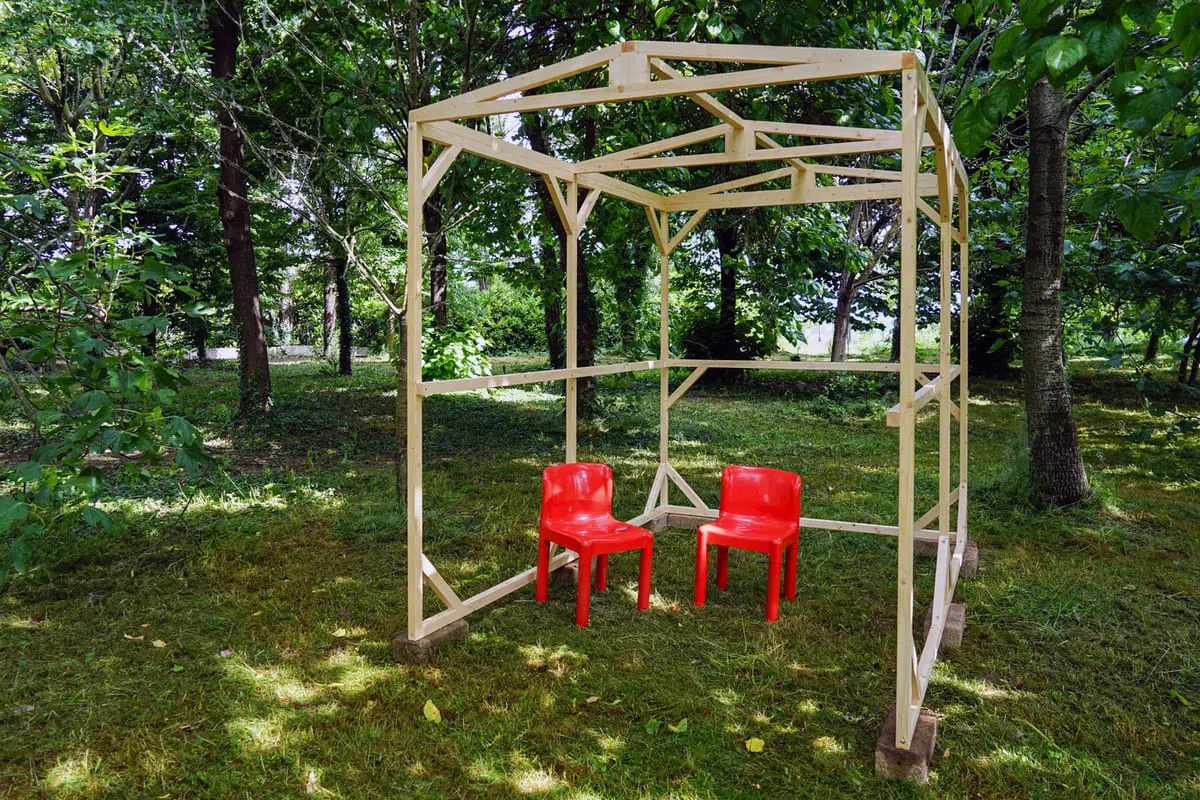
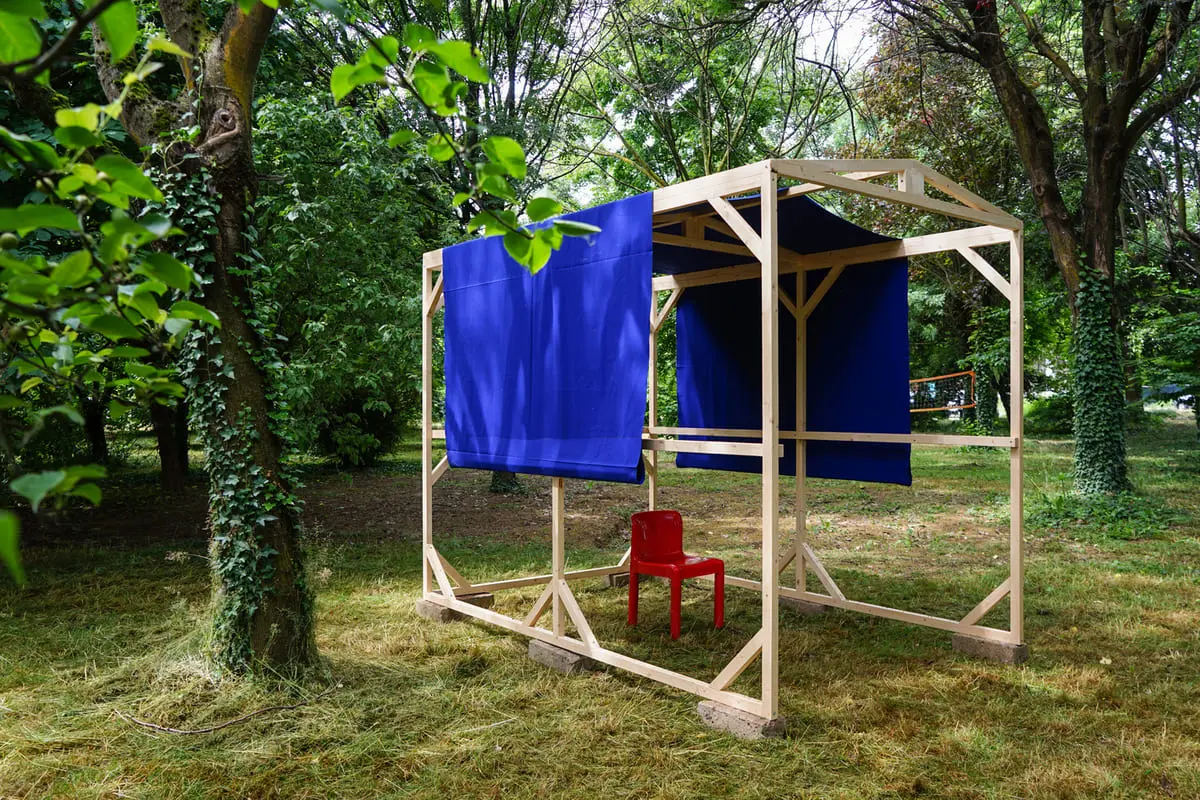
The image features an experimental temporary pavilion located in a wooded park or garden. The structure is made of a basic light wood frame, with a gabled geometry that evokes the shape of a small house. Three large, deep blue fabric sheets are draped over the roof and side walls, creating a sheltered and shaded area. Inside, a single red chair stands out, creating a strong color contrast with the surrounding greenery and the blue fabric. The setup suggests a meditation on minimal space and the relationship between architecture, color, and the natural environment.
A light wood gabled structure rests on concrete blocks in the middle of a forest. Inside, two bright red chairs face each other, creating a vivid color contrast with the natural surroundings and the simplicity of the wooden frame.
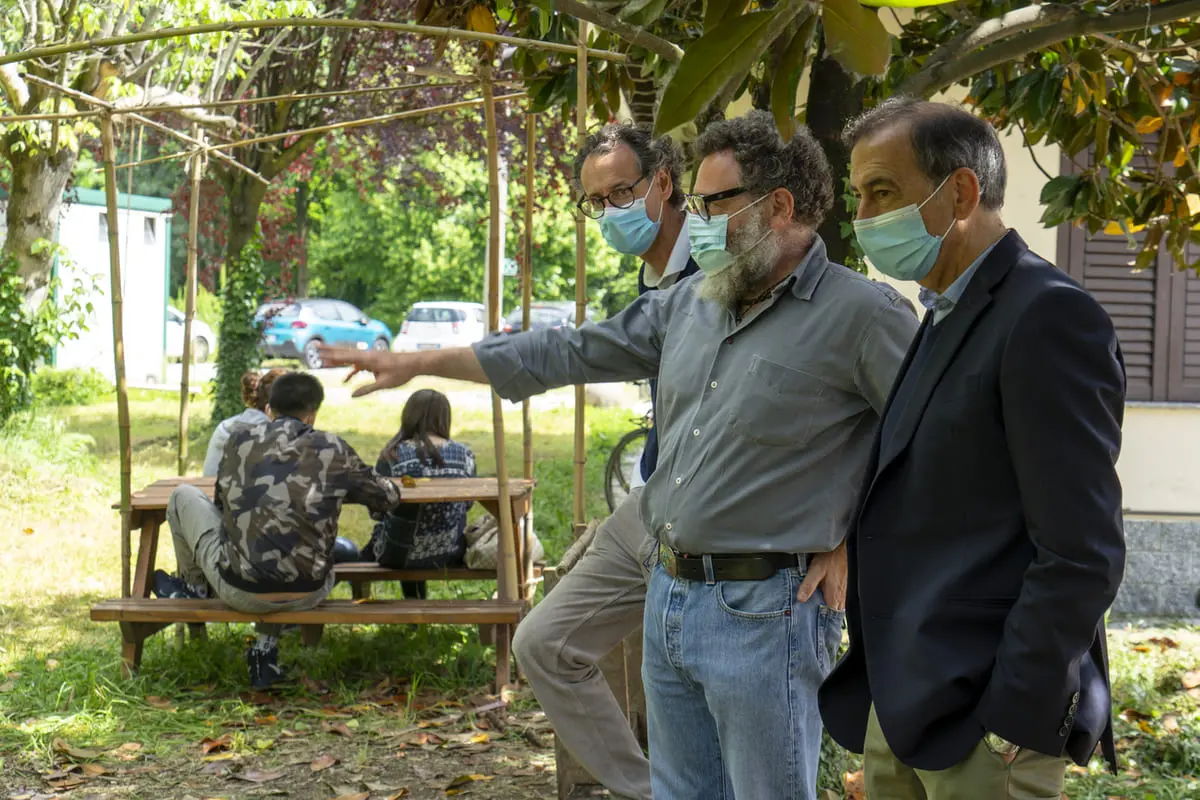
Three men wearing surgical masks are engaged in a discussion in a garden. The man in the center, with a beard and a grey shirt, gestures toward something off-camera, likely explaining a project. In the background, students are seated at a picnic table under a light bamboo structure, suggesting a workshop or an academic review session in an outdoor setting.

These projects are part of the experiments carried out by the Lab.I.R.Int research team for the construction of therapeutic habitats to support non-pharmacological therapies for Alzheimer, in collaboration with GENERA Onlus, within the GRACE_Lab laboratory.

At the end of the workshop we received visits from Mayor Beppe Sala, Councillor Gabriele Rabaiotti and Prof. Marco Trabucchi. Also present was Pierfrancesco Majorino, former Councillor for Social Policies, who in recent years has followed the rebirth of the seized property.

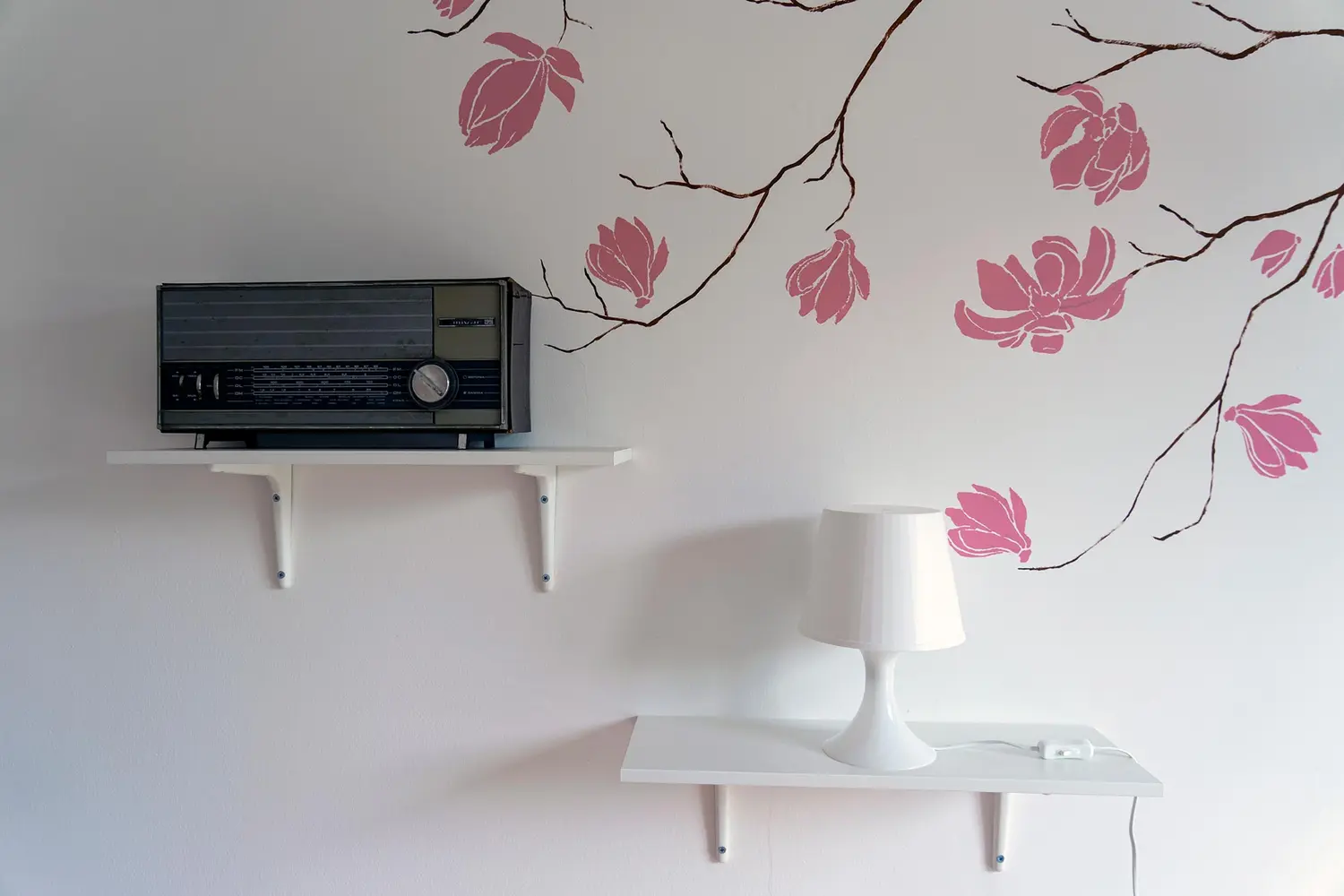
The wall features a stylized mural of magnolia branches with vibrant pink flowers. The furniture consists of two staggered white shelves: the upper one holds a vintage rectangular radio with a technical design, while the lower one supports a modern, minimalist all-white table lamp. The overall look creates a pleasant contrast between past technology and contemporary design.
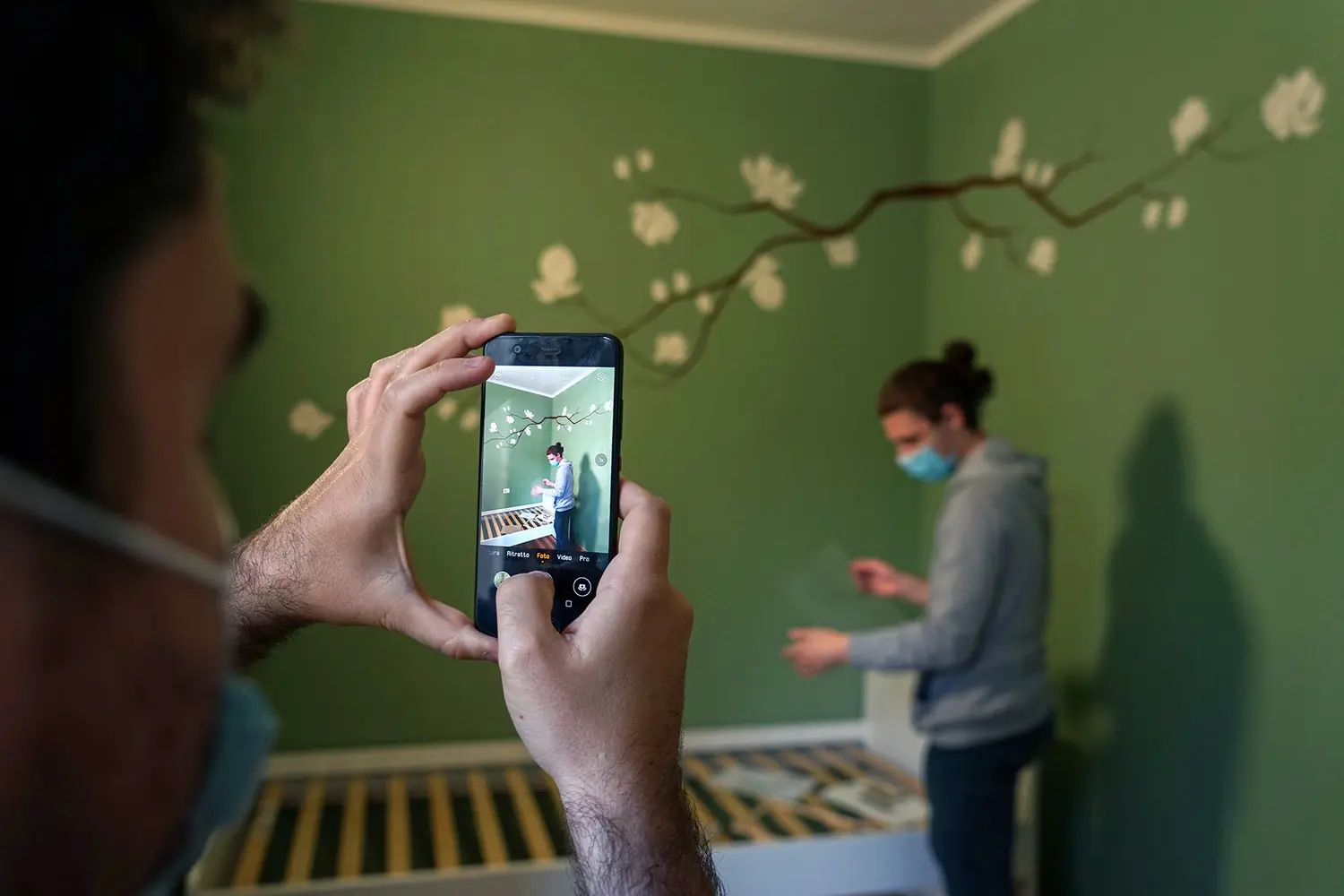
In the foreground, two hands hold a black smartphone horizontally, capturing a photo. The phone screen shows the image of another person wearing a blue surgical mask and a grey hoodie, standing next to a slatted wooden bed frame, similar to the one present in the actual room. The real background is a room with a wall painted a matte sage green, decorated with a stylized mural depicting blooming magnolia branches with white flowers. The real person framed in the phone is also visible in the background on the right, blurred and busy handling an instruction sheet. The lighting is natural and comes from the right, creating shadows on the wall. The atmosphere is diligent and documentary-like.

Students:
Agnese Azzola, Alessio Ruggieri, Arianna Terzi, Eleonora Alberti, Elisa Morandi, Elisa Sozzi, Fabio Rossi, Francesca Sena, Francesco Bivona, Francesco Ciceri, Ilaria Molteni, Ilaria Veronese, Juncheng Xiang, Kaiserin Alen Panganiban, Lorenzo Filippi, Martina Gelmi, Matilde Agnello, Marta Menassi, Matteo Cassina

Tutor:
Lorenzo Fossi

POLIMI coordination:
Alessandro Biamonti, Silvia Maria Gramegna

GENERA coordination:
Andrea Coden, Sara Mariazzi

Acknowledgements:
Paolo Padova Exhibit Lab - Design Department for his technical support, Armando Sena for his valuable help, Elena Galimberti for the beautiful shots

Share on: