
The third Materials Dialogues workshop by the research group MaDe/Trans of the Department of Design, The DIY Materials approach in Iceland, took place in Blönduós at the Icelandic Textile Center as hands-on journey into bioregional materials and situated making. Led by Dr. Sofia Soledad Duarte Poblete and PhD Candidate Elena Albergati, the workshop gathered artisans, artists, and designers.
Materials Dialogues in Iceland: when the river and the ocean meets
A biomaterials workshop within the Horizon Europe Tracks4Crafts project.
Three days of workshops designed by MaDe/Trans in collaboration with the Icelandic Textile Center to explore how local ecosystems can inform new material practices, grounded in craftsmanship, experimentation, and environmental awareness.
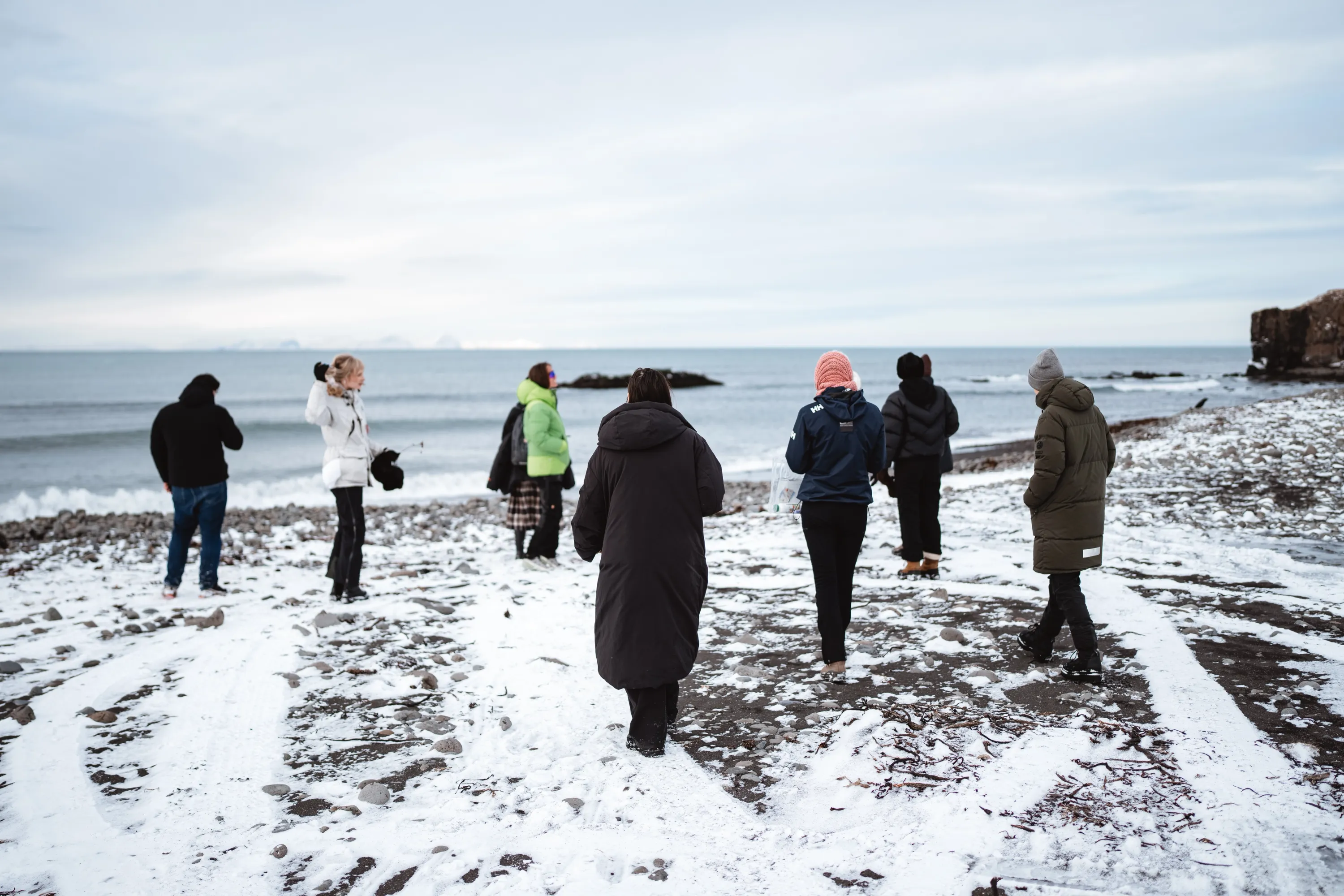
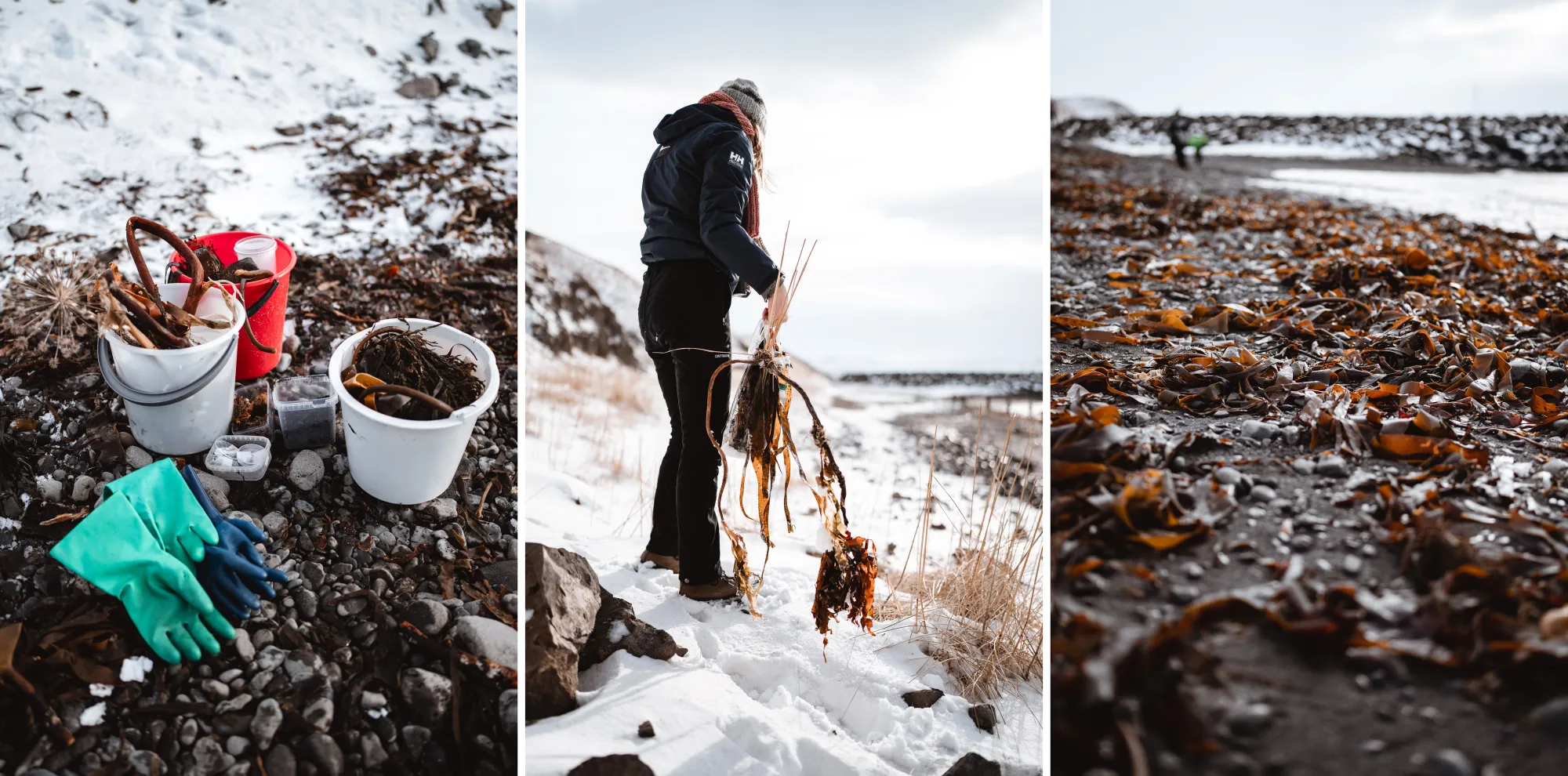
The workshop began with short pill lectures in the lab, and then moved outdoors. Participants walked through the surrounding landscape and coastline to observe the territory and discuss its material agency – seaweed washed onto the shore, volcanic sand shaped by wind and water, fibres and residues embedded in everyday life. All materials were ethically gathered in small quantities, with care for the local ecosystem and in line with site guidelines and responsible field practice. This field exploration set the tone for the days ahead, an approach based on curiosity, careful observation, and respect for local resources – before transforming them.
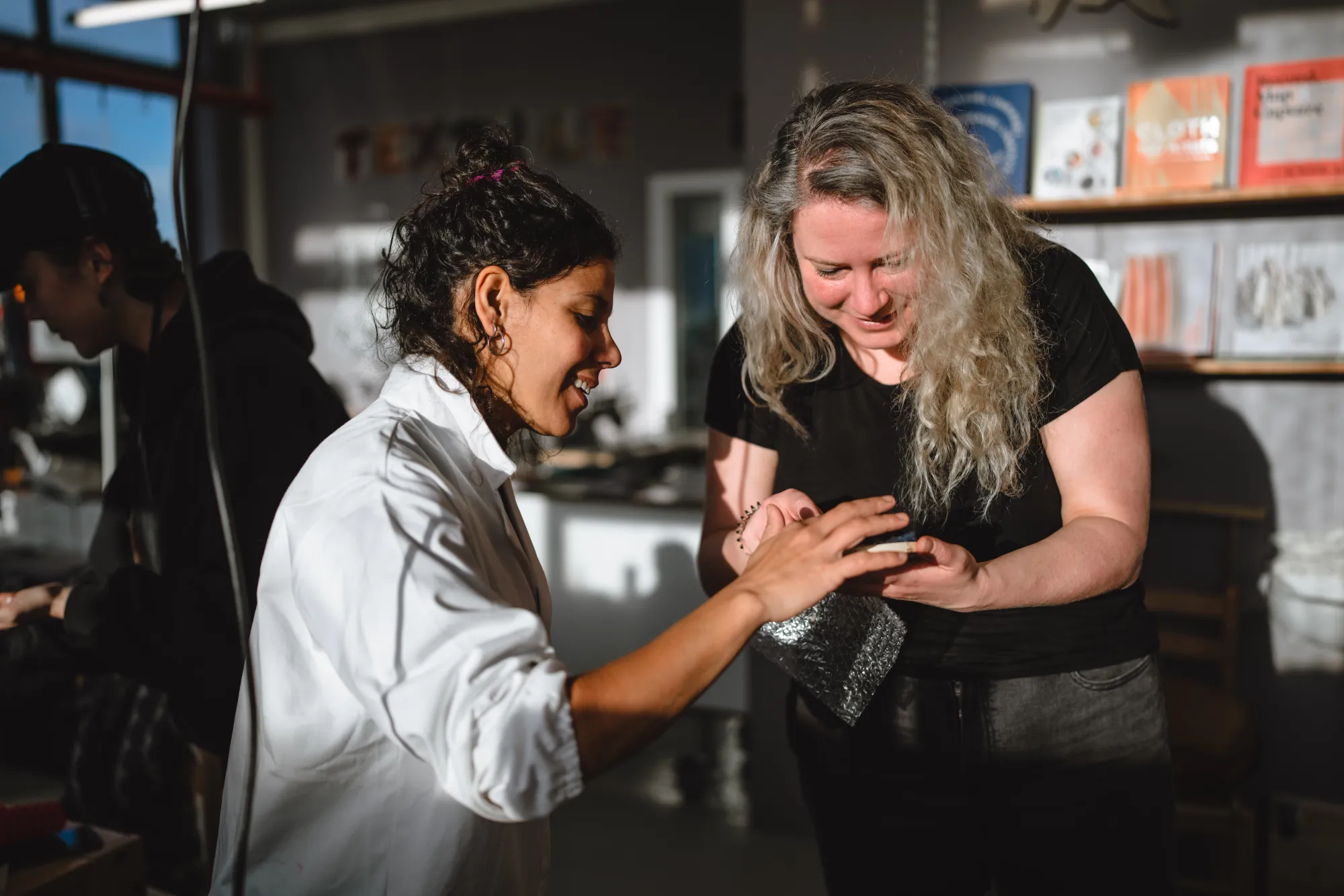
Back at the Textile Center, the group shifted intocrafts and making. The focus was on biomaterials and bio-composites, experimenting with animal and vegetal biopolymers and combining them with seaweed, volcanic sand, Icelandic wool, and other locally abundant available resources. Using open “recipe” formats, participants developed mixtures, tested proportions, and observed how each ingredient influenced viscosity, drying behaviour, flexibility, strength, translucency, and colour. Each trial became both a material sample and a learning event, an opportunity to compare outcomes, exchange knowledge, and build shared vocabulary around what the materials were “doing.”
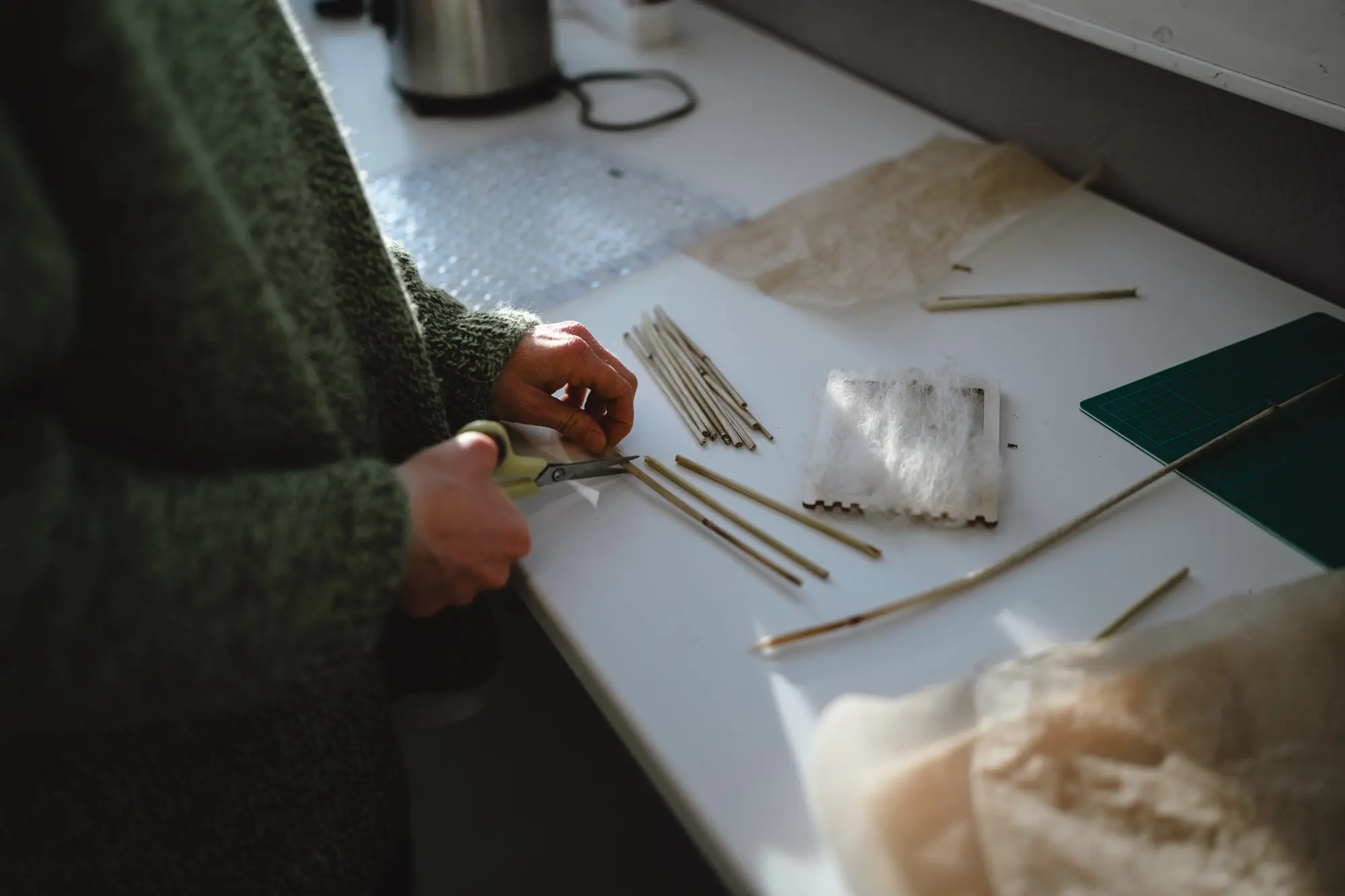
The workshop encouraged a broad range of fabrication techniques, bridging familiar craft gestures with experimental methods. Some processes echoed kitchen-based practices-mixing, heating, thickening, setting – where temperature, timing, and patience shaped results. Others drew from ceramic-like techniques, including moulding, pressing, texturing, drying, and exploring the role of substrates. Alongside these manual approaches, participants also tested the integration of tools and machines, working with laser engraving to explore surface interventions and patterns, and using mechanical craft techniques such as sewing and assembly to investigate how soft and flexible samples could become part of textile-based forms.
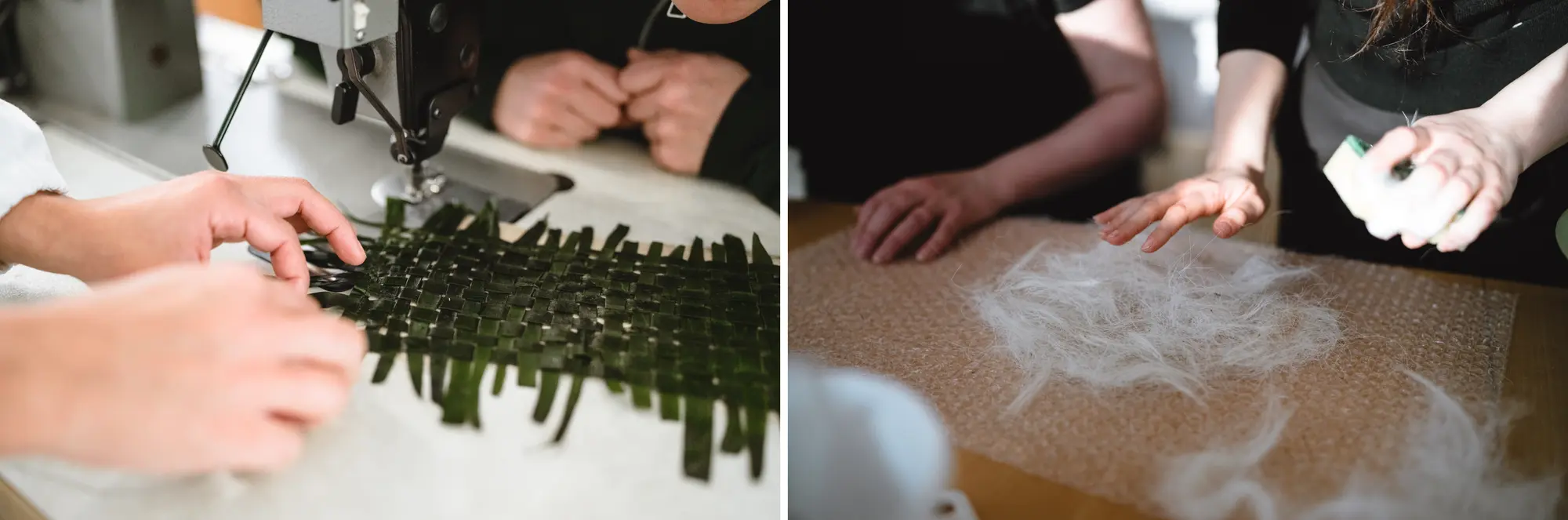
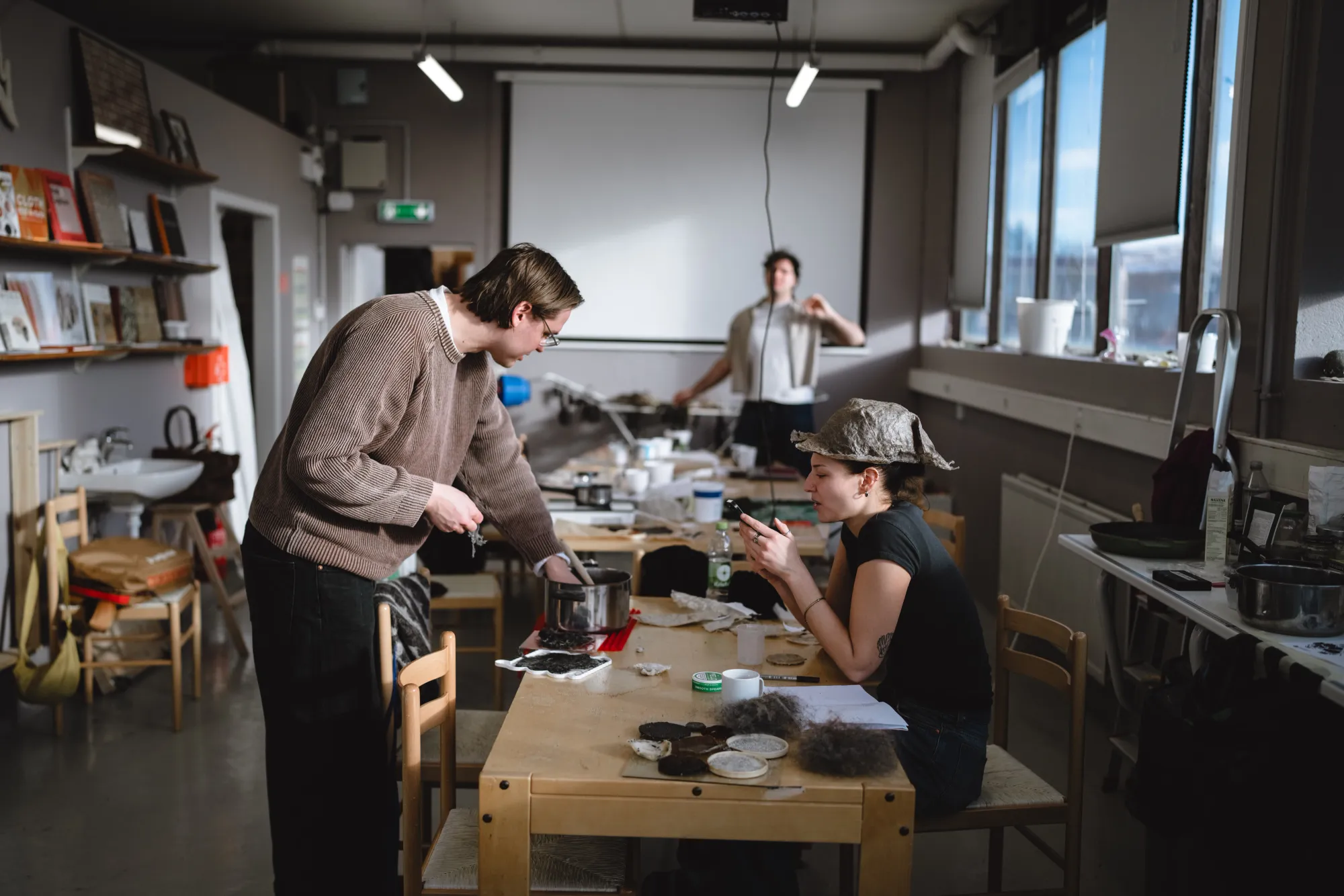
As experimentation progressed, the space became a shared studio-lab; tables filled with prototypes, notes, tools, seaweed traces, fibres, and evolving material families. Participants documented processes and outcomes throughout the workshop, capturing key steps, variations, and unexpected behaviours. This documentation is central to the Materials Dialogues approach; it supports knowledge exchange across communities and makes learning transferable beyond the “moment of making”.
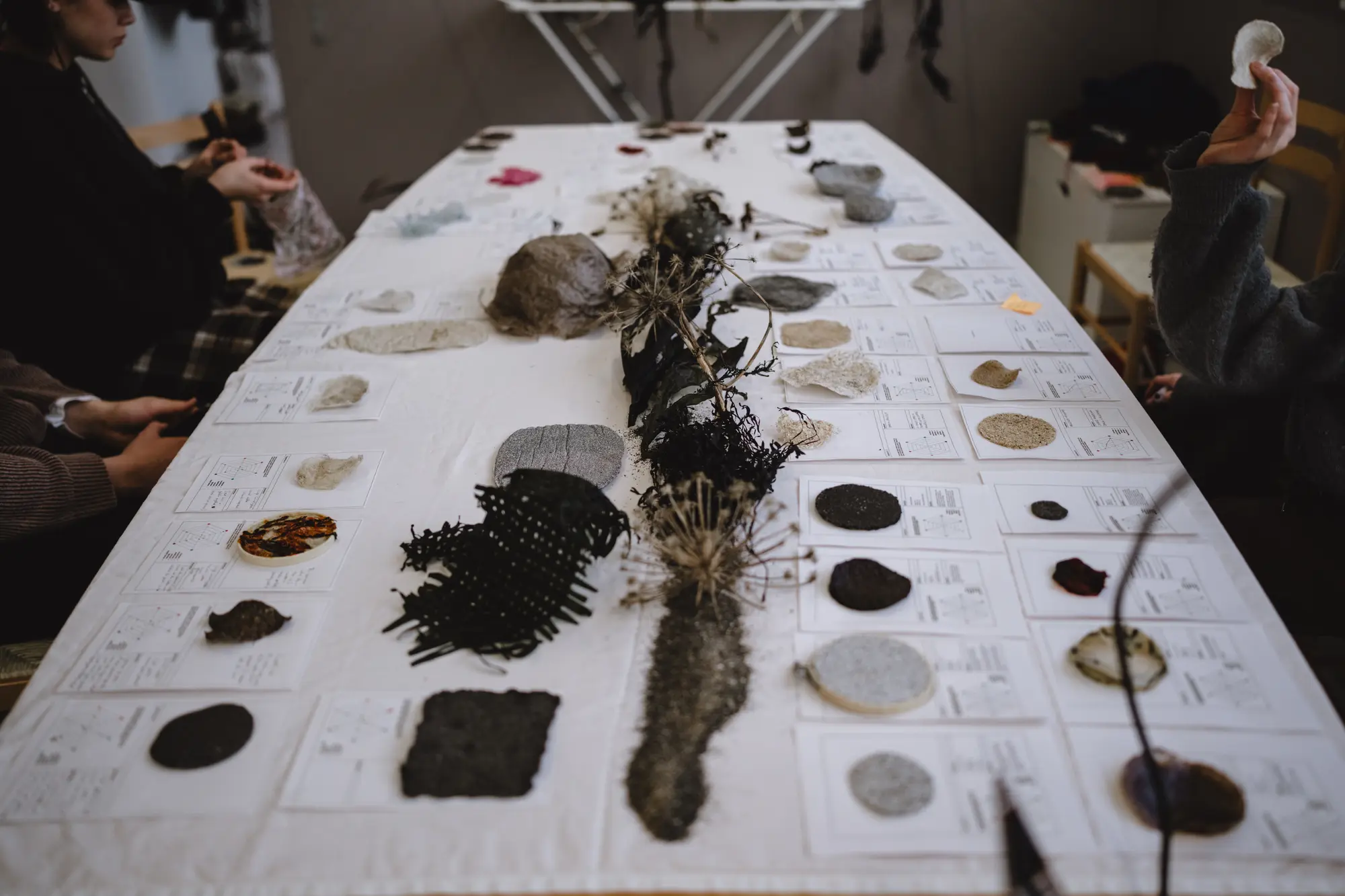
The workshop culminated in a small material showcase titled When the River and the Ocean Meets, bringing together the samples and demonstrators developed during the three days. The title reflects both the geography of the place and the workshop’s central theme, material transformation at the meeting point of ecosystems, traditions, and emerging practices. The final selection captured a spectrum of outcomes – from translucent seaweed-based films to sand-filled composites, wool-integrated surfaces, and hybrid textile experiments – each carrying traces of the local territory and the collective process that shaped them.
The outcomes contribute to Tracks4Crafts by generating not only material prototypes, but also transferable methods, workshop learnings, and documentation formats. These insights feed into the project’s broader experimentation platform and support the development of the DIY Materials Manual (D3.2), strengthening the capacity of pilots and local communities to run future-oriented, craft-based material experimentation grounded in bioregional resources.
Photo credits: Elena Albergati