Sguardo Mobile

Lab COmeta presented a project to overcome autistic people's experience of loneliness

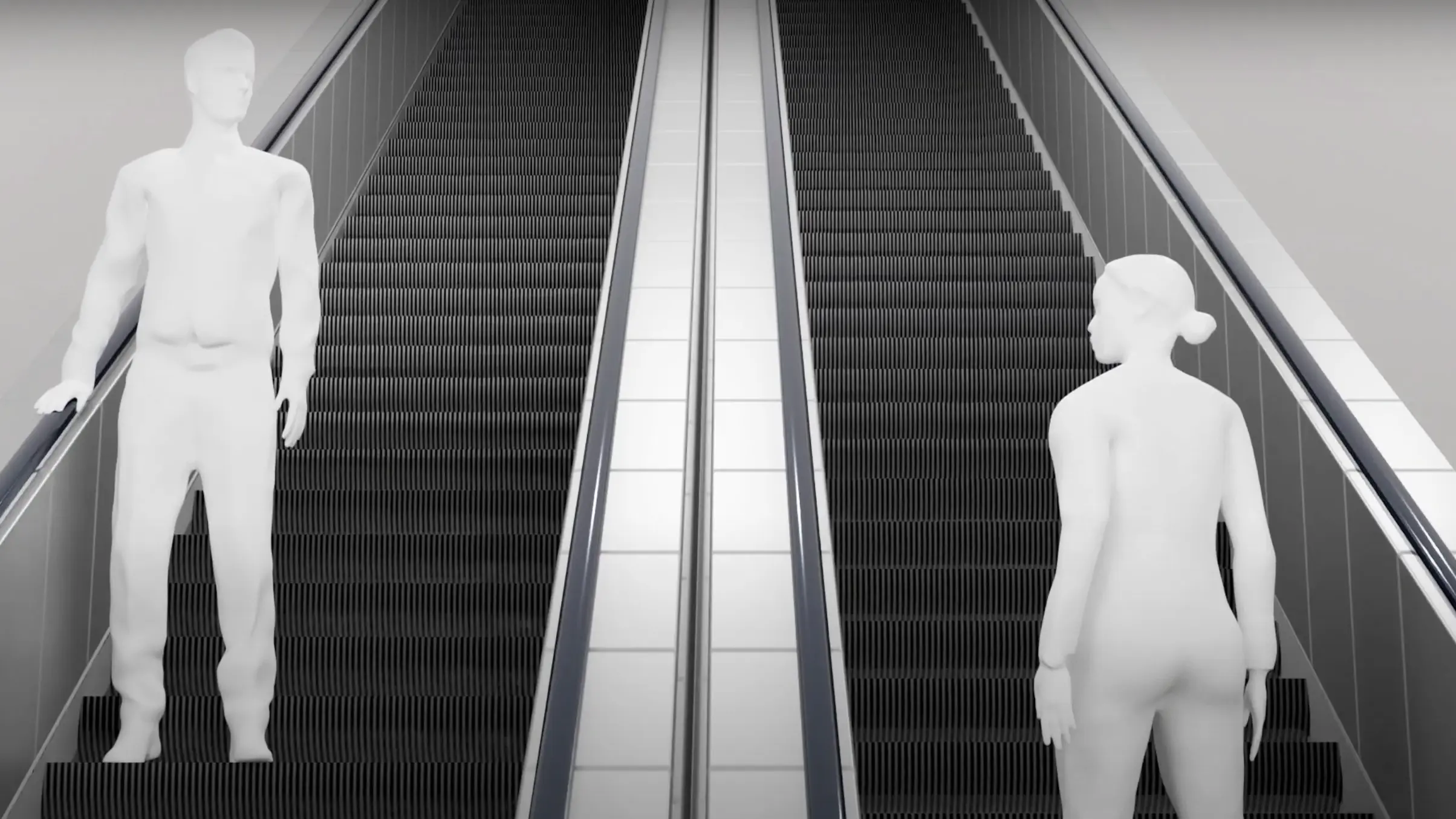
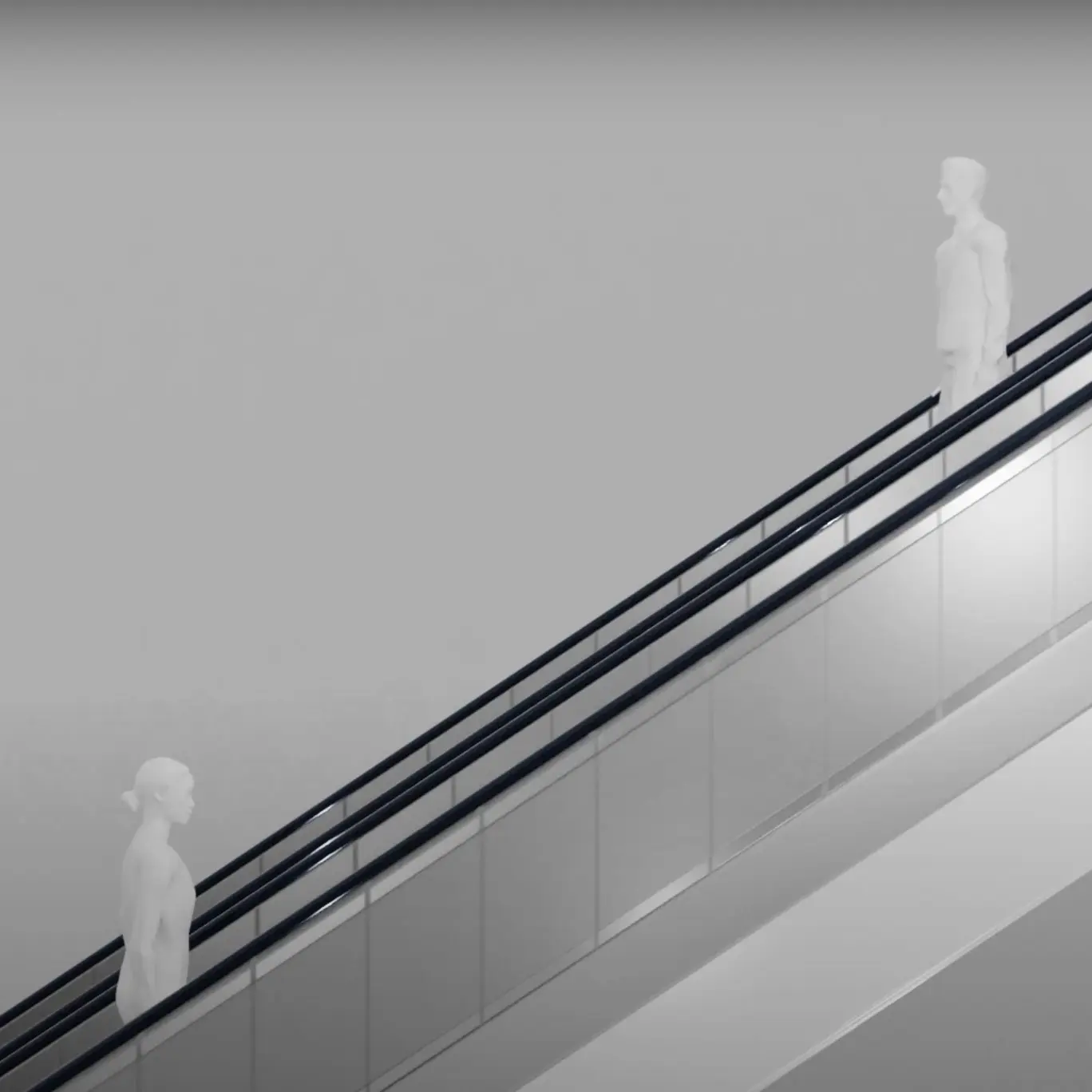
The image shows a digital rendering or 3D visualization of two stylized human figures on a pair of parallel escalators. The figures are entirely white and lack facial or physical details, featuring a male form on the left ascending and a female form on the right seen from behind. The environment is minimalist, dominated by shades of grey and white, with a symmetrical perspective that emphasizes verticality and the sense of mechanical movement within a contemporary urban or transit space.

On the occasion of International Day of Persons with Disabilities, two students from the Metadesign Lab COmeta exhibited the installation "Sguardo Mobile" at MUSE to raise awareness of autism issues, focusing in particular on the concept of the gaze as a tool to overcome isolation, a condition typical of patients with Autism Spectrum Disorder.

On December 3, the multimedia installation "Sguardo Mobile"- Moving Gaze - was presented at MUSE, the Science Museum of Trento, as part of the "Obiettivo Accessibilità" event.

The installation was inspired by Annachiara Marangoni, social and health director of the Cooperativa Autismo Trentino, and was created by students Fedör Zot and Johns Midlow as part of the Metadesign Lab COmeta within the Industrial Product Design Course led by Professors Venanzio Arquilla, Davide Genco and Fabio Guaricci.
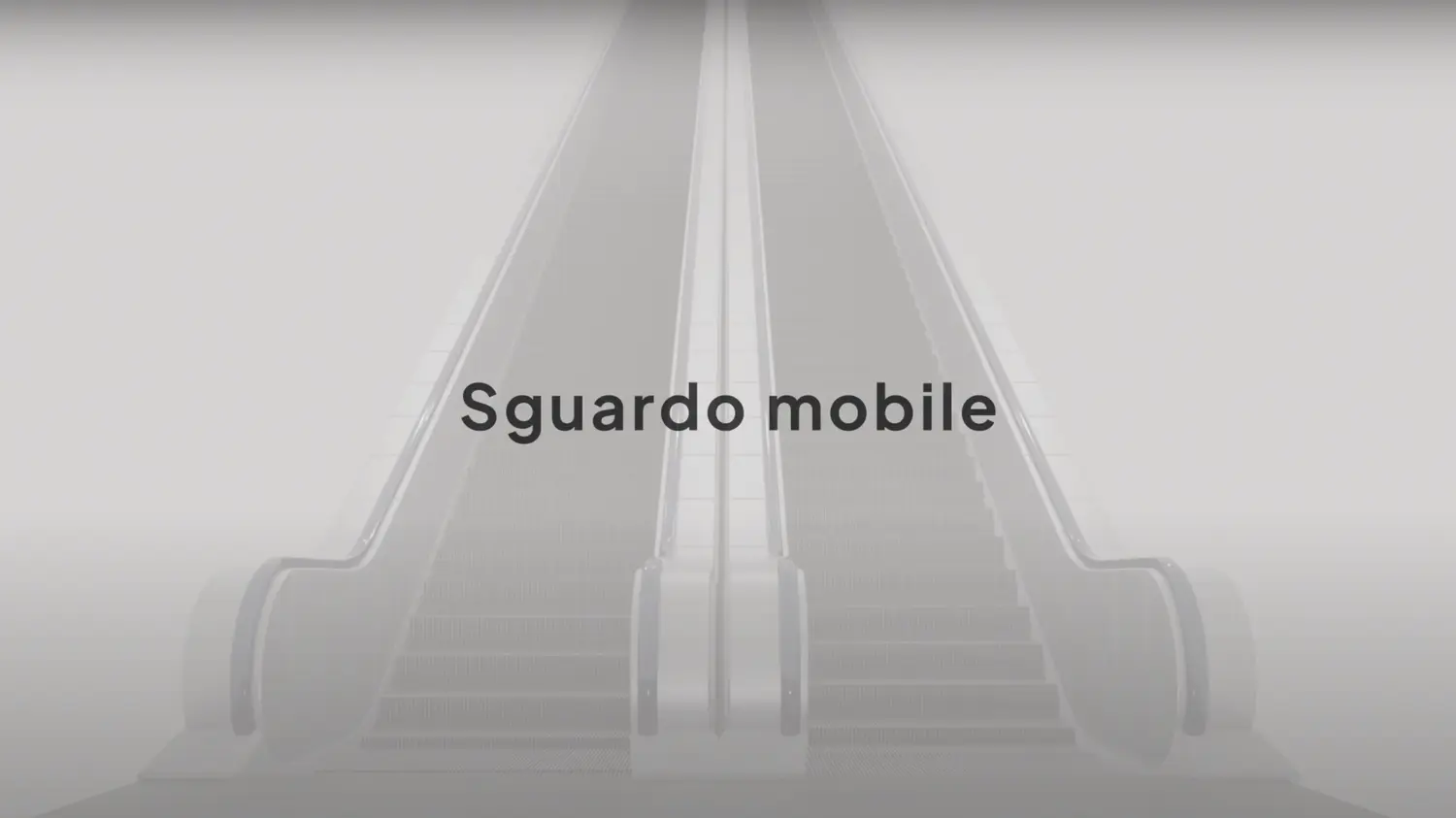
The image features a perspective shot of two parallel escalators ascending toward a bright, undefined horizon shrouded in white mist. In the center of the composition, the black text "Sguardo mobile" (Mobile Glance) is overlaid.  The aesthetic is minimalist and almost abstract, dominated by white and grey tones that give the scene an ethereal, suspended atmosphere. The symmetry of the escalators guides the eye upward, suggesting themes of movement, transition, and the dynamic observation of urban space.

Sguardo Mobile” is a multimedia work that combines art and awareness to focus on the gaze, a concept closely related to the reality of autism.

The video installation proposes a scenario with escalators extending infinitely, in a place without a specific location in space and time, a non-place, where the only significant space is the meeting of gazes.

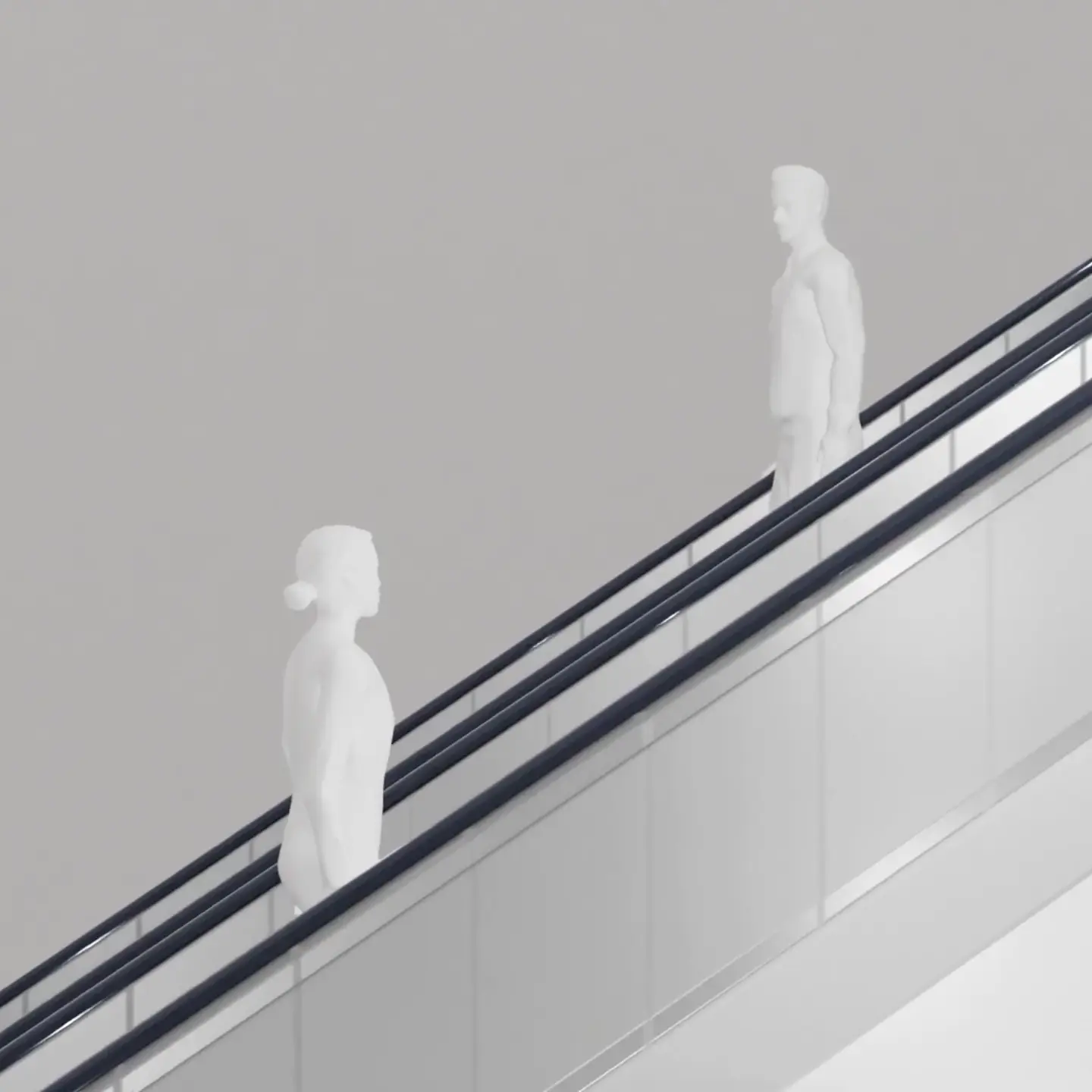
3D rendering of two parallel escalators against a grey background. Stylized, completely white human figures are positioned along the ramps, suggesting an anonymous flow of movement in a public or transit space

The gaze becomes the protagonist, a fundamental tool for creating significant connections and overcoming perceptual barriers. Every unreturned glance is considered an attack on the sensitivity and the recognition of the Other.

«In the gaze we either are recognised or cancelled out. »

Placing the gaze in a place beyond the everyday becomes meaningful, a common experience that allows the viewer to empathise with the subject. The gaze becomes the authentic place of encounter that overcomes loneliness, a means of establishing deeper connections with the Other, transforming the experience of autism into a path of relationship and mutual understanding.

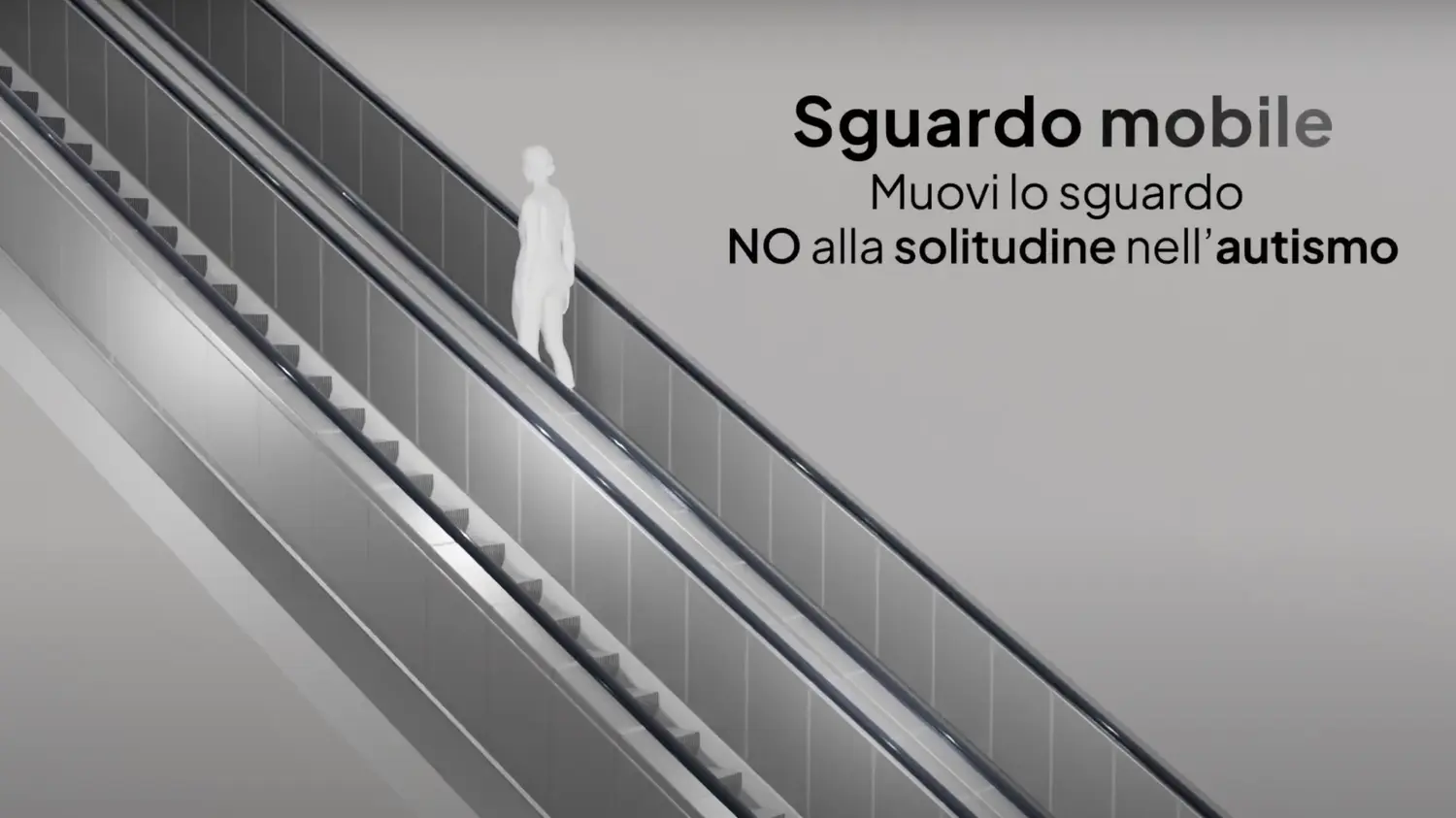
The image shows a minimalist 3D rendering of two escalators with a single white human silhouette. On the right, Italian text reads: "Sguardo mobile - Muovi lo sguardo - NO alla solitudine nell'autismo" (Mobile glance - Move your gaze - NO to loneliness in autism). The scene, set in a digital interface, conveys a message of social awareness.

MUSE, with its "Obiettivo Accessibilità" event, provided the ideal context to amplify this message by offering engaging experiences such as tactile tours, virtual reality presentations and sensory workshops, enabling visitors to live inclusive experiences. Following the approval of the PEBA, the Plan for the Elimination of physical, sensory and cognitive Architectural Barriers, MUSE proposes itself as a space for the realisation of a model of cultural welfare, promoting wellbeing and health through cultural heritage.

COmetaand Open COmeta

The multimedia installation "Sguardo Mobile" is part of the decade-long experience of Lab Cometa, which supports the design of product concepts with the aim of improving the quality of life of autistic people. Thanks to decades of collaboration with experts in the field, such as the Fondazione Trentina per l'Autismo, with the Casa "Sebastiano" project and with Onlus Abilitiamo, the Lab's educational objective is to make students aware of the social usefulness of design, with the intention of raising awareness of autism issues.

The projects realised over the years have shown that the possibilities are vast and can have a targeted and improving impact on the everyday life of people with autism spectrum disorder. This awareness and the desire to create a community of reference led to the creation of Open COmeta.

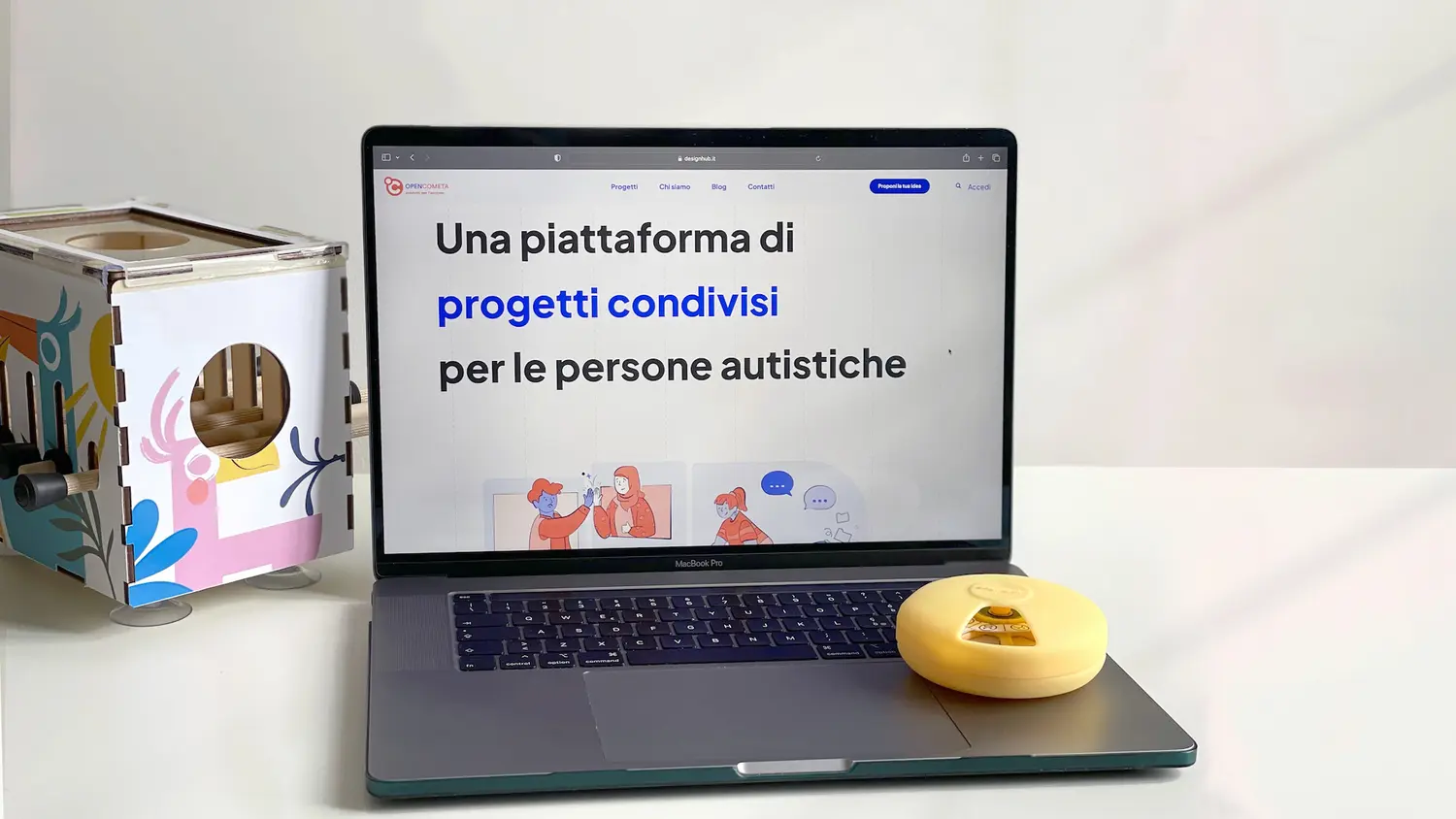
The image shows an open laptop, a MacBook Pro, positioned centrally on a clean white surface. The screen displays a webpage with the Italian title: "Una piattaforma di progetti condivisi per le persone autistiche" (A platform of shared projects for autistic people). To the left of the laptop is a colorful wooden activity box, and to the right, placed on the laptop's palm rest, is a small, light yellow round object. The lighting is natural and even, coming from the left, and the entire shot has a sharp, professional style.
«An Open Source project; a space in which to share ideas, projects and opinions; a network for knowledge and dissemination that reflects on the relationship between design and autism. »

Open CoMeta is a platform of collaborative projects for autistic people, sharing knowledge, methods and materials for the realisation of projects that are scalable, replicable and accessible, promoting collective participation and fostering the development of an inclusive and non-discriminatory society through innovative ideas that embrace all forms of diversity. All projects are open source and can be carried out independently or with the support of the FabLab network and many partners.

Share on: