Exhibitions, installations and events of the Polimi Design System

Milano Design Week 2024

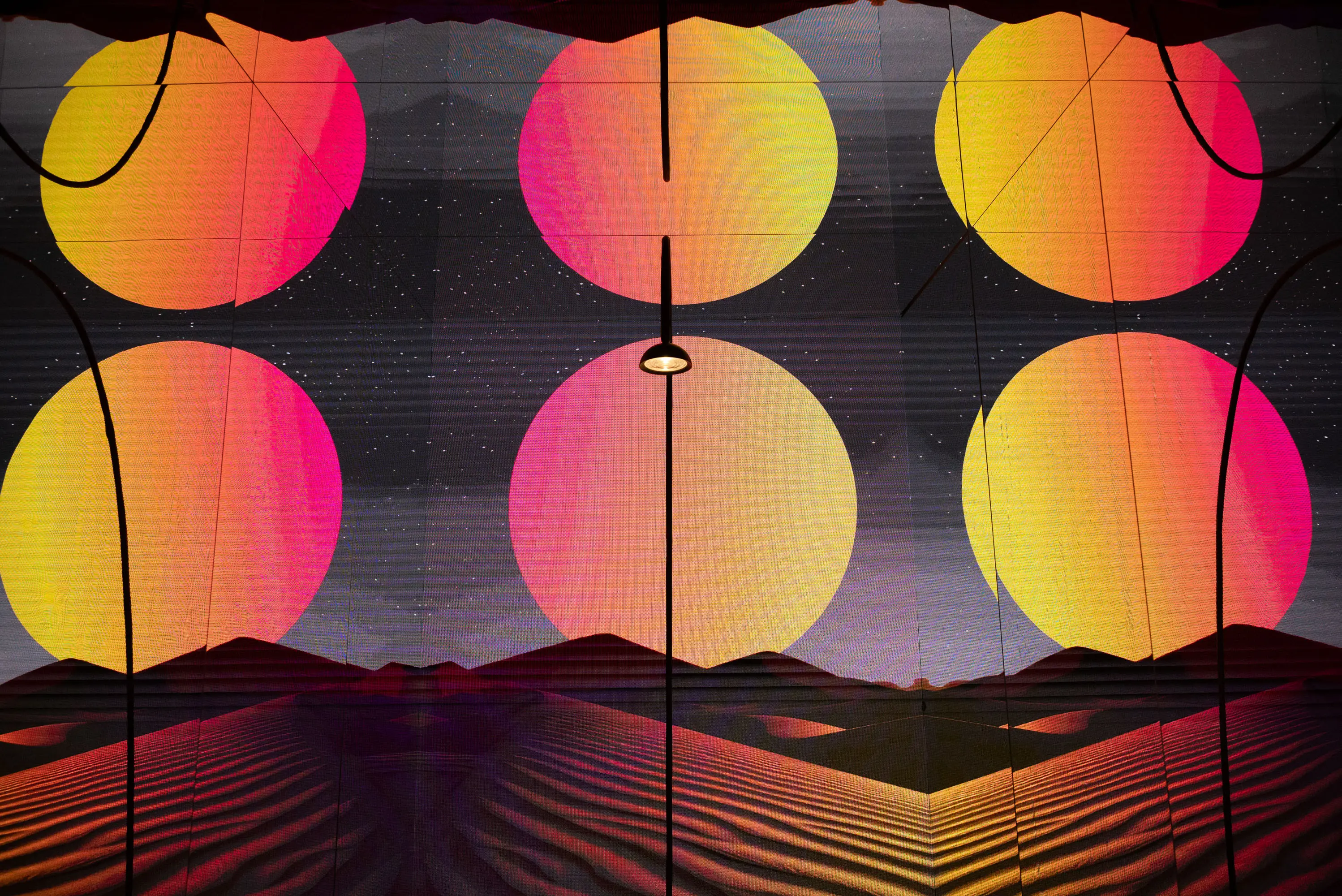
The image shows an evocative artistic or visual installation that combines digital and physical elements. On a large LED screen, or through a projection, a nocturnal desert landscape is displayed with undulating sand dunes in the foreground and a starry sky in the background. The main features of the scene are large glowing circles reminiscent of suns or moons, characterized by warm gradients fading from bright yellow to deep pink and red. In the foreground, thin black physical elements, similar to cables or curved stems, cross the vertical space, adding depth and three-dimensionality to the composition. The overall effect is hypnotic and futuristic, evoking a science fiction atmosphere or an immersive art installation.

The Department of Design, the School of Design and the POLI.design consortium have once again confirmed their commitment to enhancing and promoting creativity, design and innovation.

The Milano Design Week 2024 has come to an end. The Design System of Politecnico di Milano presented the widespread event INTERDEPENDENCE - designing relationships and a series of other events featuring projects, installations and performances by members of our System.

Interdependence was the central theme of the DesignXDesigners exhibition, featuring the work of Polimi Design System students at Campus Bovisa Durando, of the international INTERDEPENDENCE exhibition in the spaces of Fabbrica del Vapore and of an interactive installation at Salone Satellite.
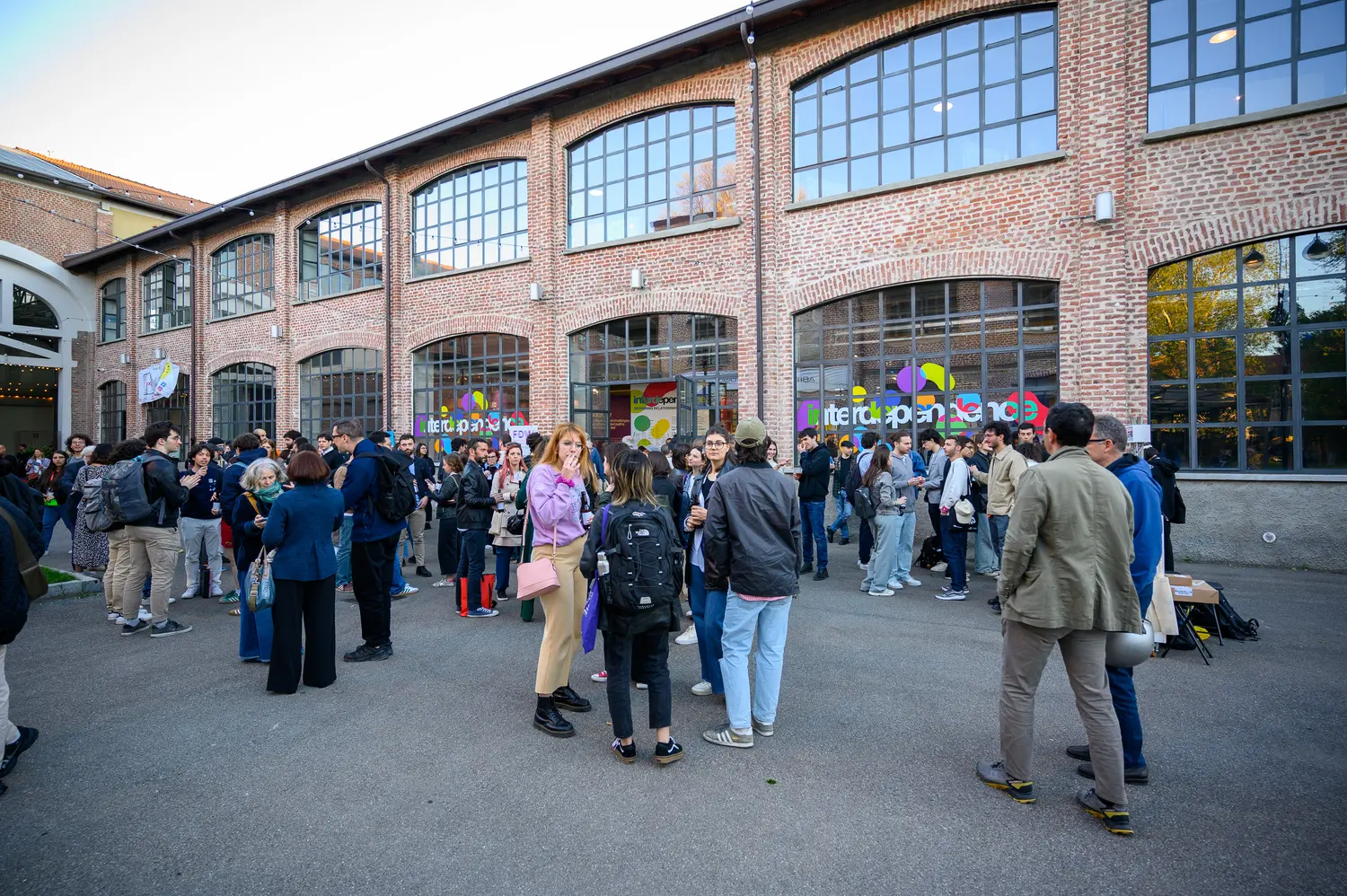
The image captures a moment of lively social interaction outside a repurposed industrial building, featuring large exposed brick arches and expansive windows. A large group of young people is gathered in the courtyard, chatting and interacting in an informal and dynamic atmosphere. On the building's windows, the colorful word "Interdependence" stands out, suggesting that the space is hosting a cultural event, festival, or creative project. The natural light of the late afternoon illuminates the scene, highlighting the urban and contemporary style of the participants and the historical architecture of the structure, which serves as a modern hub for social and cultural gathering.

The rich exhibition programme allowed allowed more than 6,500 visitors to explore the dense network of relationships and connections that characterise the contemporary world, through a selection of projects by students from Politecnico and fifty other international universities.

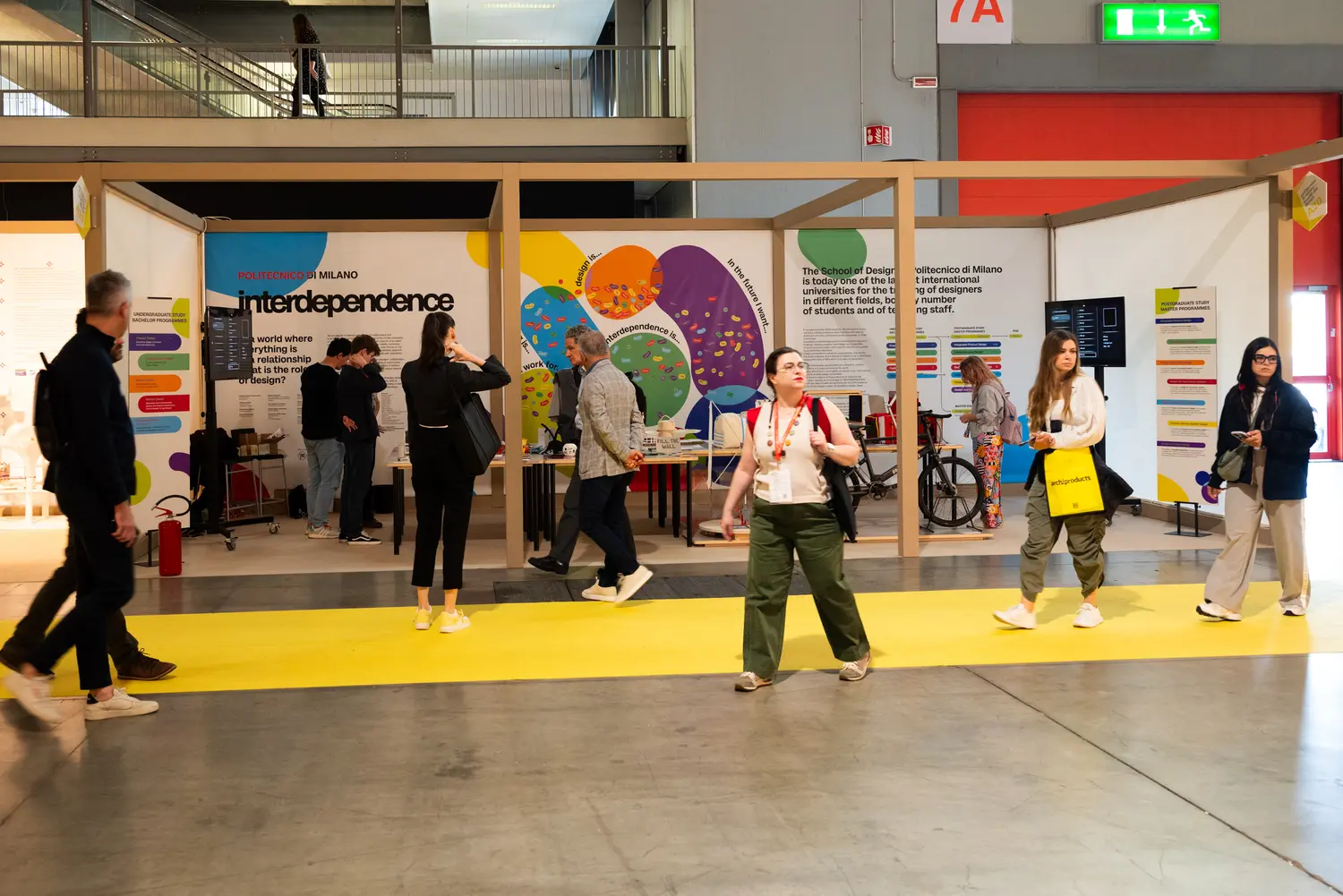
The image shows the interior of a large exhibition pavilion during a design event, as indicated by the word "interdependence" on the booth walls. The space is organized with modular wooden structures that define various exhibition areas belonging to the Politecnico di Milano.  Several people walk along a central path marked by a long yellow strip on the gray floor, which guides visitors through the exhibition. The booths feature information panels rich in colorful graphics, diagrams, and descriptive texts. The environment is characterized by industrial lighting and a dynamic, professional atmosphere, typical of large trade fairs dedicated to innovation and academic education.
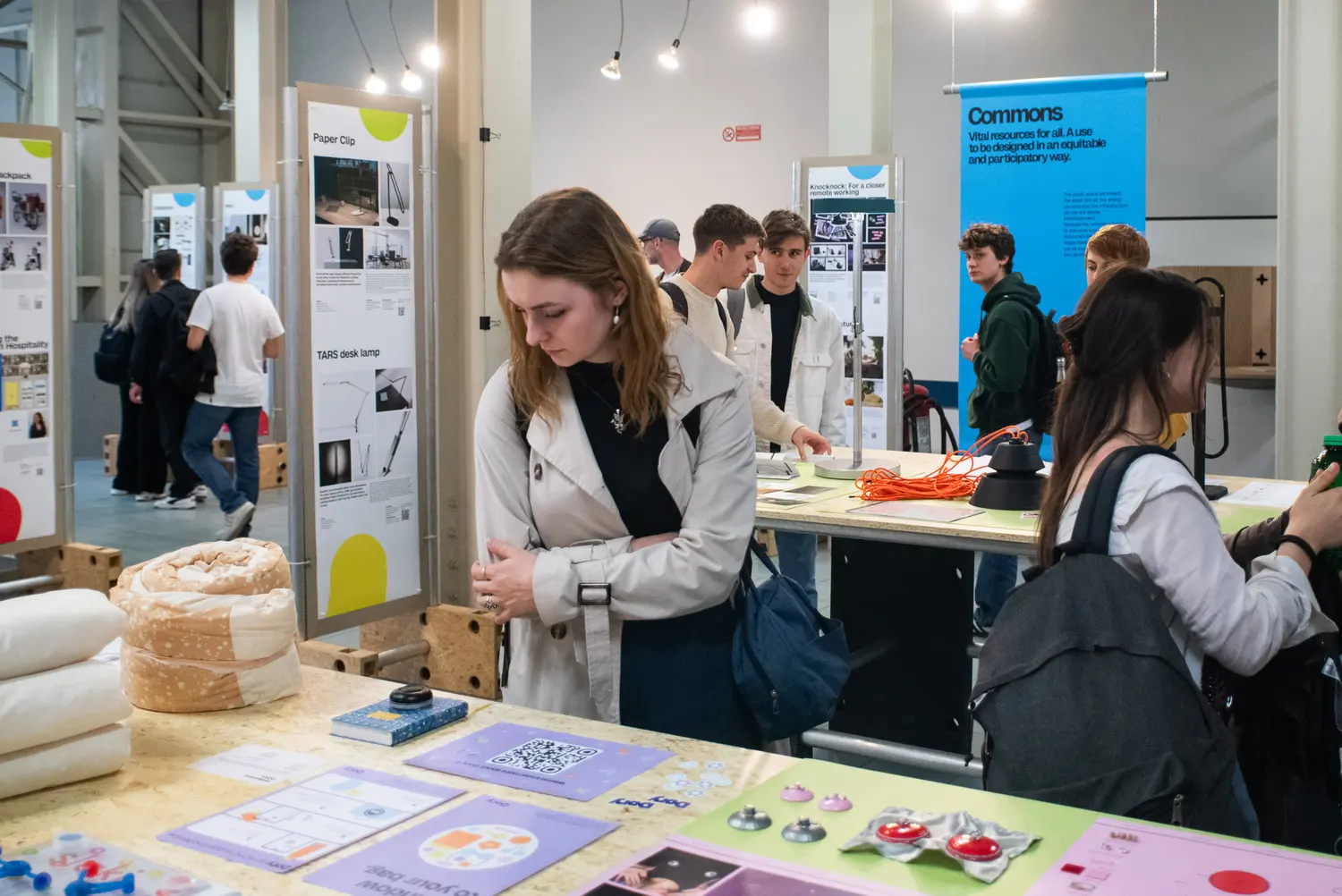
The image captures a moment of careful observation within a design exhibition. In the foreground, a young woman in a light-colored trench coat is focused on examining the prototypes and information materials laid out on a light wood table; among these are brochures with QR codes, small colorful objects, and a rolled-up textile element.  In the background, other visitors move between the booths, while several vertical panels display project details such as the "TARS desk lamp." A large blue banner with the word "Commons" stands out in the upper right, adding a significant textual element to the educational and design context. The focused lighting and minimalist setup create an atmosphere of study and intellectual curiosity, typical of a university exhibition or an Industrial Design industry event.

Many other initiatives involved professors and researchers from the Department and the School of Design, highlighting the different design and research areas of the System: from industrial design to fashion, from interiors and furniture to communication, from services to branding, from transport to design engineering.

Among the exhibitions, "New Materials" covered the 10 years of experimentation of the MadeTrans laboratory, led by Valentina Rognoli and focused on material research, from the cultivation of bacteria and fungi to the use of new processes and technologies; while the installation "To the edge of matter. An unforgettable journey", curated by Ico Migliore, offered the public a journey into matter, between the physical and the virtual.

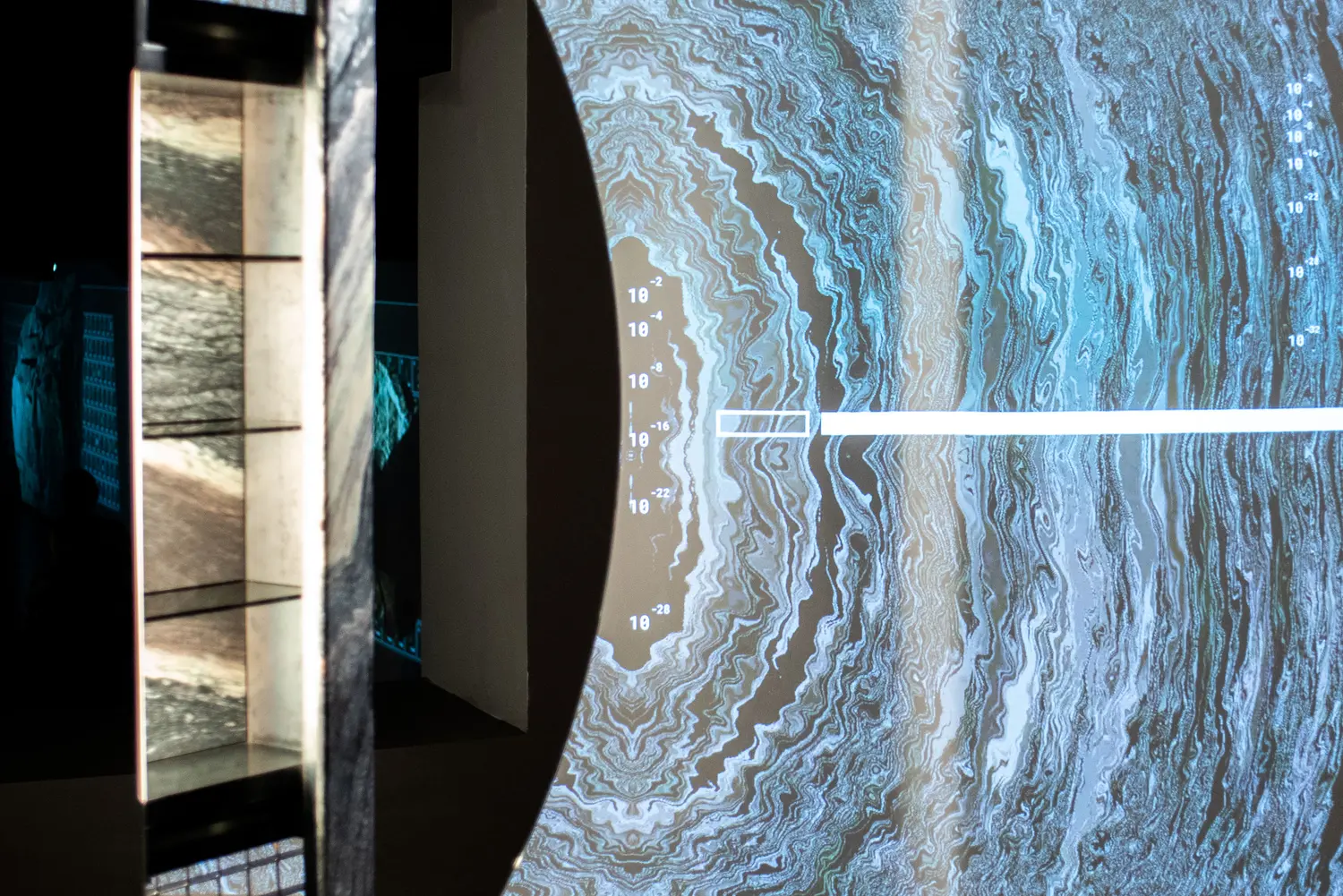
The image shows a close-up detail of an impactful multimedia and architectural installation. On the right, a circular projection dominates, showing a fluid texture in shades of blue, gray, and white, reminiscent of natural marble or stoneware veins transformed into a dynamic pattern. Scientific graphic elements are visible on the surface, such as a scale of negative powers of ten (10  −2   to 10  −28  ), suggesting a microscopic or molecular exploration of the material.  On the left, a vertical structure serves as a backlit display, with thin shelves holding slabs of stone material. The contrast between the darkness of the surrounding environment and the brightness of the projected surfaces creates a futuristic and technological atmosphere, typical of an exhibition path that merges industrial design with scientific research.
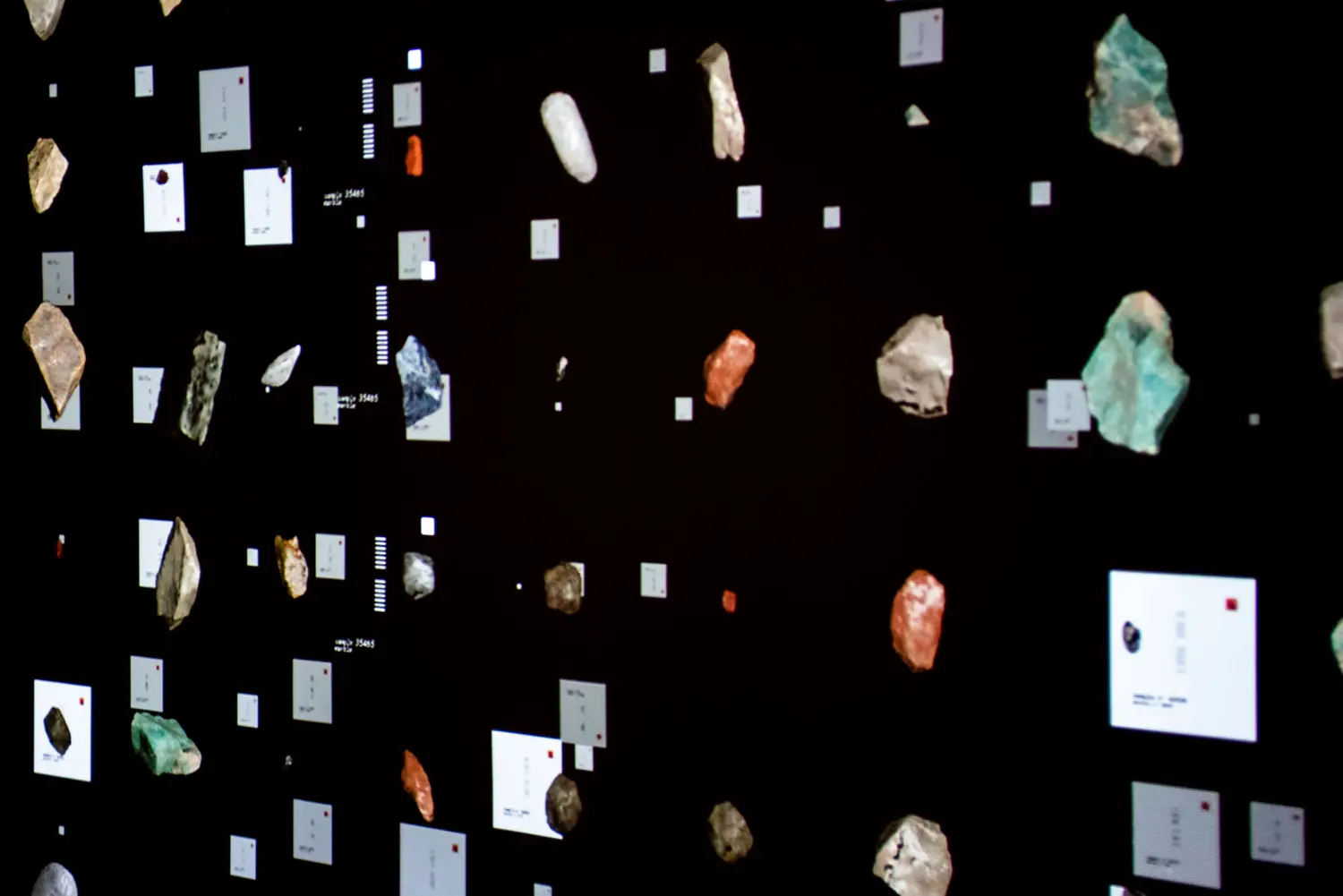
This image captures a detail of an exhibition or museum installation. Numerous fragments of stones and minerals of various shapes, sizes, and colors (from teal to rust, gray to white) are displayed on a solid black wall. Each specimen is accompanied by a small, backlit white identification tag. The setup creates a striking visual contrast, making the minerals appear as if they are floating in space, emphasizing scientific research and the beauty of the raw material.

"Shaping Sustainable Innovations Through Design Practice", curated by Venanzio Arquilla, Patrizia Bolzan and Carlo Emilio Standoli, presented a selection of prototypes made by the students of the Master's degree course in Integrated Product Design; "Design is Happiness" exhibited the work of the students of the Landscape and Interior Spatial Design workshop led by Professors Michele De Lucchi, Francesca Balena Arista, Marco De Santi and Francesco Clerici.

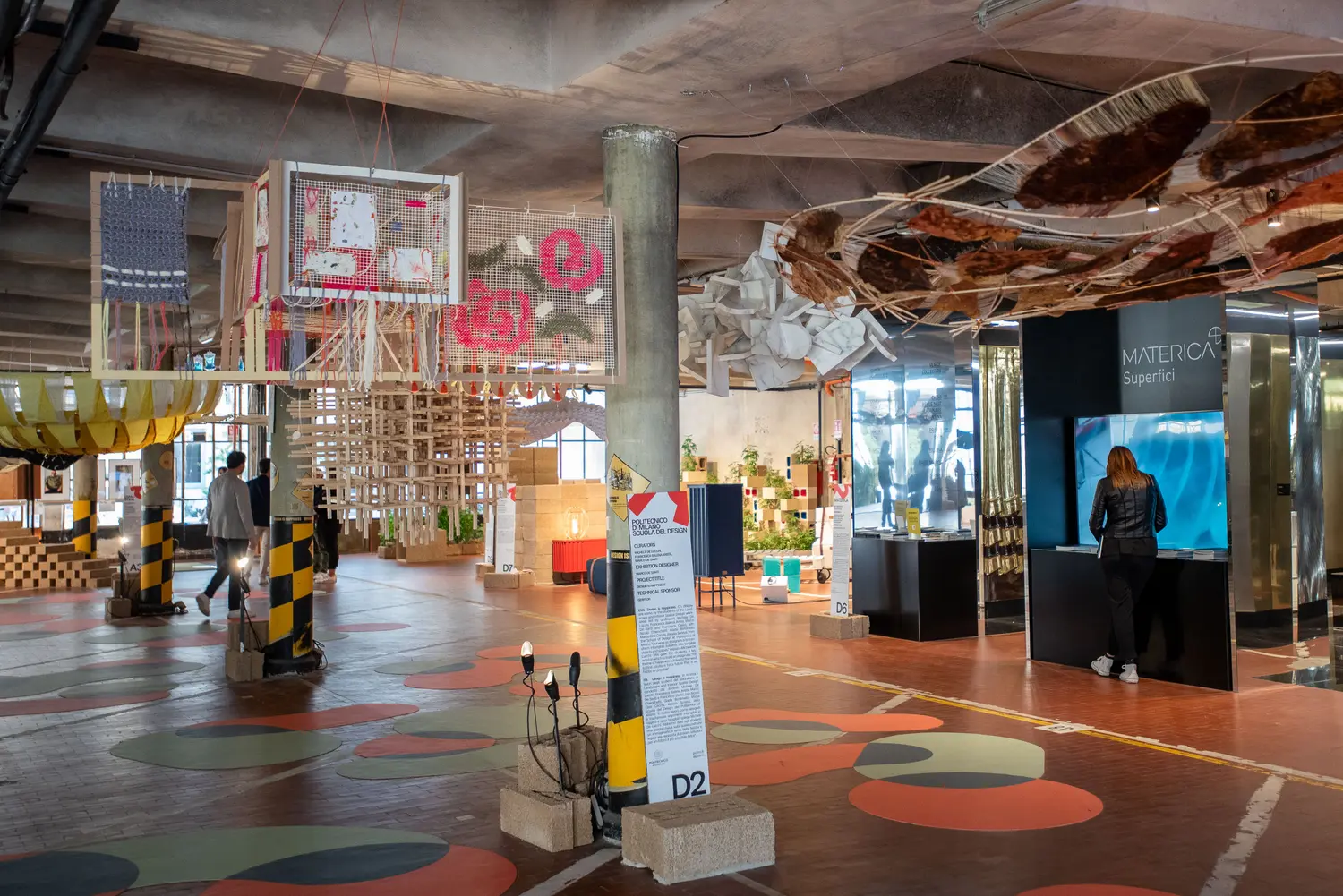
an evocative design and textile art exhibition set within a vast industrial space, characterized by high exposed concrete ceilings and structural columns. Numerous creative installations hang from the ceiling, including looms with colorful floral weaves, wooden lattice structures, and organic shapes made from natural materials.  The floor is decorated with large overlapping circular graphics in shades of red, green, and gray, which guide visitors through the space. On the right, a modern black booth features the words "MATERICA Superfici", indicating an area dedicated to materials research. The overall atmosphere is vibrant and multidisciplinary, reflecting the innovative spirit of the exhibitions organized by the Politecnico di Milano School of Design.
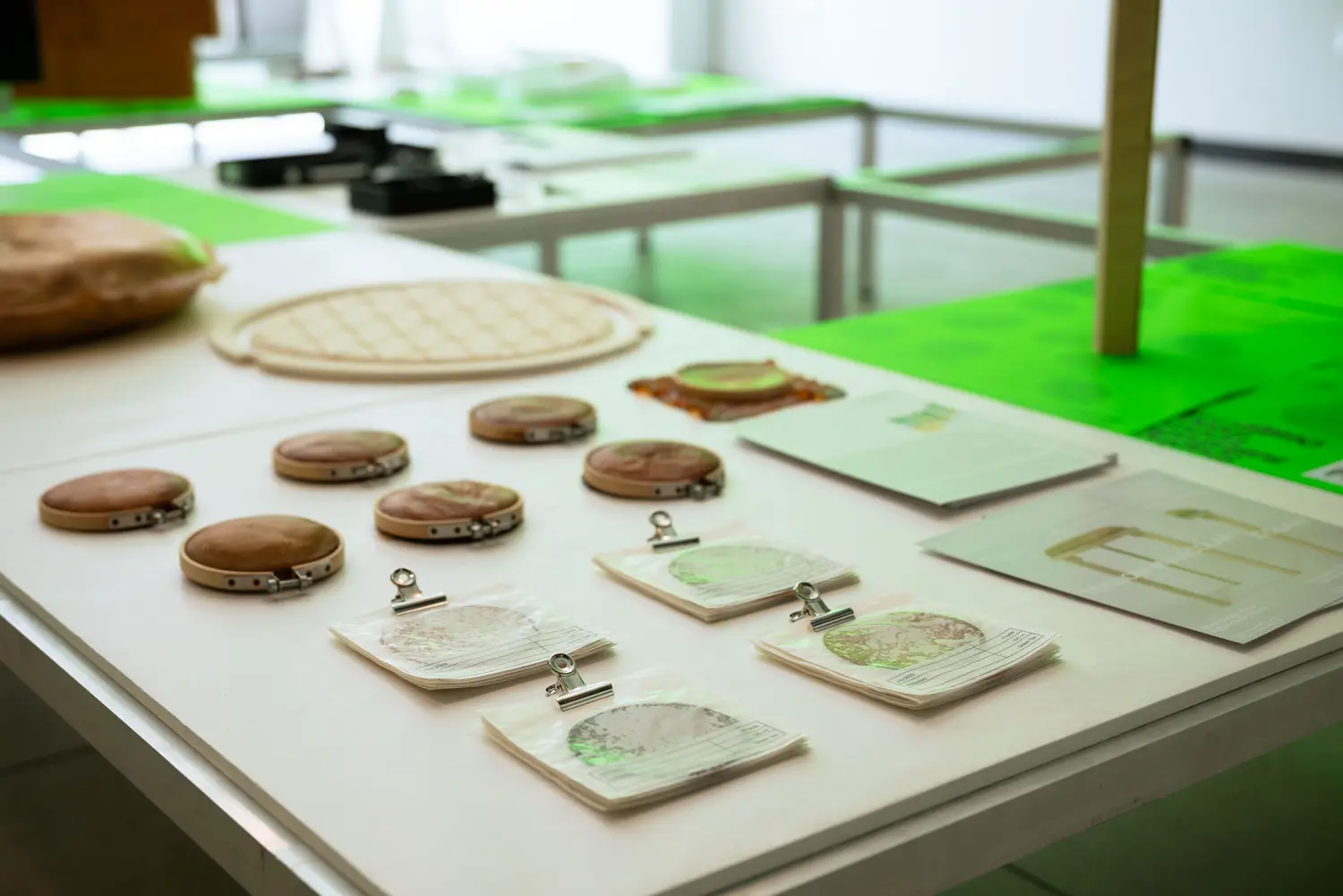
a detail of an exhibition table within a design show, focused on material and botanical research. In the foreground, several small wooden embroidery hoops are precisely arranged, enclosing samples of fabrics or organic membranes in warm tones. Next to these are small transparent bags held by metal clips, containing material discs with natural textures similar to microbiological cultures or plant sections.  In the background, the workspace continues with vibrant acid green surfaces and informational materials, including brochures illustrating the project’s concepts. The diffused light and methodical organization of the objects suggest a scientific approach to design, typical of experimental research exploring new languages between nature and technology.

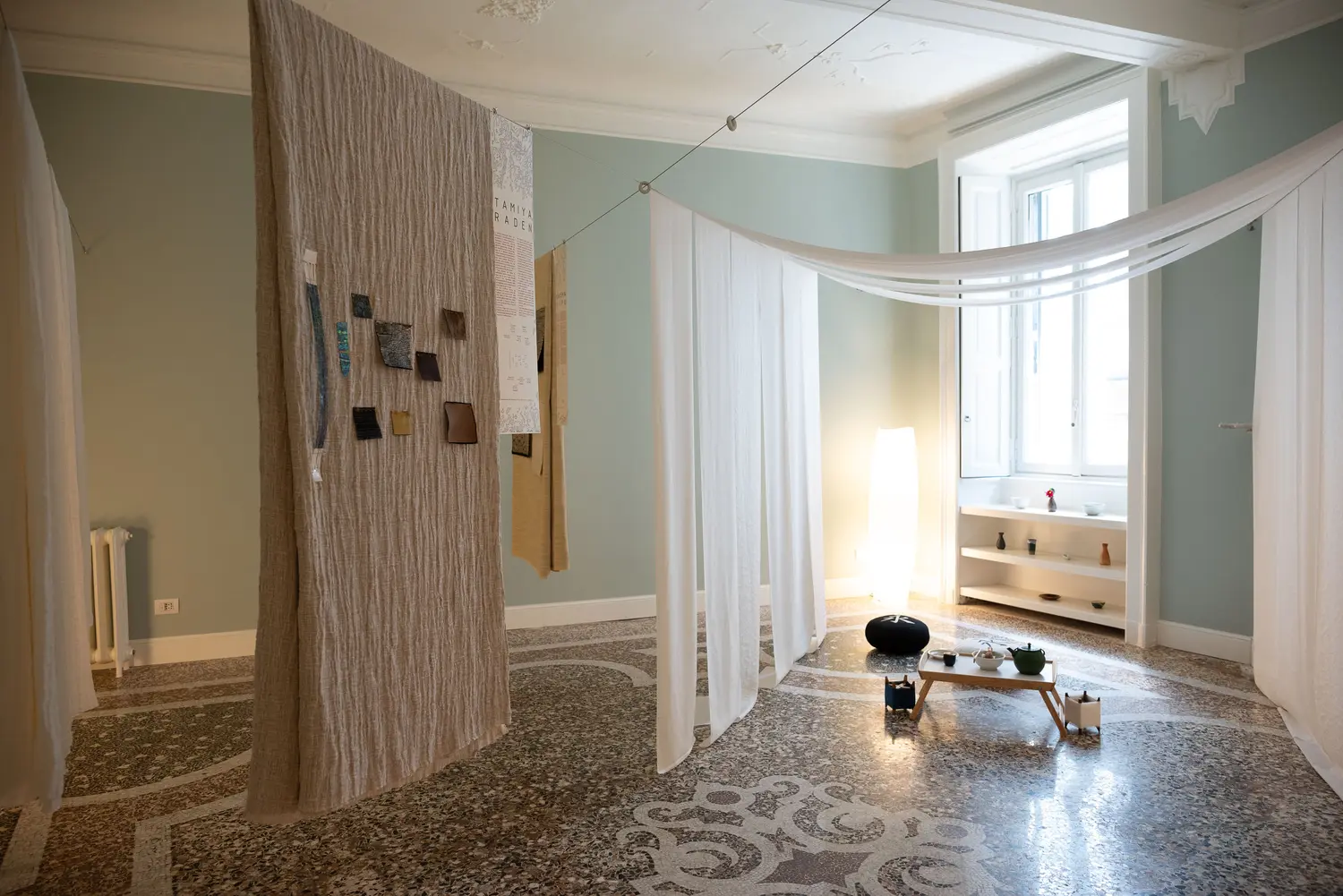
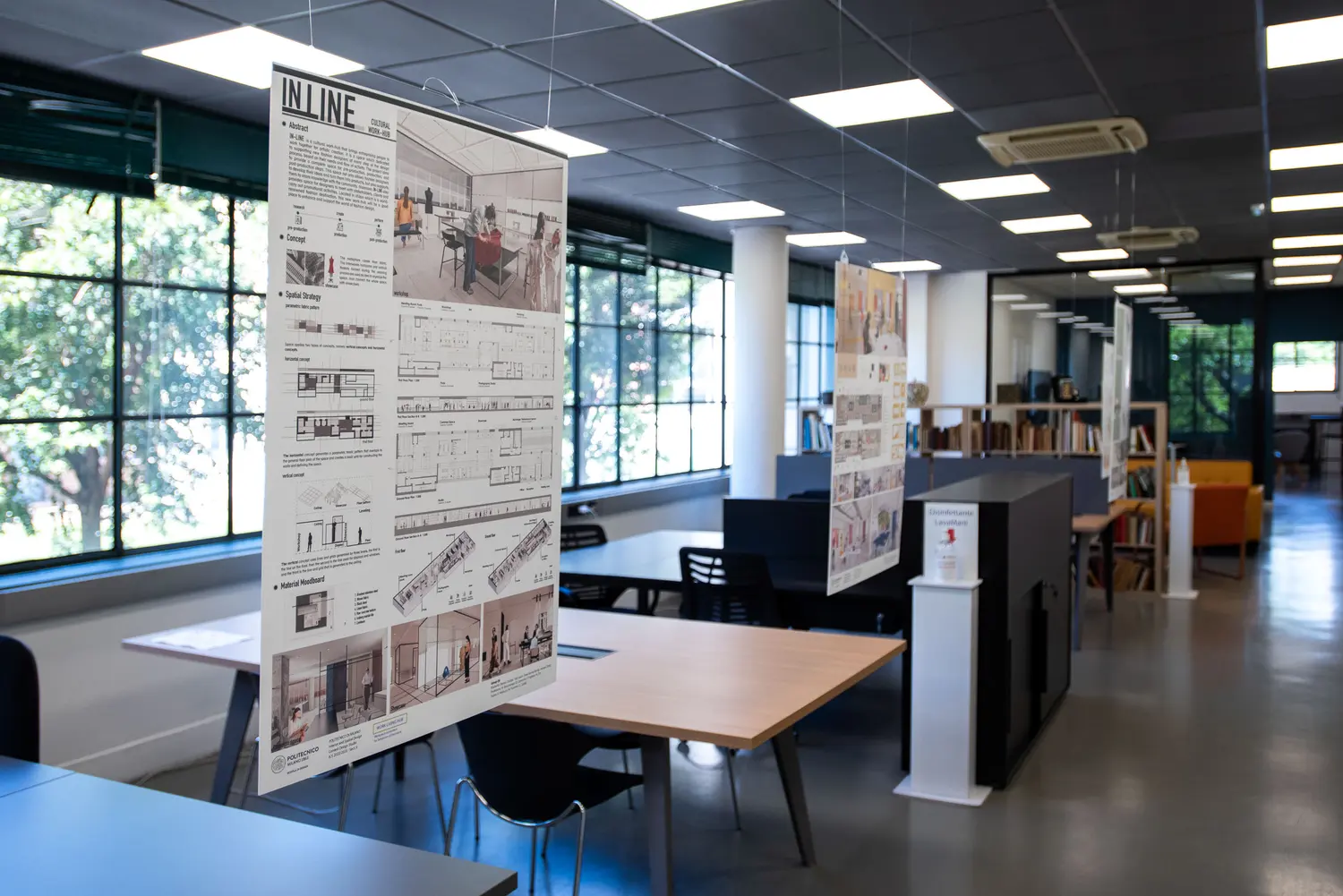
The "On Weaving" exhibition, born from the encounter of two ancient textile cultures, the Italian and the Japanese, featured the collaboration of Giovanni Maria Conti and Martina Motta and Labir_int; the G-Gravity space hosted the projects developed within the "Work Living Hub. Workplace ecosystem for behaviours of the future", led by Barbara Camocini, Francesca Foglieni, Marco Bencivenga, and Michele Zini, with the supervision of the tutors Melania Vicentini, Elena Martucci and Carola Zulato.

a delicate and poetic exhibition setup inside a historical room, featuring a decorated Venetian terrazzo floor and sage green walls. The space is paced by light, gauzy fabric sheets hung from thin metal cables, creating semi-transparent partitions and fluid paths.  On the left, a large drape of crinkled fabric displays small square material samples, while at the center of the scene is a corner dedicated to a tea ceremony or meditation, with a low wooden table holding a teapot and cups, accompanied by a dark floor cushion (zafu). Natural light enters from a large window in the background, filtered by white drapes hanging from the ceiling, creating an ethereal and Zen atmosphere that blends the elegance of classical architecture with contemporary textile design.

During the 2024 edition of Milan Design Week, the Politecnico di Milano renewed its commitment to research in the field of design, also thanks to its collaboration with an ever-growing international network. This was fully demonstrated by the extraordinary response of students and institutions who wanted to put their voice alongside that of our Design System, thus ensuring productive interactions of places, visions and knowledge.

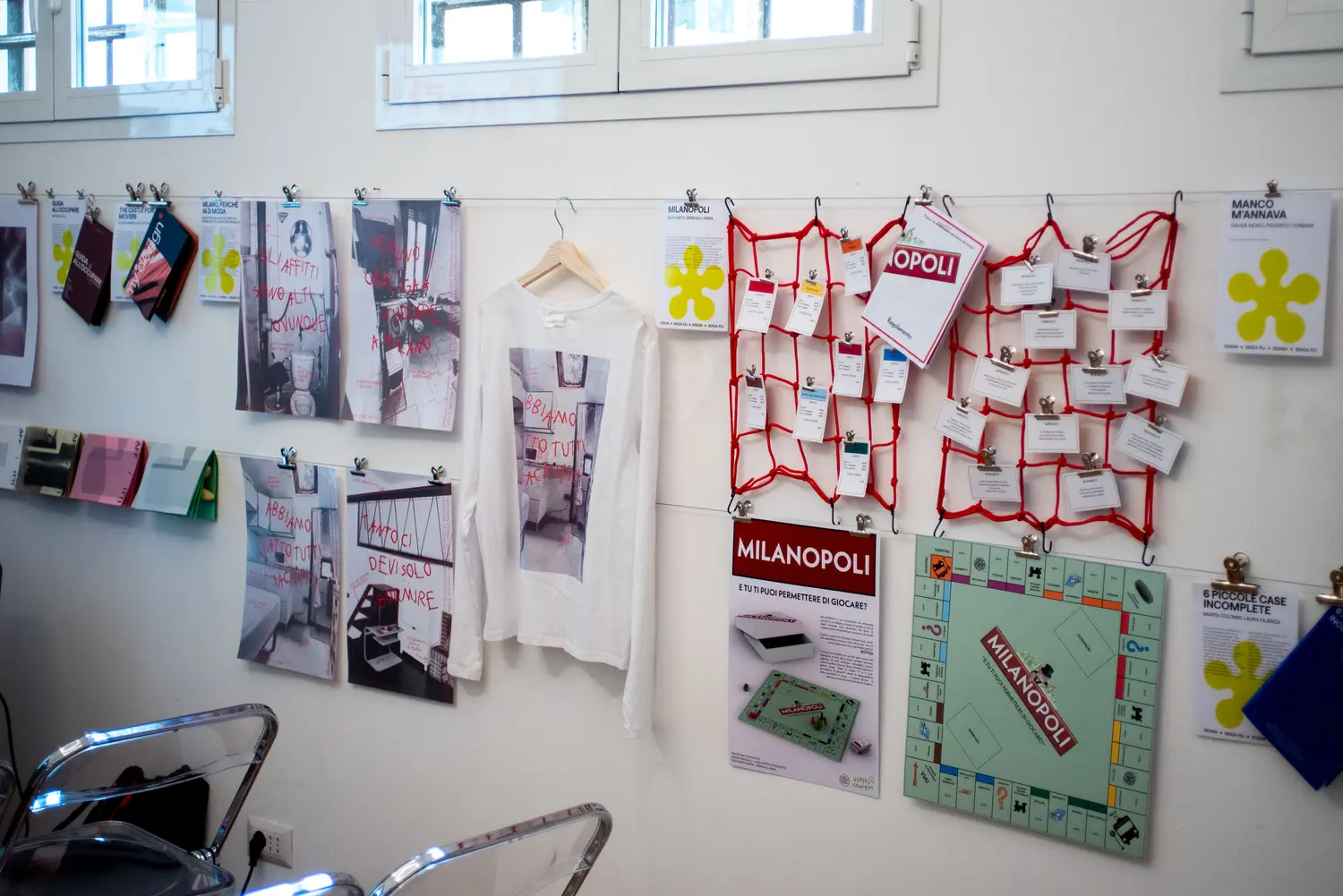
The image shows a display wall within a bright environment, likely a studio or gallery, where various graphic and creative materials are presented. The collection is arranged informally using metal wires and clips, including posters, small booklets, and a white long-sleeved shirt hanging on a wooden hanger.  The project titled "Milanopoli" stands out, a creative reinterpretation of the famous board game, featuring explanatory posters and a board that recalls the map and urban dynamics of Milan. Other elements include red nets with small white tags attached and graphics featuring a yellow flower or blot icon, accompanied by Italian text reflecting on social and housing themes. The setup suggests a context of participatory design or an academic exhibition dedicated to the analysis of urban territory.
The image shows the interior of a modern office or university classroom, temporarily transformed into an exhibition space. In the foreground, several design boards are suspended from the ceiling by thin metal cables, floating above the workstations. The nearest panel, titled "IN LINE", features detailed floor plans, conceptual diagrams, and photorealistic renderings, complete with Politecnico di Milano logos.  The environment is characterized by long wooden desks and dark ergonomic chairs, neatly arranged under a row of large windows overlooking a wooded area. Natural light, combined with the square LED panels on the technical ceiling, uniformly illuminates the space, highlighting the clean design and the atmosphere of academic and professional research.
Photo credits: Image Lab

Share on: