PARIPASSO - Per crescere insieme

The research project and participatory design workshops

A young girl with curly hair tied back is shown from behind as she draws with an orange marker on a transparent surface, likely a plexiglass sheet or a window. A simple, childlike drawing is visible on the panel, while the background reveals a bright educational environment with bookshelves filled with books and blurred figures suggesting the presence of others in the room. The image captures a moment of free creative expression and active learning, highlighting the importance of hands-on activity and imagination in early childhood education.

The Department of Design is a partner in the PARIPASSO project, which is financed by Impresa Sociale Con i Bambini as part of the “Fondo per il contrasto della povertà educativa minorile”. Aimed at children aged 0–6, with a focus on the first 1,000 days of life, the project experiments with a flexible model of access to educational services. This model is designed to progressively involve families in vulnerable situations in conscious practices of early childhood education and care.

The PARIPASSO project, led by the Cooperativa Sociale Stripes Onlus, is being developed across five territories — Castel Volturno, Rome, Desio, Valle Trompia and Bari — by establishing territorial hubs for children. These spaces are designed to welcome children and families, particularly those from disadvantaged backgrounds who are often excluded from traditional services.

The hubs' interior and urban design explores how multi-functionality, flexibility and accessibility can generate 'threshold' spaces that foster the engagement of local communities.
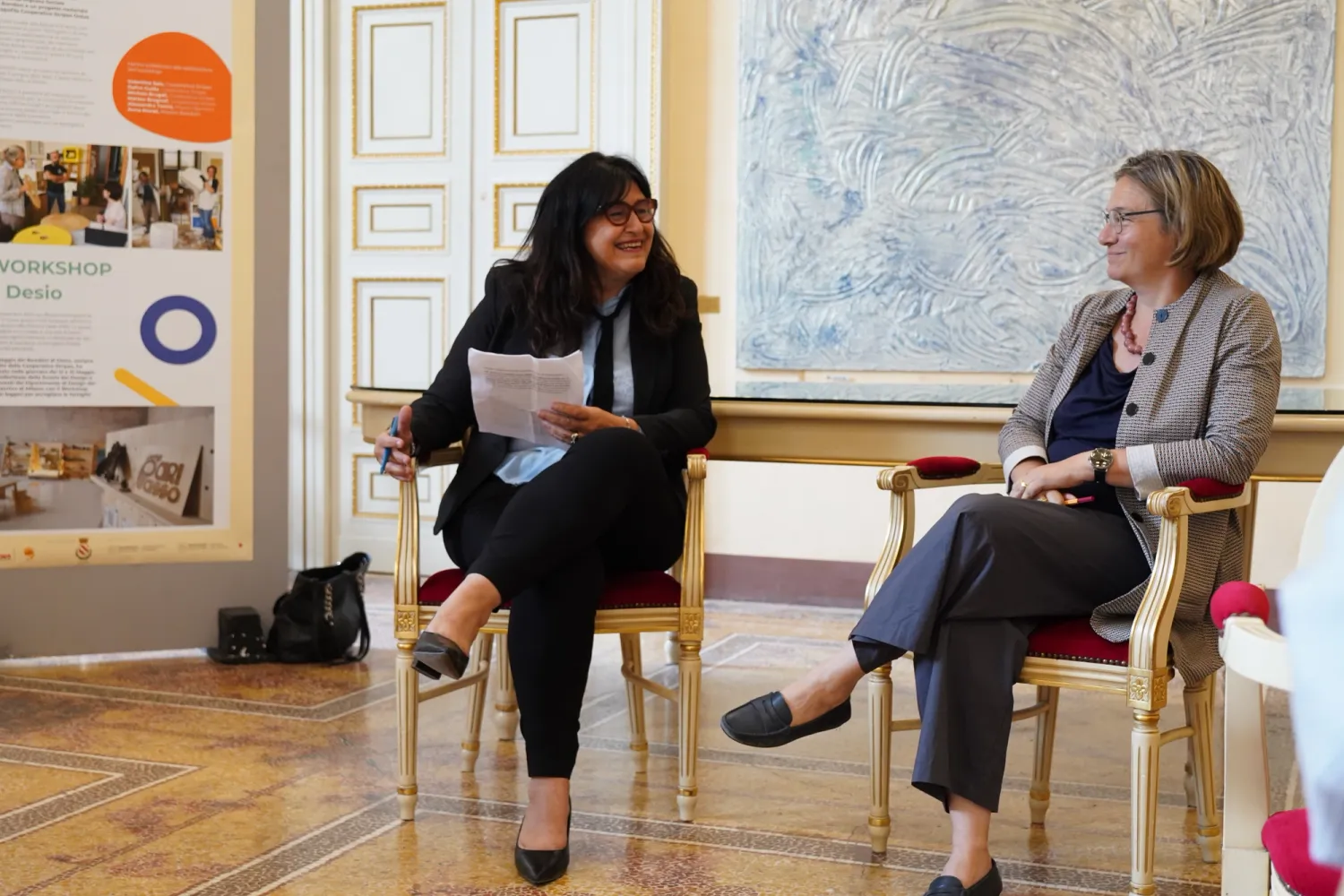
Two women sit across from each other in an elegant, historic room, engaged in a relaxed and smiling conversation during an interview or public debate. The woman on the left, wearing glasses and a dark suit, holds some notes, while her counterpart listens attentively in a relaxed pose. The space features refined terrazzo flooring, decorated doors, and a large abstract painting in the background, along with an information panel on the left documenting workshop activities. The image conveys an atmosphere of authentic cultural and professional exchange, typical of talks dedicated to design and social innovation in institutional settings.
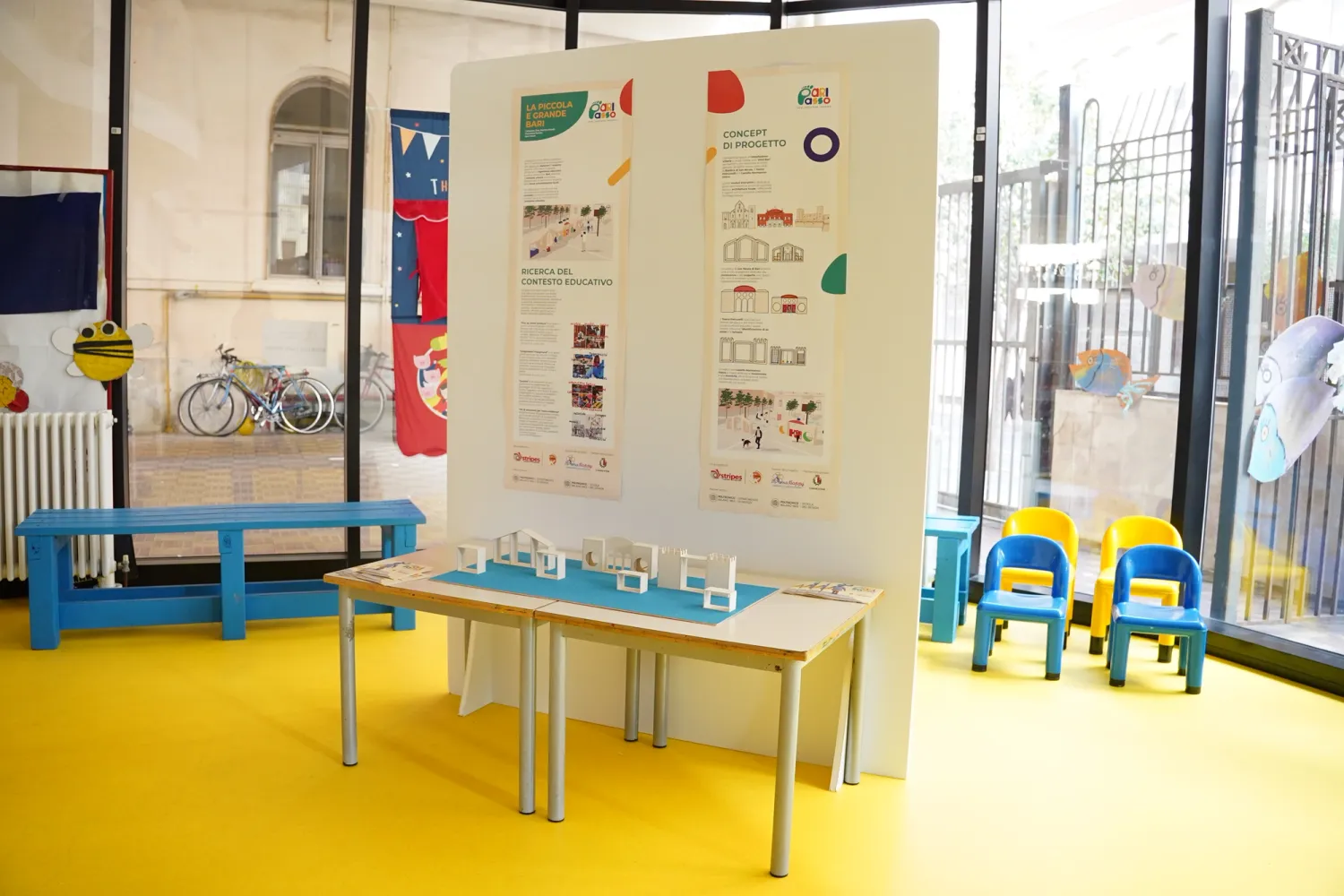
An exhibition display within a bright educational space presents the project "LA PICCOLA E GRANDE BARI," focusing on educational context research and project conceptualization. Two long vertical panels filled with illustrations, text, and architectural diagrams are pinned to a white mobile partition, while a white volumetric model reproducing the studied structures in scale sits on the table in front. The surrounding environment, featuring a vibrant yellow floor and child-sized furniture such as colorful chairs and blue benches, underscores the participatory and pedagogical nature of the initiative, aimed at integrating urban design with the needs of new generations.

In this context, the Department of Design's research team is contributing to the development of the hub model as a tool to support parenting. This involves promoting a multidisciplinary educational approach and enhancing the experiences of territorial partners in order to build a shared and lasting legacy.

The Department has organised two participatory design workshops at hubs in Bari (November 2024) and Desio (May 2025). These workshops involved design students, pedagogists from the PARIPASSO network, and local families. The aim was to strengthen the sense of belonging and co-responsibility within the community.

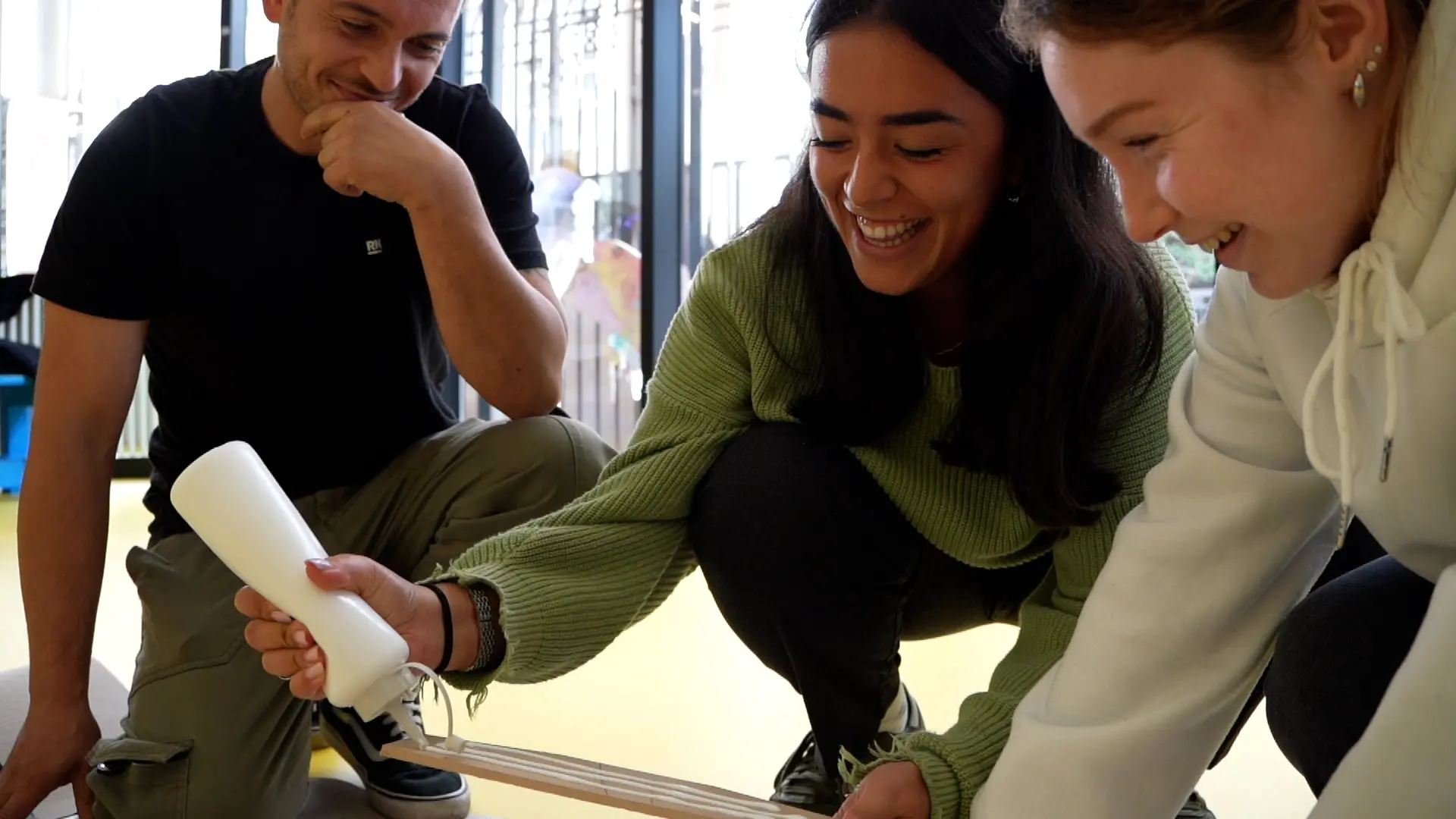
Three young people are crouched on the floor in a bright workshop or classroom, enthusiastically collaborating on a prototype. A smiling girl in the center holds a wooden structure in place while a teammate carefully applies white glue from a bottle. The image captures a moment of active learning and creative sharing, where teamwork and a hands-on approach become essential tools for shaping ideas. The informal atmosphere and the visible participation of the group underscore the value of practical experimentation in the educational journey of new designers or planners.
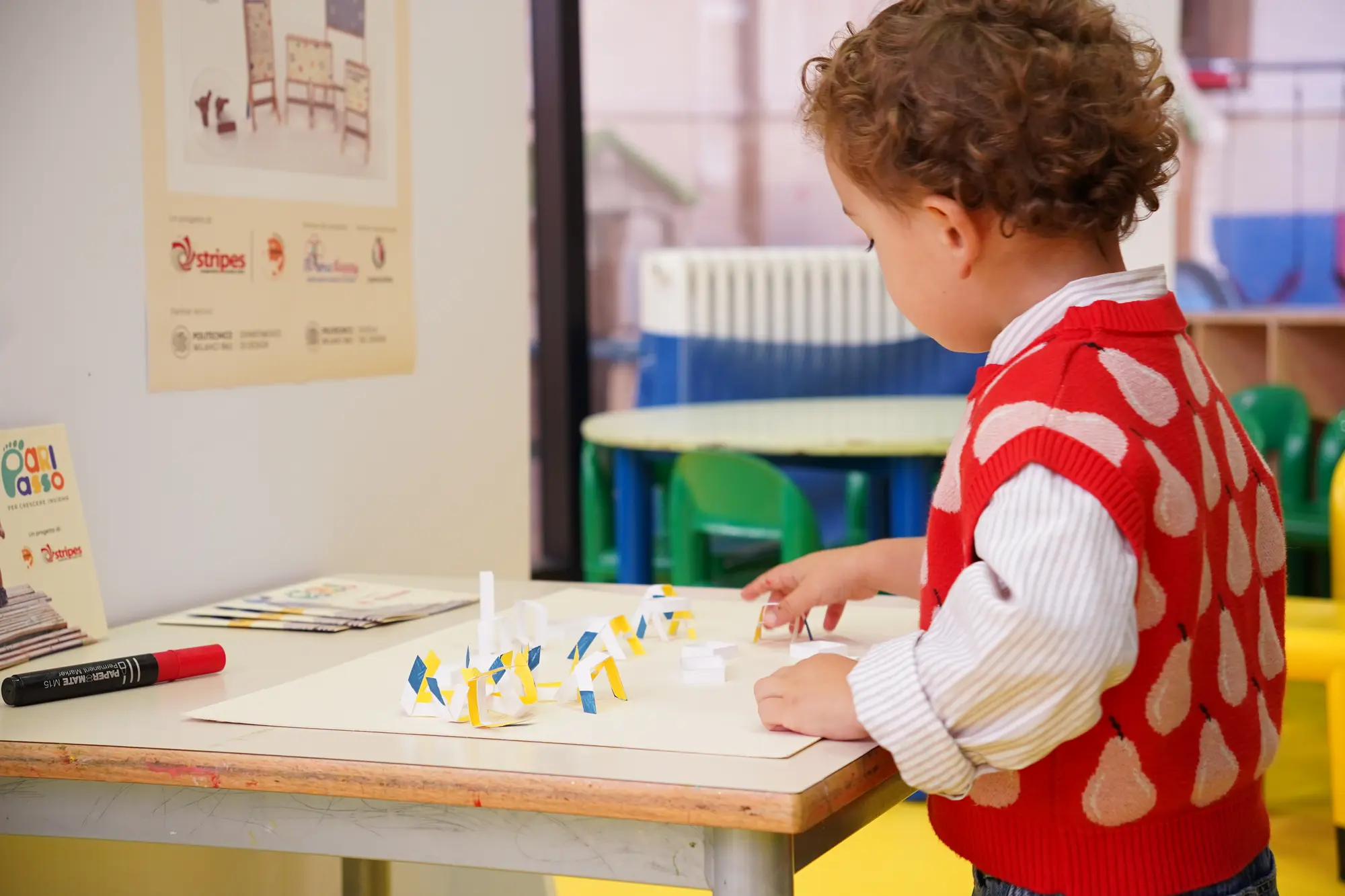
A young child with curly hair and a patterned red vest is absorbed in playing or building at a low table in a school setting. On the table, he handles small modular elements made of white and yellow paper, similar to those presented in the model of the "LA PICCOLA E GRANDE BARI" project seen earlier. The image focuses on the child's concentration and gestures, highlighting the value of physical manipulation and playful design as learning tools. In the background, colorful furniture and informational posters confirm the context of an innovative educational workshop, where design becomes an accessible language even for the youngest.

Light spaces to welcome families. The workshop in Bari

From 6 to 9 November 2024, the Hub in Bari hosted Department professors Barbara Camocini and Elena Giunta, together with School of Design students Catharina Dias, Martina Manfè, Elisa Poma, Francesca Porcile and Sara Vasco. The workshop, entitled 'Light spaces to welcome families', involved co-design work with parents and the project's pedagogical referees, Michela Brugali of Stripes and Valentina Colonna of the Mama Happy Social Promotion Association, which manages the Hub that was the subject of the intervention.

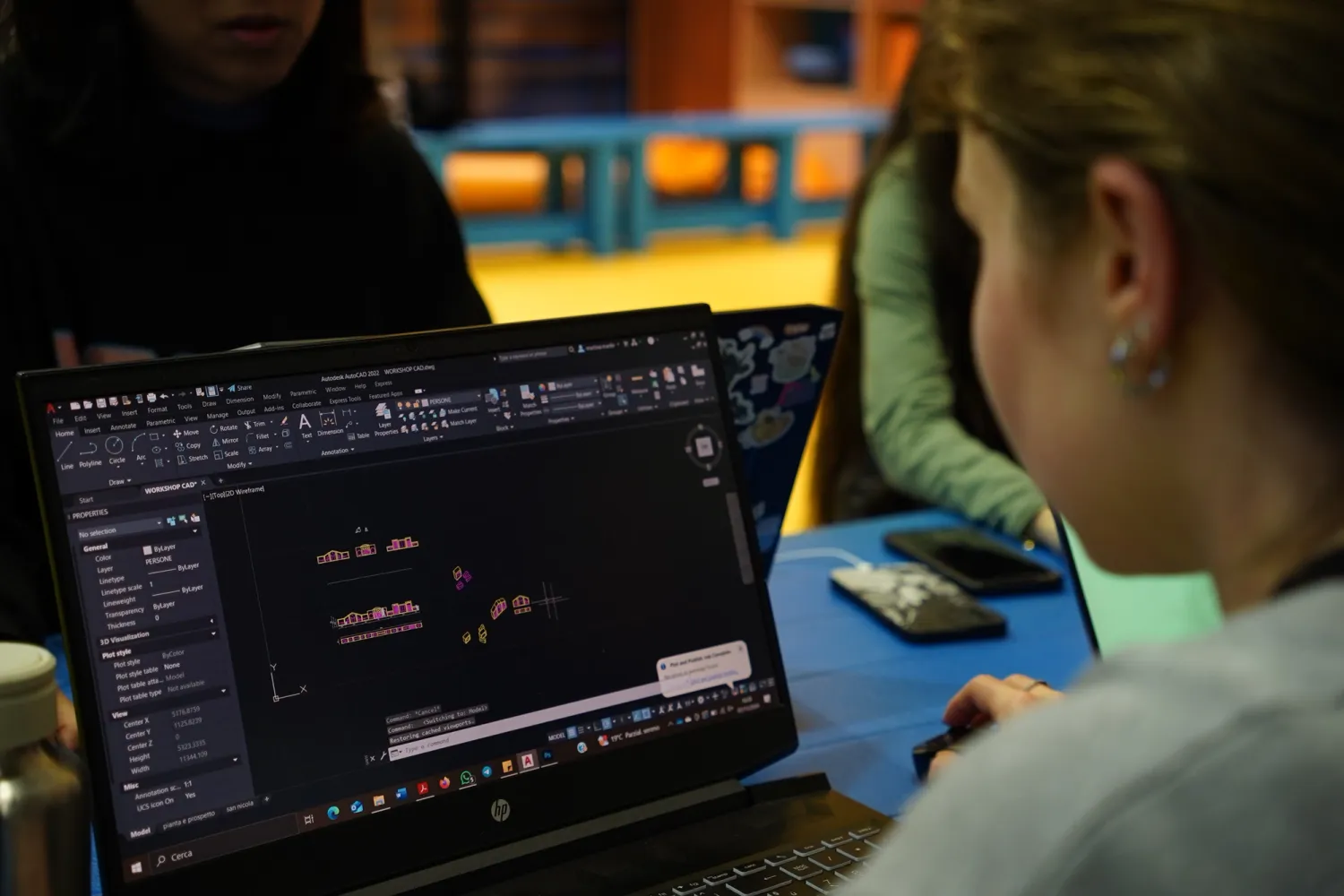
A young student or professional is focused on a laptop screen while working with complex CAD design software. The close-up shot emphasizes the technical interface of the program, filled with icons, drawing tools, and coordinates, highlighting the precision and digital skills required in contemporary design. The scene takes place in a collaborative environment, as suggested by the blurred figures and colorful tables in the background, capturing a moment of practical application where creativity merges with rigorous technical modeling.

The workshop aimed to devise design solutions to enhance the outdoor spaces adjacent to the school, namely the courtyard and the public area in front of it, by installing light fittings designed to encourage and facilitate activities for parents and children.

As well as providing practical support for the Hub's activities, the projects are intended to reinforce the project's narrative in the area and propose a thematic system of elements that can host events for citizens, thereby encouraging a more active and participatory use of the outdoor spaces.

Prototypes:

Cavalletto e cornice by Elisa Poma is a set of elements that come together to form a defined, protected space for hosting a variety of educational activities for families, while promoting the services offered by PARIPASSO hubs through communication tools located throughout the city. The project investigates the possibilities offered by combining two single set-up elements, 'Easel and Frame', which are available in two different sizes and can be arranged in various ways.

La Piccola e Grande Bari by Catharina Dias, Martina Manfè, Francesca Porcile and Sara Vasco aims to provide a space for children aged 0–3 and their carers to explore and discover together, strengthening their bond through educational and playful experiences. Designed for Bari, it enhances the urban and cultural context by proposing a route to discover local architectural icons. An interactive layout and visual communication stimulate children's curiosity and growth through play and interaction with the city environment.

Welcoming educational spaces as a pedagogical approach to support families. The Desio workshop

Students Alice Abela, Martina Crivellaro, Anna Meregalli, Giulia Mastrantonio and Giulia Tassoni, guided by professors Barbara Camocini and Elena Giunta, conducted a documentation and design activity in April 2025, which led to the realisation of prototypes in the field at the Hub in Desio at the end of May 2025. These proposals, for communication campaigns and punctual set-ups, were designed to promote the Hub's activities in the urban context, also involving the Villa Tittoni park, adjacent to the structure.

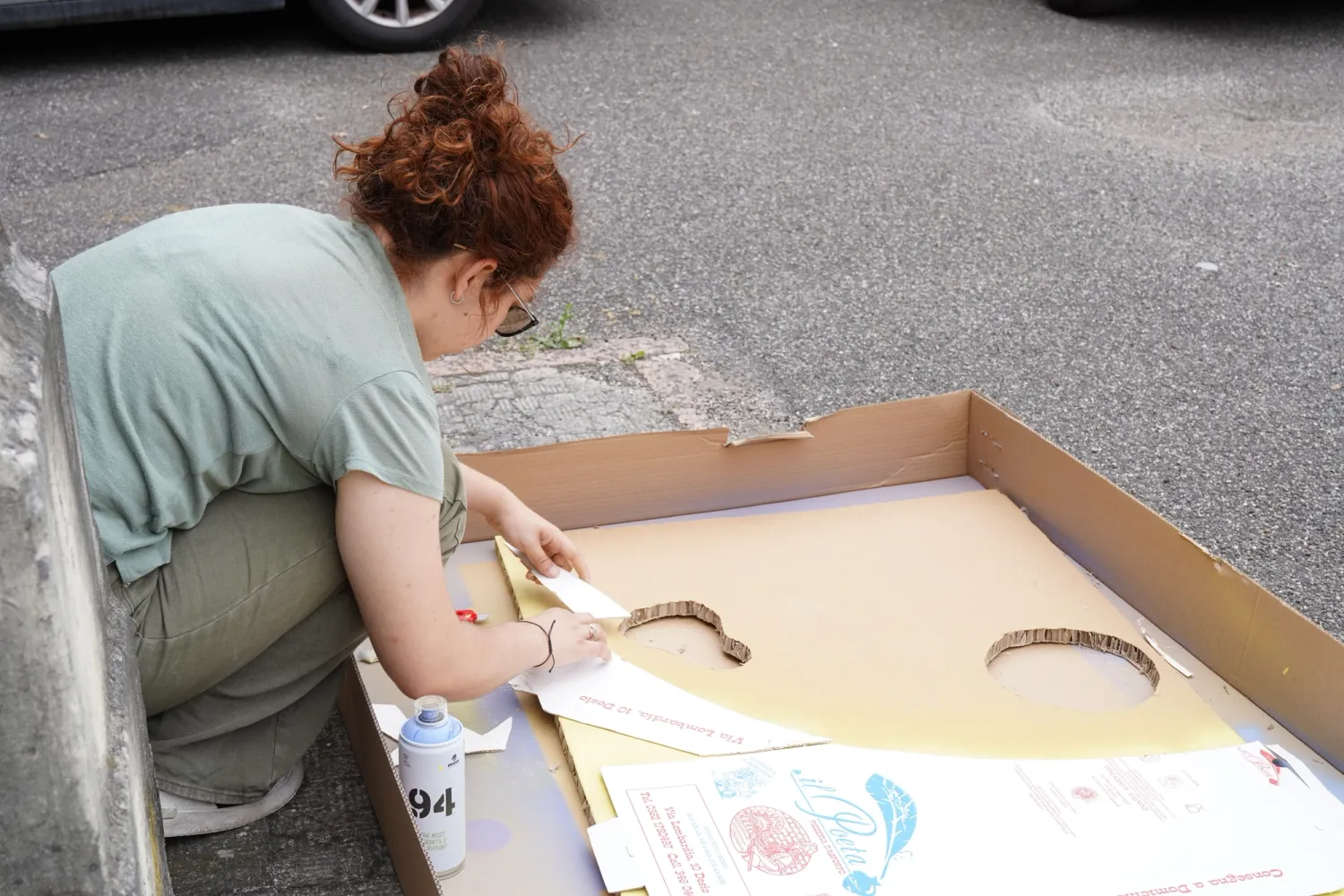
A young woman is crouched outdoors, working with precision on a cardboard prototype or urban signage. Using cut-out stencils and a spray paint can positioned next to her, she is assembling or decorating a structure inside a large box, transforming salvaged materials into communication or design tools. The scene captures a phase of practical, hands-on experimentation, typical of self-construction and participatory design processes that bring design directly into public spaces.
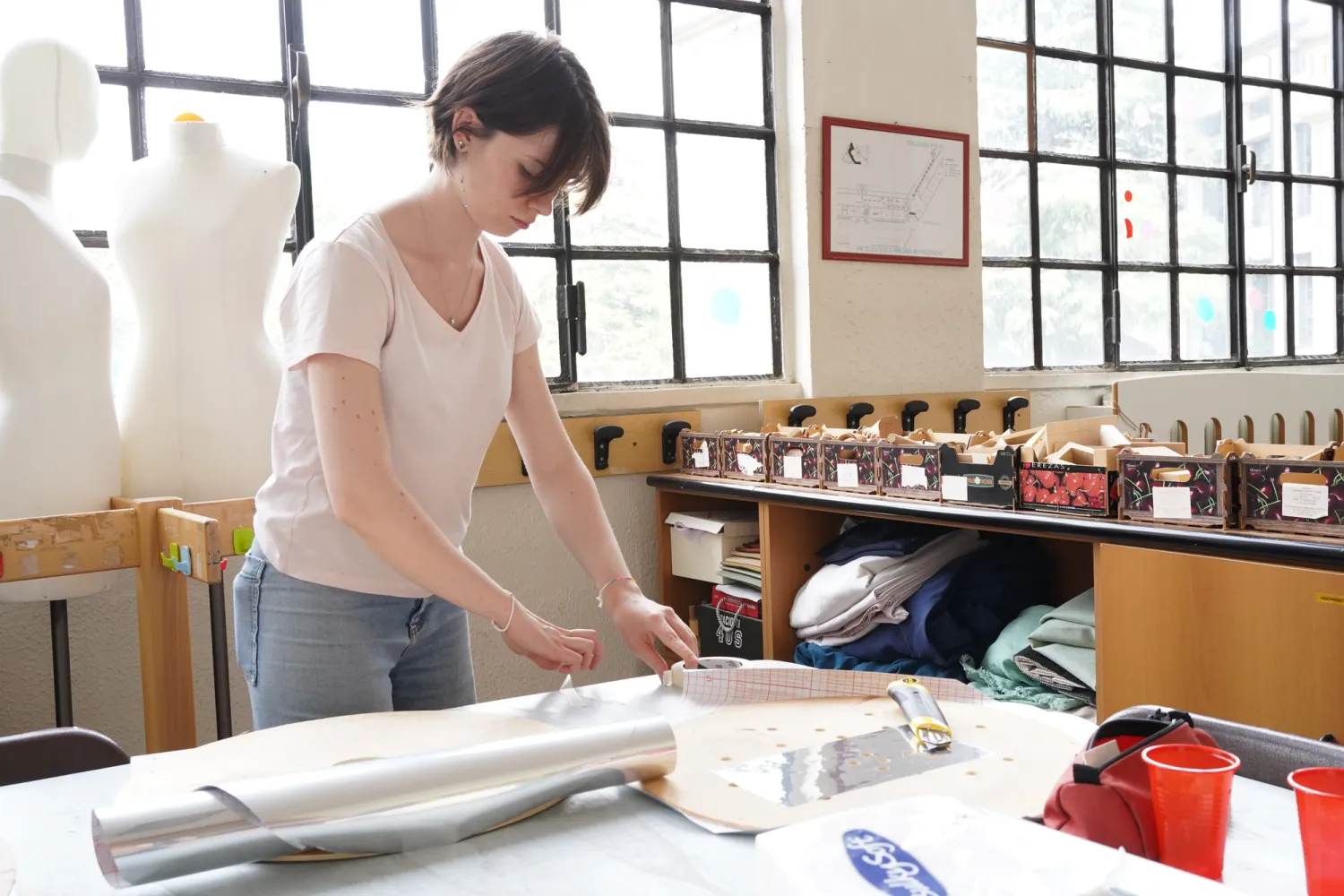
A young professional or student works carefully in a bright workshop, focusing on preparing materials for a design or set-design project. Rolls of reflective film, circular templates, and cutting tools are arranged on the workbench as she carefully applies technical adhesive tape. In the background, dressmaker manikins and shelves organized with materials suggest a creative production context related to fashion or product design. The scene conveys the importance of manual precision and attention to detail during the prototyping stages within a co-working or academic space.

Integrating space design, product and graphic design skills, the workshop made it possible to develop, with the contribution of the Stripes pedagogical staff, prototypes of educational micro-installations subsequently presented to the families attending the Hub, as well as to the citizens of Desio.
The projects offer insights into the relationship between adult and child, both in the indoor and outdoor spaces of all the hubs involved in the PARIPASSO project.

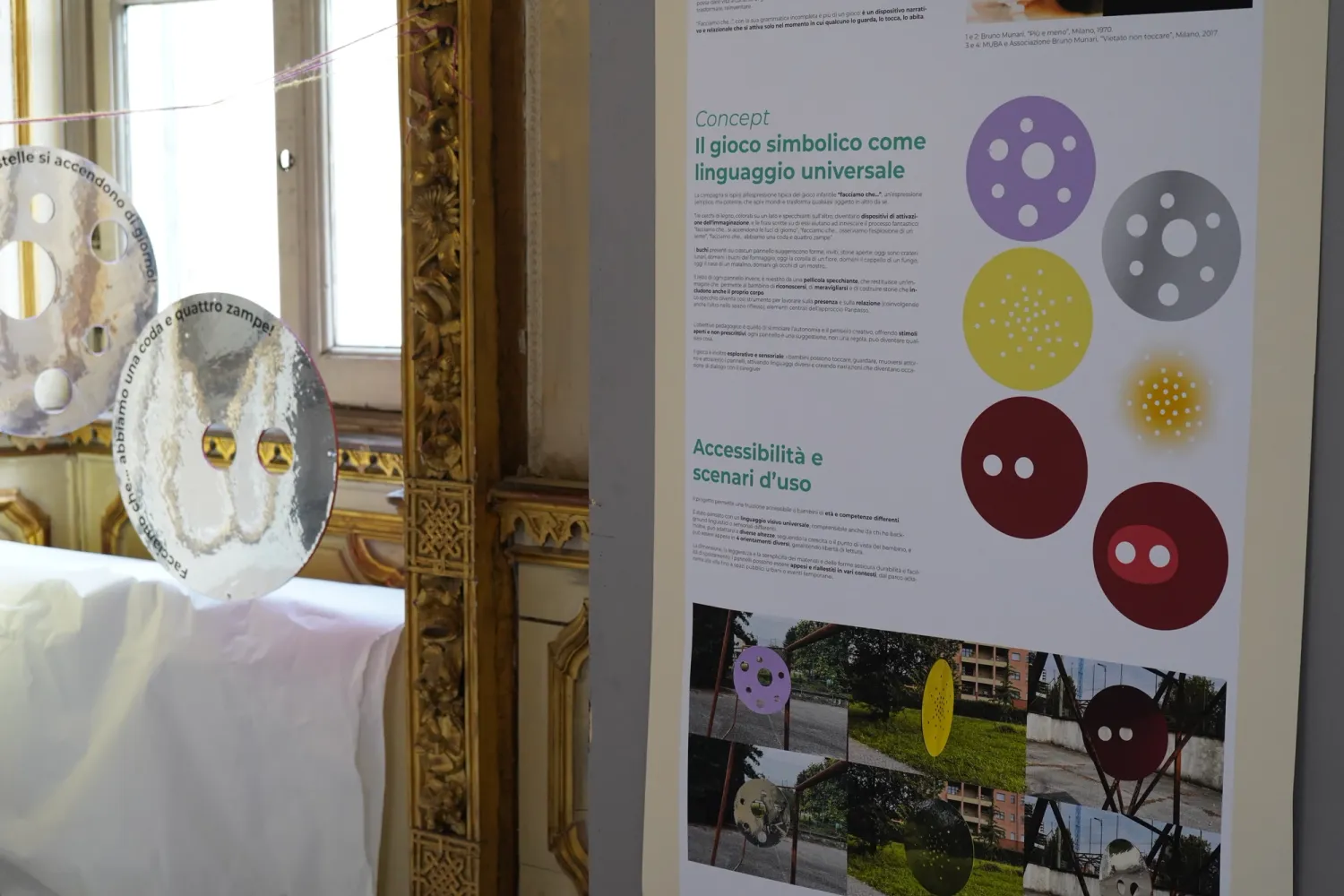
A vertical information panel, set in a prestigious historic room decorated with golden stuccos, presents the project concept "Symbolic play as a universal language." The poster describes the importance of imagination and accessibility in educational design, illustrating through colorful circular graphics and environmental photographs how sensory panels can transform into narrative devices for children. On the left, physical elements of the project, such as mirrored and perforated discs, hang from the ceiling, creating a visual dialogue between the stated theory and material experimentation. The display highlights an inclusive approach to design, where the simplicity of shapes and the variety of materials encourage free and multi-sensory exploration.
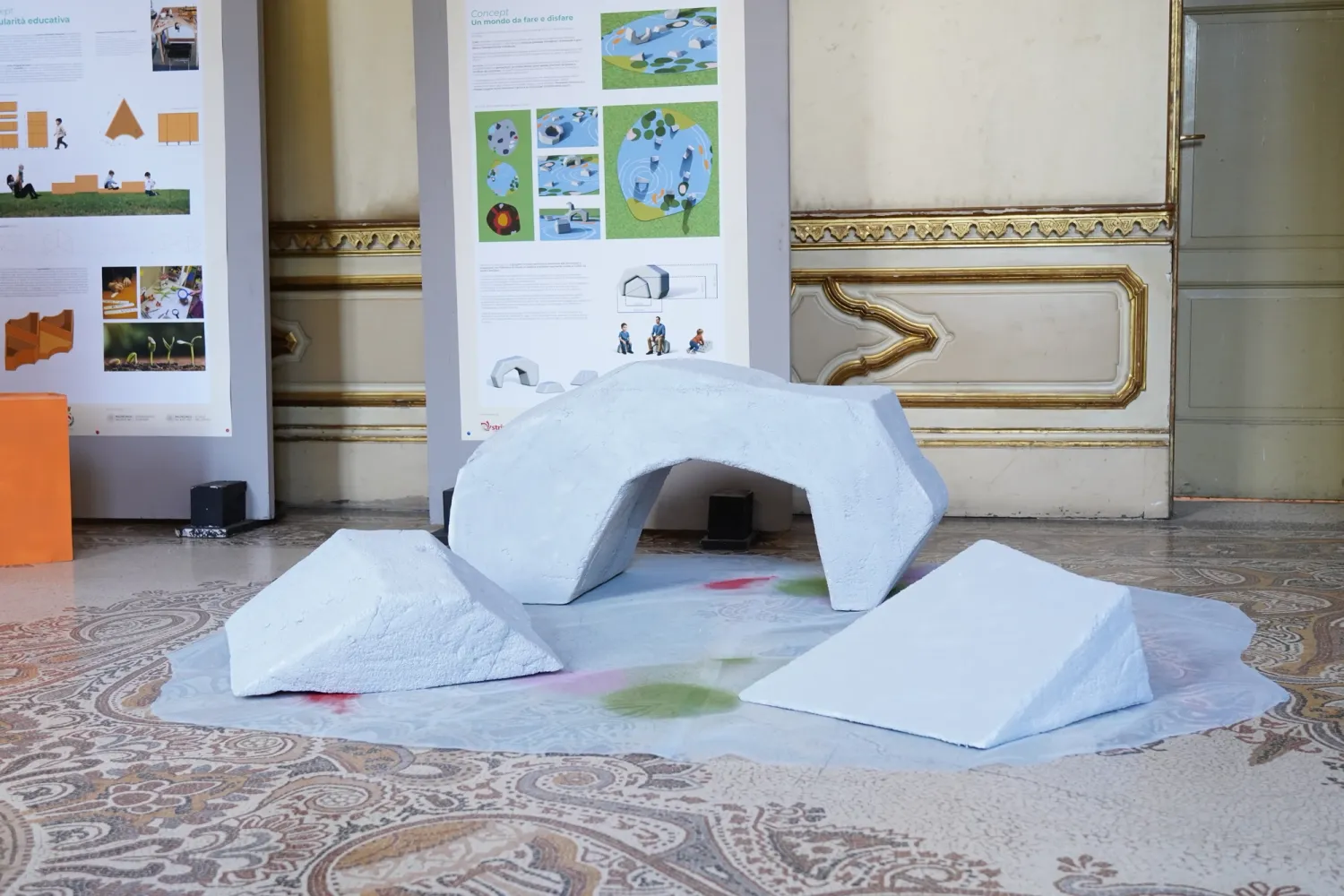
A sculptural installation composed of large geometric modules in a lightweight, off-white material is positioned in the center of a historic room featuring mosaic flooring and walls adorned with gilded boiserie. The three elements, with angular shapes reminiscent of rock formations or abstract architectural structures, rest on a circular rug with colorful gradients, inviting physical and spatial interaction. In the background, large vertical panels present the concept "A world to make and unmake," illustrating through diagrams and drawings how these modules can be configured to create playful landscapes and shelters. The image represents a successful blend of contemporary design oriented toward active pedagogy and the timeless charm of a high-level institutional setting.

Prototypes:

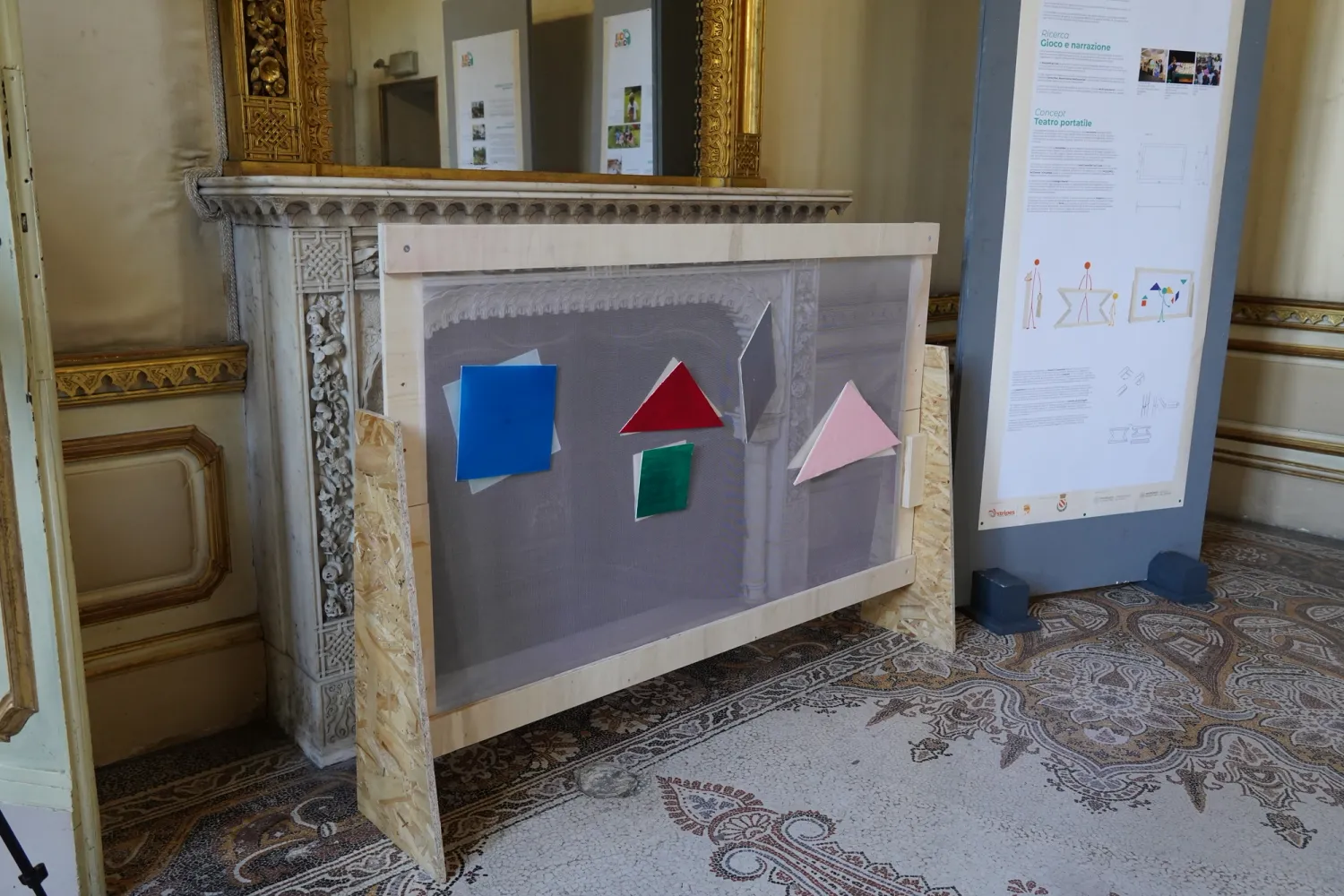
Forma Fiabe by Alice Abela is an interactive theatre in which children can unleash their imagination and immerse themselves in a world made of shapes that come to life creating ever-changing adventures. By applying the shapes to the structure, children create different scenarios, characters and environments each time, into which they can immerse themselves, becoming the real protagonists of the story. Telling stories becomes a shared educational experience that encourages exchange, listening, empathy and the construction of a common imagination.

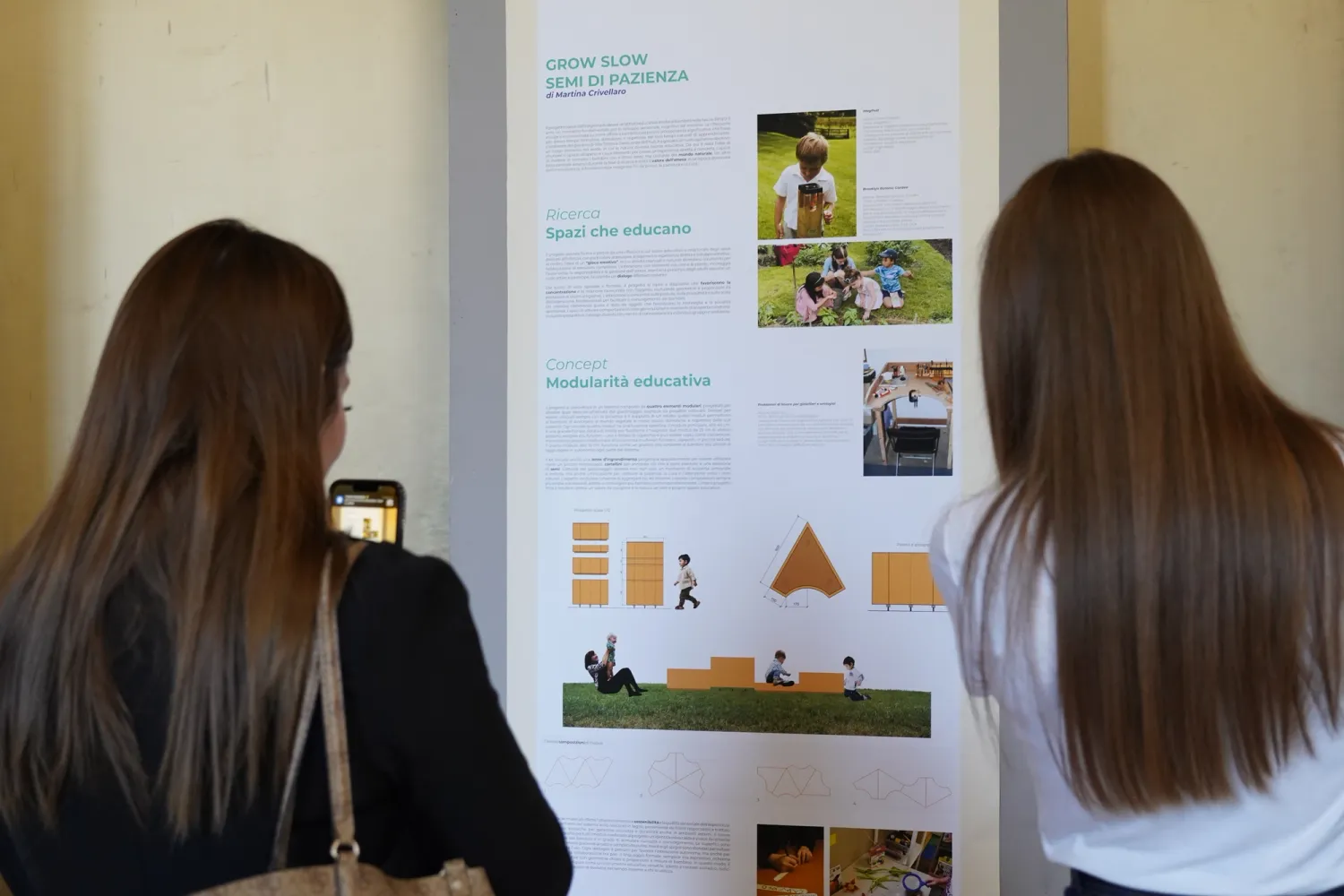
Grow Slow - Seeds of Patience by Martina Crivellaro was created with the aim of devising an educational activity aimed at children from 0 to 3 years old. Inspired by the park of Villa Tittoni in Desio, the project enhances the open-air space and its natural elements, creating a system composed of four modules designed to set up areas dedicated to gardening. Through a concrete and immersive experience, Grow Slow offers children the possibility of coming into contact with the slow but constant rhythm of nature, promoting sensorial learning based on patience, observation and care.

Piccoli Mondi by Anna Meregalli was born within the framework of threshold projects designed to create meaningful connections between indoors and outdoors. It is a temporary micro-installation system, consisting of mobile but durable furniture elements that extend the functions and activities of the indoor service to the outdoors. A canvas, made of plastic material resistant to outdoor use, serves as a narrative base: through abstract shapes and simple colors it recalls imaginary landscapes, stimulating free play and individual interpretation.

Two visitors attentively observe a vertical exhibition panel illustrating the project "GROW SLOW - SEEDS OF PATIENCE" by Martina Crivellaro. The poster delves into research on "Spaces that educate" and the concept of "Educational modularity," integrating explanatory texts, photographs of children engaged in outdoor activities, and technical diagrams of modular wooden furniture. On the left, one of the two women takes a photo of the panel with her smartphone, documenting the interest in the pedagogical and design solutions presented. The scene captures a moment of professional dissemination and discussion on how architecture and design can foster slow and mindful learning paths, in harmony with the rhythms of nature.
An exhibition display inside a historic room introduces the "Teatro portatile" (Portable Theater) project, an initiative exploring the link between play and storytelling. In front of a monumental carved marble fireplace, a rectangular self-supporting panel is positioned, featuring a raw wood (OSB) frame and a semi-transparent central surface onto which various colored geometric shapes are applied: a blue square, a red triangle, a green rectangle, and a pink triangle. To the right, a large information poster illustrates the project concept through technical drawings and diagrams showing how the structure can be used for theatrical and performative activities. The integration of contemporary materials and abstract shapes within an ancient architectural context, characterized by refined mosaic floors and gilded boiserie, emphasizes the desire to create new spaces for creative expression and interdisciplinary dialogue.

Enigma in Color by Giulia Mastrantonio is designed to attract and engage families in Desio, making Villa Tittoni an interesting and accessible destination for young and old alike. At the heart of the initiative is the focus on the relationship between parent and child: the path to the Villa becomes a moment of sharing and dialogue, in which imagination is stimulated thanks to a series of colored silhouettes installed along the way, designed to intrigue and stimulate stories.

Facciamo che... by Giulia Tassoni aims to tell the pedagogical approach of the Hub PARIPASSO in Desio by evoking an idea of childhood based on imagination, relationship and freedom of interpretation. Through light, modular and accessible installation elements, it invites to play in the present, co-imagine and be in public space as an open educational place. The pedagogical goal is to stimulate autonomy and creative thinking: each panel is a suggestion, not a rule; it can become anything. Play is exploratory and sensory: children can touch, look, move around and through the panels, activating different languages and creating narratives that become opportunities for dialogue with adults.

«The Department of Design's main objective within the project is to create a model embodied in the development of childcare hubs, which is the result of collaboration between different energies and disciplines.»

(Barbara Camocini, project coordinator for the Department of Design)

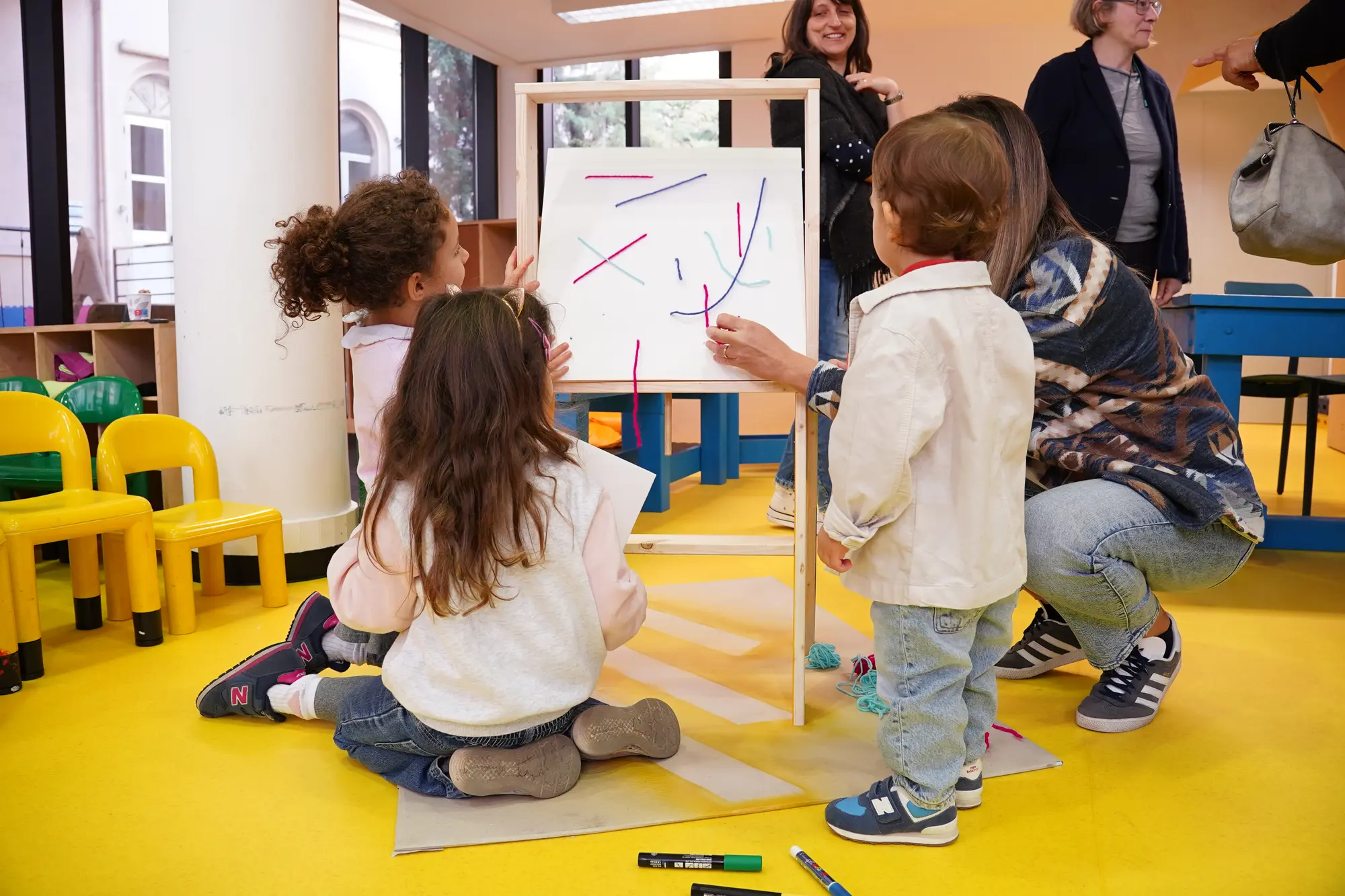
In a bright and colorful classroom, a group of children participates in a creative workshop under the guidance of an adult. The little ones are gathered around a self-supporting wooden structure holding a white panel, where marks are drawn and colored threads are applied to create an abstract composition. The environment, featuring a vibrant yellow floor and child-sized furniture, fosters an atmosphere of experiential learning and sharing. The image captures the essence of active pedagogy, where design and art become languages to explore manual skills and collaboration from the earliest years of education.

Photo credits: Elisa Ercolani and Anna Morali for Mission Bambini

Share on: