Strategic Design for the Third Sector

By Xue Pei

The image is an abstract graphic background featuring a powder blue or light teal gradient. The composition displays minimalist, blurred overlapping geometric shapes: a soft circular form is visible in the bottom-left corner, while two large radial icons resembling gears or stylized stars occupy the top and right areas of the frame. The style is clean, ethereal, and professional, consistent with the visual identity of the background series shown earlier.

This book discovers and demonstrates the strategic values of design within the context of the third sector, a domain characterized by inherent complexity and the objective of effecting positive transformations across both economic and social dimensions.
Based on seven years of research, Strategic Design for the Third Sector. Bridging Business Innovation and Social Responsibility by Co-creating Organisational and Systemic Changes by Xue Pei combines theoretical insights with hands-on empirical studies, offering a compelling narrative on the evolving roles of strategic design in third sector organisations. Through an in-depth analysis of best practices and four action research projects, the book showcases how design enables third sector organisations to uncover opportunities, manage innovation processes, and facilitate meaningful collaboration among diverse stakeholders.

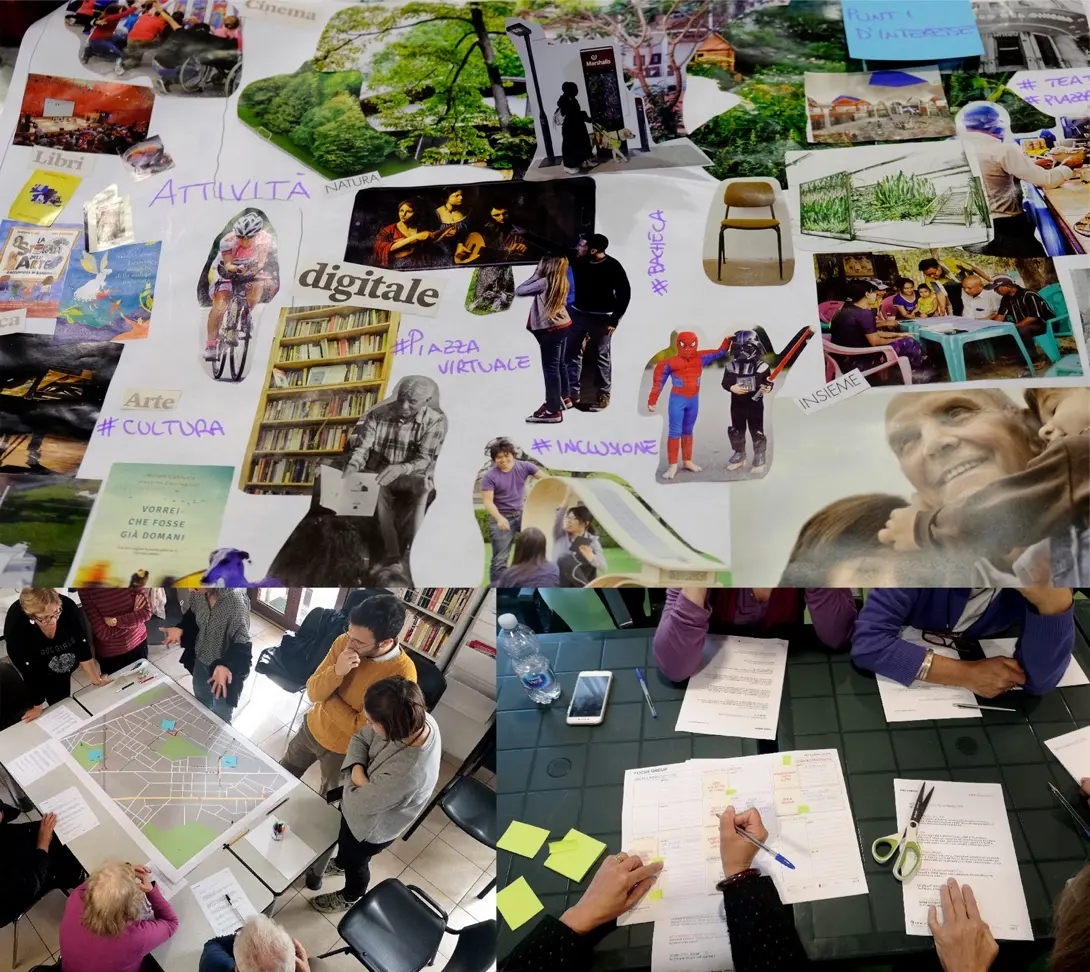
The image is a collage illustrating a three-stage co-design and community participation process. At the top, a moodboard gathers clippings and visual concepts such as culture, inclusion, and digital to define the project's values. At the bottom left, a group of people analyzes a technical map of the territory to identify urban issues and opportunities. Finally, on the right, the operational phase shows the filling out of worksheets and the use of sticky notes to synthesize the emerging ideas. Overall, it describes a methodological approach ranging from visual inspiration to concrete planning for social regeneration.
Co-creation activities involving elderly citizens, service providers, volunteers, researchers, and students in the Longevicity project (funded by Fondazione Cariplo), aimed at defining promising urban service systems and strategies for promotion and implementation

At its core, it introduces a design framework to illustrate how a strategic design mindset, together with methods and tools, fosters stakeholder participation and co-creation in the innovation process, and how it inspires conversations and reflections on organizational and systemic changes. The framework also offers actionable strategies for design researchers and practitioners willing to apply strategic design for addressing complex societal problems through creativity, innovation strategy and a systemic lens.
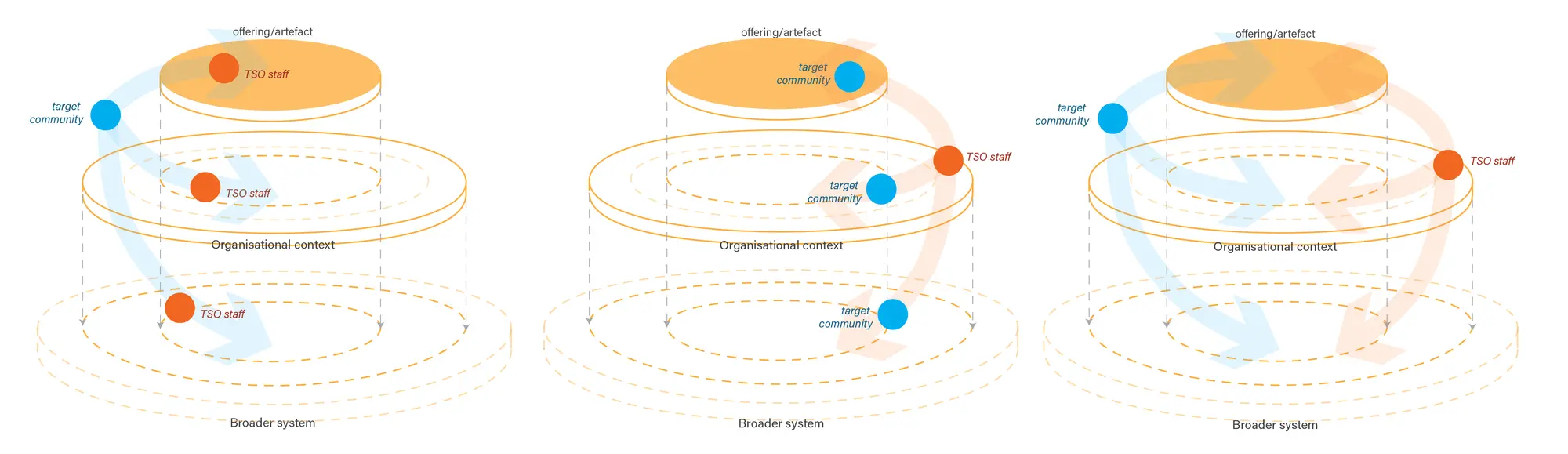
The image presents a series of three conceptual diagrams illustrating the interaction dynamics between different actors within a complex system. Each schema is structured across three hierarchical levels: offering/artefact at the top, organisational context in the middle, and the broader system at the base.
Three types of organisational encounters for applying Strategic Design for co-creation in Third Sector Organizations (TSOs): (1) Outside-In: empowering external actors to enhance TSOs’ offerings; (2) Inside-Out: empowering TSOs’ internal capabilities to reshape processes and behaviours; (3) Bridging Outside-In and Inside-Out: collaboratively formulating TSOs’ values and purposes (from left to right).

The volume, published by Springer Nature, is available on this website.

Share on: