Project Ecologies. The Department of Design at DRS 2026

Design Research Society Conference

The participation of researchers from the Department of Design spans a wide range of themes, reflecting an increasingly systemic, relational, and transdisciplinary approach to design research.

The biennial DRS2026 – Design Research Society Conference, taking place in Edinburgh in June 2026, offers a particularly clear picture of a design discipline that is becoming increasingly open, systemic, and transdisciplinary. As one of the leading global events dedicated to design research, this year’s edition focuses on issues ranging from artificial intelligence, sustainability, and material cultures to care practices, cultural heritage, and more-than-human relations. Together, these themes portray a landscape in whichdesign is no longer limited to the production of objects, services, or interfaces, but emerges as a cultural, political, and relational practice.

Within this context, the Department of Design stands out not only for the number of contributions featured in the conference programme, but also for its ability to engage with diverse topics, scales, and formats, showcasing the breadth and transdisciplinary nature of the research developed within the Department.

The programme highlights different research trajectories that converge around a redefinition of design beyond a solely human-centered perspective, embracing broader networks of relationships among people, technologies, materials, territories, and living systems. Design is no longer understood simply as the solution of bounded problems, but as the creation of relationships among bodies, data, territories, algorithms, materials, and forms of life. In this sense, the Department’s presence at DRS2026 reflects an academicenvironment capable of jointly addressing technology, material culture, environmental transformations, and contemporary forms of coexistence.
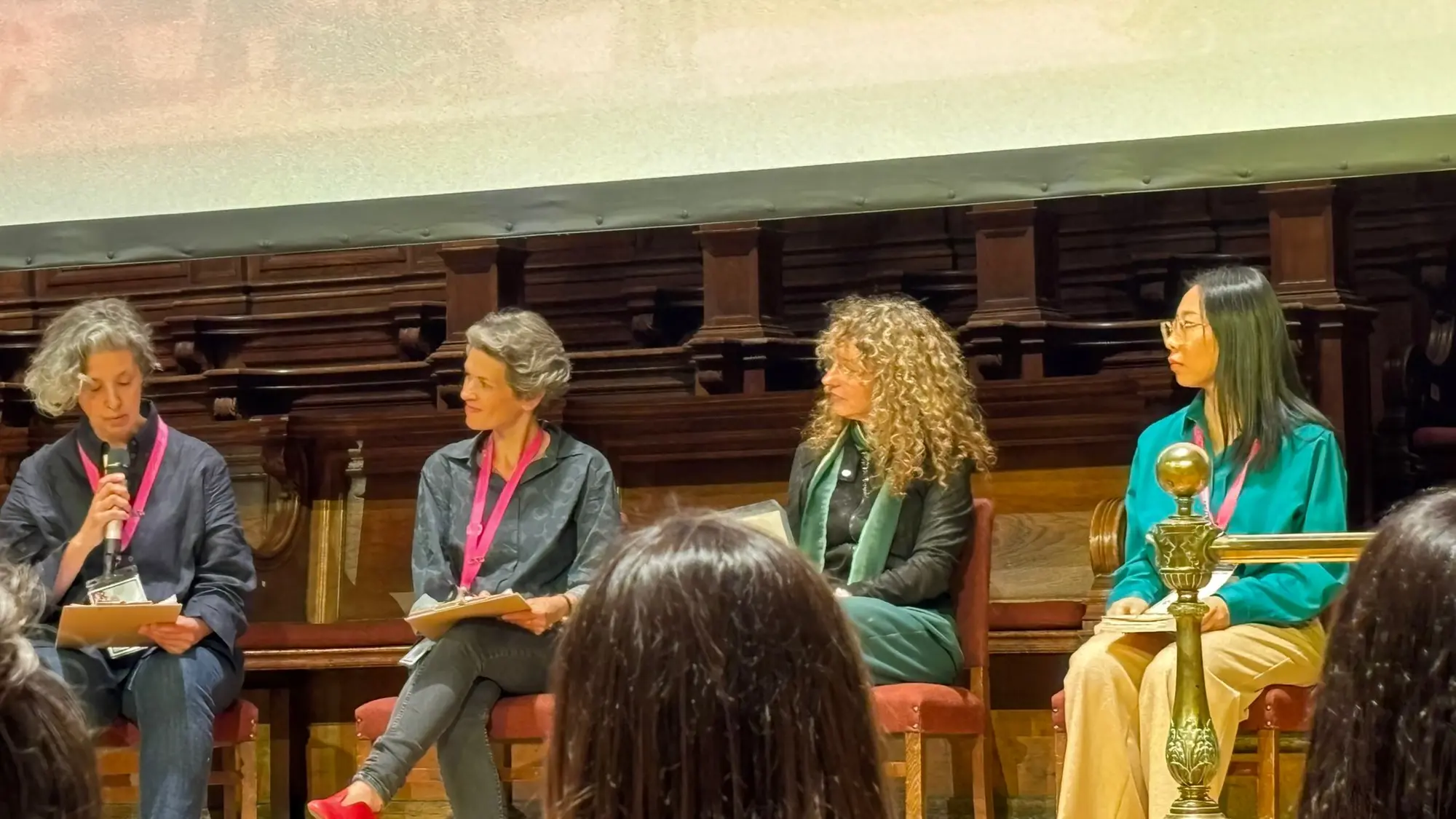
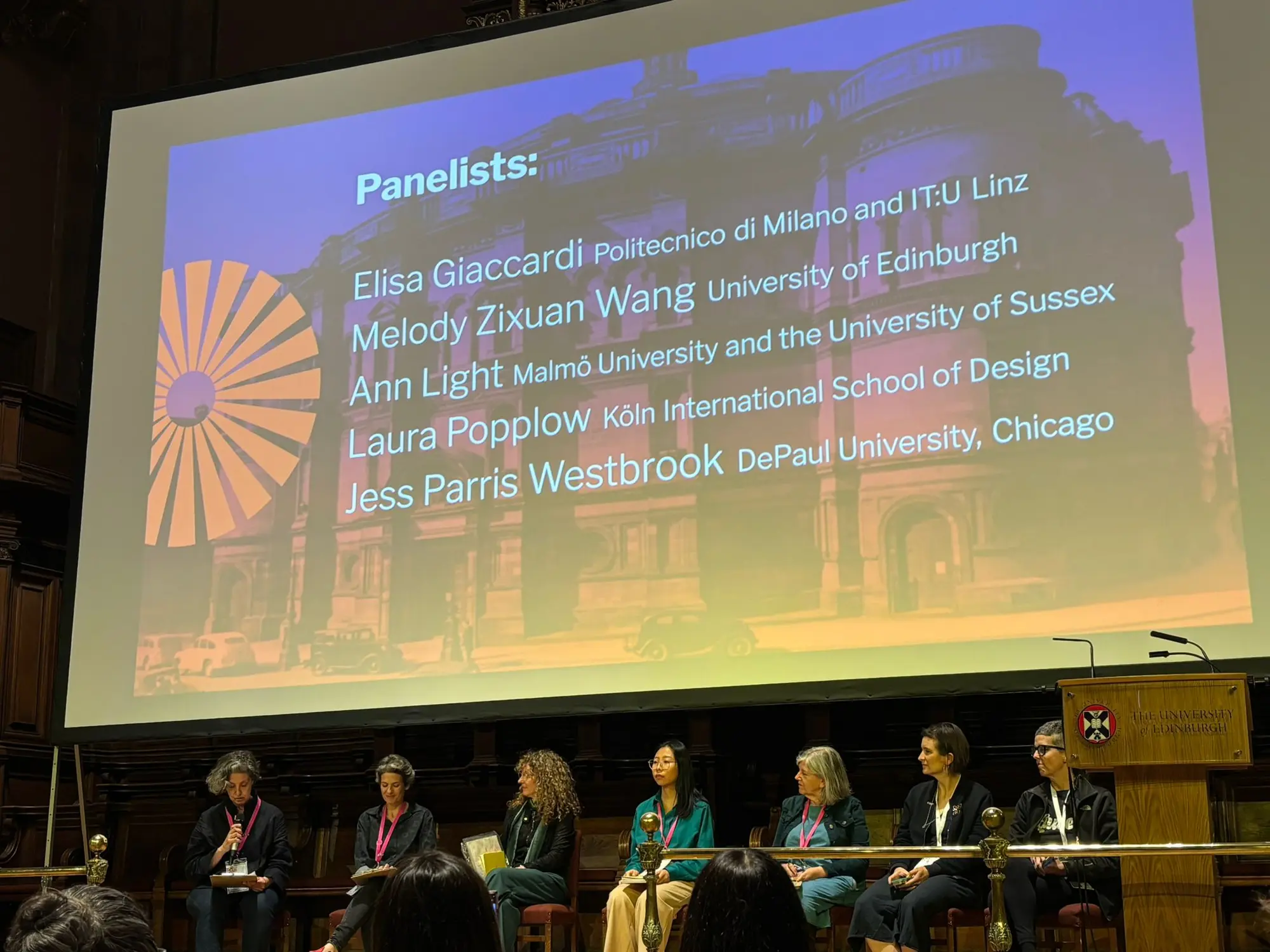
Looking across the Department’s contributions, a constellation of contemporary design research emerges. Topics range from artificial intelligence, materials, cultural practices, heritage, and inclusion to multispecies ecologies and social transformations. Beneaththis diversity, however, a shared direction becomes visible: expanding what design is able to see, hear, recognize, and take responsibility for.

AI, Agency, and Design Practices

In the field of artificial intelligence, Co-speculating with AI: From Prompts to Practices by Elisa Giaccardi, Joseph Lindley, Maria Luce Lupetti, Giulia Jiangxian Zhu, and Dave Murray-Rust explores practices of co-speculation with generative systems, while Deconstructing the Designer–GenAI Interaction in the Design Process by Fabio Antonio Figoli, Francesca Mattioli and Lucia Rampino examines the micro-dynamics of interaction between designers and generative AI. In both cases, attention shifts from AI as a mere productive tool toward questions of agency, methodology, and responsibility within the design process. This perspective also resonates with experiments developed within the Final Design Studio 2 and the exhibition More Than Humans – The Future is Multispecies, both initiated at the Politecnico di Milano. These experiences encourage students to decenter the human perspective and use AI as a critical interlocutor in the creation of regenerative and multispecies scenarios.

Materials, Biodesign, and Transitions

Another key area concerns materials and ecological transitions. The conference programme includes In Search of the Definitions for Biodesign: Practice, Identity and Biodesign Literacy and Where Regenerative Design Theory Meets Ground, focused on a regenerativedesign case study on Weizhou Island, both involving contributions from Valentina Rognoli. Rognoli also serves as chair of the session Mapping Materials and Practices.

Taken together, these contributions show how materials are no longer considered passive elements of design, but active participants in contemporary environmental and productive transformations. This trajectory aligns with the work of the MaDe/Trans researchgroup and the new B.Lab at the Politecnico di Milano, where biodesign, living matter, and regenerative processes are explored as central areas of contemporary design research.

The same direction is reflected in Strategic Design for Circular Transitions: Co-defining Servitisation Strategies with a Furniture Company by Mattia Italia, Silvana Migliozzi, Michele Melazzini, Daniela Maurer and Xue Pei. The paper addresses circular transitions withinthe furniture sector, exploring how Strategic Design and Transition Design can support companies in developing sustainability-oriented servitization strategies. Through a participatory research process conducted with an Italian furniture company, the study highlights the role of design in creating scenarios, collaborative processes, and strategic directions capable of supporting the transition toward more circular and systemic production models.

Politics of Design and Revisiting the Canon

Another research stream represented at DRS2026 concerns the reconsideration of the cultural and political foundations of design. The “P” in Design: Towards a Genealogy of the Political in the Field, of Silvia Cantalupi, Annalinda De Rosa, Laura Galluzzo emphasizes the inherently political nature of design, not as an additional dimension but as a constitutive aspect of the discipline itself. The conversation Rebalancing the Design Canon, featuring Francesco E. Guida, extends this reflection to design history, addressing invisibility, intersectionality, and geographies of recognition.

Related critical perspectives emerge in Unsettling the Human in Design Research, Without Comfort by Annalinda De Rosa, Elisa Bertolotti, Virginia Tassinari, Elvia Vasconcelos and Maria Maramotti, which focuses on antispeciesism and the destabilization of the human subject, and Disrupting gender binaries in product language of Martina Labarta Labrador, Francesca Mattioli and Silvia D. Ferraris, addressing gender codifications within design culture and education. Here, the Department’s transdisciplinary approach becomes particularly evident: rethinking how to design in an interdependent world also requires revising the canons, vocabularies, and cultural structures that design has historically helped shape.

Cultural Heritage and Digital Practices

The programme also highlights significant contributions in the field of cultural heritage and digital practices. Decolonising digital practices in Intangible Cultural Heritage of Eleonora Lupo and Designing the echo. Practices for oral heritage in the digital age of Ilaria Bollati, Luisa Collina and Alice Biancardi demonstrate how heritage is approached not as a static archive to be preserved, but as a dynamic set of practices, mediations, and cultural infrastructures that can be reactivated through digital tools, listening, and participation.

Data, Territories, and Relational Infrastructures

Another group of contributions focuses on data, territories, mapping practices, and relational infrastructures. Elisa Giaccardi serves as chair of the session More-than-human Data Practices and leads the conversation More-Than-Human Design: Toward a ConvivialCommunity, while Marco Andrea Finardi is among the organizers of the exploration Exploring Data Otherwise: Countermapping More-than-human Design Practices.

Alongside these initiatives aimed at building shared vocabularies and communities, the programme includes the framework developed for the GOCCIA project by Francesco Vergani and Davide Fassi, the paper Sounding Territories: Dis/identificatory Codings as Relational Worlding e Material agents at work in alternative food networks involving Stefano Maffei.

Across these contributions, data are not treated as mere quantitative information, maps are not regarded as neutral representations, and materials are not seen as passive logistical supports. Instead, they become components of relational systems that design seeksto understand, make perceptible, and transform. Sound territories, food infrastructures, informational landscapes, and multispecies relationships thus emerge as fields of design intervention.

Information Design and Critical Literacy

A further contribution addresses the role of Information Design within the context of Media and Information Literacy through the paper DDENSO: An Evaluation-Driven Methodology for Information Visualisations by Elena Aversa, Anna Cattaneo, Michele Maurio and María de los Ángeles Briones Rojas. The paper presents a replicable methodology for designing and evaluating data visualizations based on a case study concerning the social implications of artificial intelligence.

Here too, information design emerges not only as a representational practice but as a critical tool for interpreting complex phenomena and fostering more informed access to knowledge.

The Forms of Research

One of the most interesting aspects of the Department’s presence at DRS2026 is its reflection on the forms of design research itself.

Eleonora Lupo serves as co-chair of the session Innovating Scientific Publishing of Design Research and co-author of the paper PRO-DES. Localising Design Research for Scientific Publishing. The contribution investigates scientific publishing in design, questioningthe models, formats, and criteria through which research is localized, made accessible, and legitimized within academia.

This highlights how the Department engages not only with the content of design research but also with the cultural and editorial infrastructures through which knowledge circulates and becomes consolidated.

In this context, Elisa Giaccardi’s role as series editor of the Palgrave Studies in More-than-human Design book series acquires particular significance, demonstrating the Department’s contribution to creating international platforms for discussion and scholarlydevelopment.

Redefining Contemporary Design

Ultimately, what DRS2026 makes visible is not simply a broad and articulated presence, but a continuity of research that spans themes, methodologies, and scales of contemporary design practice. Artificial intelligence, materials, cultural heritage, data, participatorypractices, generative systems, and multispecies relations do not appear as separate territories, but as interconnected elements of a shared framework in which design is progressively redefined as a relational, cultural, and systemic practice.

Share on: